From Assad to Al-Sharaa: The Geopolitical Realignments and External Influences in Modern Syria
Executive Summary
The fall of Assad's government has reignited long-standing tensions between Israel and Türkiye, the two regional powers that have different visions for the future of Syria. The ongoing political instability in Syria, along with the conflict influenced by its complex ethnic makeup and volatile neighborhood, poses profound security implications for neighboring countries and regional states. Türkiye had always been against the Assad regime but has now emerged as a key player in Syria and is advocating for a centralized post-Assad state. Israel, on the other hand, is deeply suspicious of Al-Sharaa's governance, citing his ties to Al-Qaeda, leading it to advocate a decentralized Syria by backing minority groups. The following sections examine the influences of Türkiye and Israel on post-Assad regional dynamics and the broader regional balance of power. This paper will shed light on the ways Türkiye and Israel security interventions are reshaping Syria’s post-Assad political order and the nature and extent of their interventions.
Key Background: Syria’s Changing Political Order in Focus
The Syrian Civil War
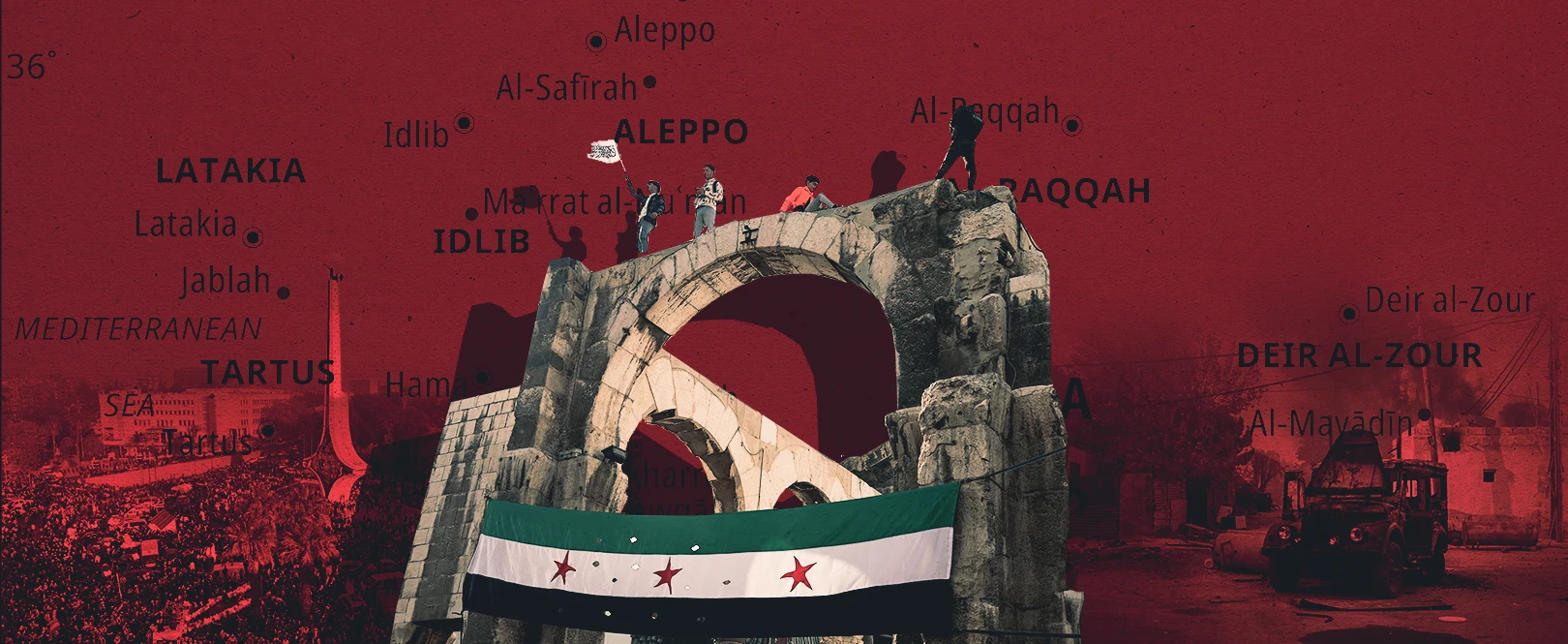
Syria has been a mosaic of ethnic and religious communities, making it one of the most diverse societies in the Middle East. This diversity has also made national unity difficult, especially over the past decade. Before the civil war, the population of Syria was about seventy percent Sunni Arabs, alongside a diverse minority—including Alawites, Kurds, Christians, Druze, Armenians, Turkmen, and others. Notably, Syria stopped collecting ethnic data in 1960 with the rise of pan-Syrian nationalism ideology that washed away minorities.1 Despite being a minority, the Alawite community held political dominance over a Sunni majority country through decades of Assad family rule (1970-2024). The 2011 uprising, along with the civil and proxy wars, shattered this order, causing the death and displacement of over 600,000 people, primarily from the Sunni population. After thirteen years of war, Assad’s regime finally collapsed, paving the way for Ahmed Al-Sharaa, a former commander of Tahrir al-Sham (HTS), to emerge and become interim leader of the new government.
Post-Assad Security Void and External Intervention
After the collapse of the Assad regime, neighboring countries moved quickly to fill the security and governance vacuum left by the fall of centralized authority. In the north of Syria, Türkiye—which had been against the Ba’ath regime for the past decade—now had a chance to become an ally of the new Islamist-led government in Damascus. Ankara promptly deployed military advisers and humanitarian aid to stabilize areas once contested during the civil war.2 Meanwhile, along the southern border, Israel responded with force within days by reinforcing its military posture. Israeli troops moved closer toward Quneitra area in southern Syria and crossed into the demilitarized zone. Israel strengthened its military presence by securing and taking control of the most strategic points, like Mount Hermon, Quneitra, and Daraa provinces.3 Israel justified this action as a precautionary measure of self-defense, aimed at preventing any instability and cross-border chaos.4 Ultimately, both Israeli and Turkish interventions extend beyond Syria itself; they reflect each country’s pursuit of broader strategic and geopolitical interests across the Middle East.

Türkiye and Israel: From Allies to Adversaries
Historically, Türkiye was the first Muslim country to recognize Israel in 1948. From the early stages of the Cold War, both Israel and Türkiye were aligned with the United States against Soviet influence in the Middle East. This common stance positioned them as key strategic allies within the Western bloc's security framework throughout much of the latter half of the twentieth century. Notably, during the so-called "golden years" of their bilateral relation (1991-2000), the two states cooperated diplomatically in military and economic spheres.6
Between 2010 and 2020, both Israel and Türkiye grew more religious and less secular as the relationship began to dissolve. This tension escalated after 2010, when Israel’s military raided and opened fire on a Turkish civilian vessel named the Mavi Marmara attempting to breach the Israeli blockade of Gaza to deliver humanitarian aid. Israeli fighters killed ten Turkish civilians and wounded dozens more. As a result, Türkiye sharply downgraded its diplomatic relations with Israel.7
In the aftermath of shifting regional dynamics, Israel strengthened its alliance with Greece and Cyprus, gradually distancing itself from Türkiye. Joint naval and air exercises in the eastern Mediterranean exemplified this trilateral relationship. In September 2025, Israel stated that it had also supplied Cyprus with an advanced air defense system, further solidifying defense cooperation between the two. Due to the rise of Israel’s status to the most militarily advanced nation in the Middle East and a long-standing ally of the United States, its reliance on Türkiye has diminished over time.8
After the fall of Assad, Türkiye was scouting for potential new sites for military bases in Hama Province and especially the country’s main airport. It resulted in Israel bombing the two sites to prevent the Turkish military from utilizing these areas.
Israel is concerned that the new Syria, heavily leaning towards Türkiye, is more complex to fight than the shattered Syria before. Türkiye wants a strong and stable Syria; unlike Israel, Ankara fears that an autonomous Kurdish entity in Syria could give the Kurdistan Worker's Party (PKK) a safe base to operate from.
Türkiye’s Strategy and Interventions in Syria
Türkiye's Core Objectives
Ankara seeks to strengthen its ties with Ahmed Al-Sharaa, despite viewing his leadership as a potential risk for the region. Ankara rejects decentralization or a breakaway region in Syria. Regarding Kurdish autonomy, the Turkish Foreign Ministry directly stated that “Turkey does not accept any initiative that allows weapons to be carried by others not within Syrian central authority.” Turkish President Recep Tayyip Erdogan likewise dismissed the Kurdish demands for federalism as “nothing more than a raw dream.”9 Türkiye’s core strategy envisions a unified and centrally governed Syria; any other power vacuum or devolution in Syria enables the Kurdish militant group to establish cross-border sanctuaries and threaten Türkiye's territorial security.
Military and Security Posture
On 13 August 2025, the Turkish Defense Ministry and the Syrian government signed a memorandum of understanding on military training and consultancy.10 This formalized a transition to structured security cooperation between the two states. The agreement indicates that Damascus is trading training capacity and regime consolidation for Turkish assistance in managing northeastern Syria—particularly regarding Kurdish security formations. Under this framework, Türkiye will help establish training centers requested by Damascus, embedding Turkish military doctrine, logistic standards, and command procedures within the resurrected Syrian military.11
This arrangement places the independence of the Syrian military in question, since the entity that controls the training usually shapes promotion, unit cohesion, and rule of engagement—especially in disputed areas such as Hasaka and Raqqa. By the end of 2025, Türkiye aims to deploy troops and military assets across the north-east of Syria, a predominantly Kurdish area, and to establish additional bases in Syria.12 Such a strong military presence from Türkiye demonstrates the informal power Ankara exercises in Syria’s post-Assad regime. This expanding footprint underscores a deeper strategic contest; the competition over Syria fits into a wider context of geopolitical rivalry.
Türkiye is now Syria’s top ally in both the economic and security fields
Stimson Center
Türkiye's interests in the Syrian conflict appear to be correlated to protecting its national security. Since 2016, Ankara has launched multiple operations to push back the Kurdish YPG militia, part of the US-backed Syrian Democratic Forces (SDF). The fall of Assad presented Türkiye with a renewed opportunity to safeguard its border by integrating the SDF into the Syrian military under centralized command—a move framed as essential to Syria’s peace and stabilization process.
On March 10, 2025, the deal between Ahmed al-Sharaa and SDF commander Mazloum Abdi on force integration was therefore seen by Ankara as a step towards its security goals. As the Turkish Defense Ministry emphasized, “Syria’s stability is directly linked to Türkiye’s security.”13 Ankara’s security doctrine can be distilled into a single principle: eliminate cross-border insurgent infrastructure by reshaping Syria’s security sector itself. This approach links stability along the Turkish-Syrian frontier to the successful integration and disarmament of Kurdish formations under Damascus’s central authority. Türkiye demands the dissolution of Kurdish autonomy. Warning that it “cannot consent to…autonomous region or decentralized rhetoric,” and the military threat will continue if the PKK are not fully disarmed.14 This stance combines both coercive and conditional cooperation, aiming to ensure Syria’s compliance with concrete measures such as force registration, weapon accounting, and the incorporation of fighters into a formal command structure. The August 2025 memorandum of understanding thus represents not only a military partnership but also a strategic instrument of leverage, fusing diplomacy with defense to embed Turkish influence in Syria’s evolving power architecture.
Political Influence and Goals
Türkiye has formed a political alliance with Syria's new Sunni Islamist leadership under Ahmed-al Sharaa, this partnership is not just based on strategy but on shared beliefs. Both Türkiye and the new Syrian government share a Sunni-Islamist worldview, which helps them with mutual understanding and aligning security priorities. They both aim to protect Sunni interests while countering Kurdish separatism and Iranian influence in the region.
There is a clear expectation that Damascus will align with Turkish interests, an outcome crucial for Türkiye's plans to prevent Kurdish attempts for self-governance in northeast Syria.”15 Historically, Türkiye's regional foreign policy has revolved around ensuring border stability, suppressing separatist movements, and maintaining influence in neighboring Muslim-majority states.
In January 2025, al-Sharaa made his first official visit to Ankara, opening a new phase in bilateral relations. During the visit, Ankara insisted on excluding any decentralized form of Syrian governance or placing leadership in the PYD/YPG in the government unless they cut ties with the PKK.16
The PKK’s formal disbandment in May 2025 presented Türkiye with a strategic opportunity to convert its military achievement into political influence. However, if Türkiye fails to assert its regional objectives in northeast Syria, it could potentially miss the chance to institutionalize its presence, turning training centers and partnerships with Damascus into enduring mechanisms of strategic leverage. It risks a resurgence of Kurdish armed movement, a vacuum that Iran and Russia could exploit.
From Israel’s perspective, a Türkiye-aligned Syrian north—especially one that absorbs former SDF and PKK fighters under Damascus—limits its operational flexibility and complicates coordination in both airspace and ground maneuvers. While Turkish patronage offers Syria reconstruction and security assurance, it also deepens external influence over Syrian sovereignty, particularly in Kurdish-majority regions now shaped by Ankara’s strategic priorities. In short, the PKK’s absence removes one source of instability—but only if Türkiye and Syria convert that gap into a governance opportunity.
Turkey’s involvement in Syria is not only about politics; it aligns with President Erdogan’s regional vision. The strategy of the Justice and Development Party of Türkiye (AKP) is to remain independent of Western politics, rather than aligning with regions that were part of the Ottoman Empire. As Türkiye’s role expands, other regional parties could herald a hegemonic Turkish role in the Levant.17
Economic Incentives
Prior to the Arab Spring and the resulting civil war, Syria had a thriving economic partnership with Türkiye, with over $2 billion in trade between both countries. Turkish companies had major investments in construction, the telecom sector, and banking. The 2011 civil war disrupted these commercial ties, but Türkiye currently is working on rebuilding the commercial and trade relations with Syria.18
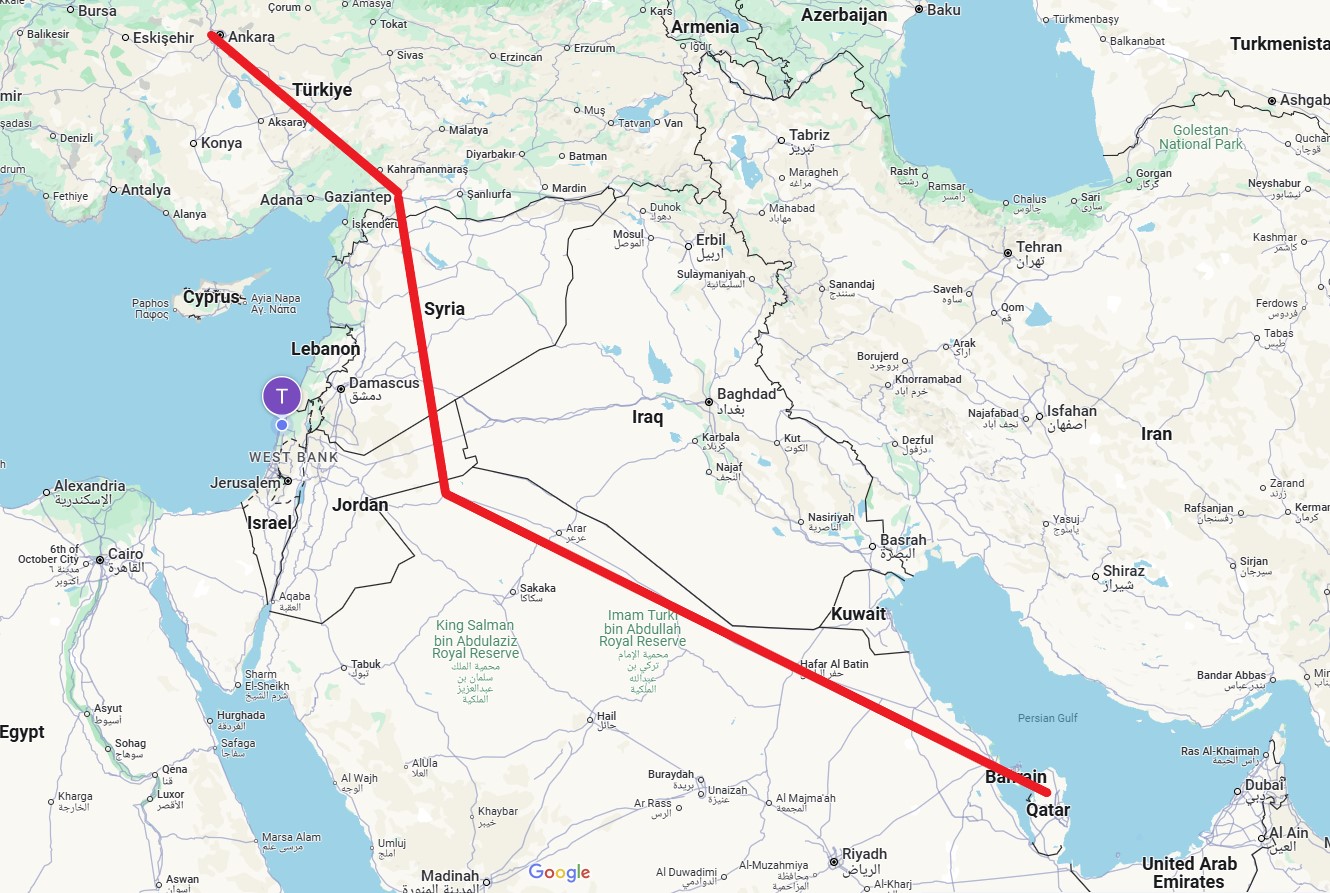
One of Türkiye's most significant economic incentives lies in energy transit. Back in 2009, Bashar al-Assad vetoed the Qatar-Türkiye pipeline that was planned to pass through Syria, under pressure from Russia, to protect the gas market in Europe. Two days after the fall of Assad, Turkish Energy Minister Alparslan Bayraktar announced plans to revive a pipeline project that would connect Qatar’s North Field gas reserves to Türkiye's Trans Anatolian Pipeline (TANAP) network via Saudi Arabia, Jordan, and Syria.19 There is consensus among experts that Türkiye and Qatar backing the Syrian uprising is the main reason for the new government in Damascus to revive the pipeline plan. Syria’s strategic location thus offers Türkiye both economic opportunity and geopolitical leverage across the Mediterranean and the Gulf.
Beyond pipelines, Türkiye seeks to dominate rebuilding Syria’s post-war as a reconstruction market. Turkish companies are already active in the north, especially in areas under Ankara’s control, where the Turkish Lira and telecommunication network operate.20 By combining military control with economic integration, Ankara has effectively embedded itself in Syria’s reconstruction process, illustrating how security and commerce reinforce one another.
Military intervention in northern Syria has enabled deep economic penetration. Turkish-backed local councils and security zones have allowed Ankara to establish banks, trade offices, and industrial zones without facing Syrian state restrictions. This dual-use strategy—combining military control with economic integration—illustrates how security objectives and economic ambitions reinforce one another when it comes to Türkiye's presence in Syria.
Furthermore, Türkiye is seeking more immediate economic benefit from Syria. For instance, controlling the borders of Bab al-Hawa and Bab al-Salameh can influence vital trade and aid routes. Turkish vendors profit by exporting fuel, food, and other goods into Syria’s northwest. This dominance over Syria's northern trade route has made Türkiye the only supplier.21
Türkiye aims to be a bridge between Middle East and Europe trade corridors, and its presence deters rival projects that might bypass it. Competing infrastructure initiatives and projects include China’s Belt and Road Initiative and the India-Middle East-Europe Economic Corridor (IMEC), unveiled at the 2023 G20 Summit, which aims to link India, the UAE, and Europe via Israel and Greece. Both projects challenge Türkiye’s role as a regional transit. To counter these projects, Türkiye seeks to offset these emerging corridors and reinforce its status as the region’s key connector. As such, Türkiye is offering to fund the reconstruction of parts of the Hijaz Railway linking Syria to Jordan and from there further south towards Aqaba and the Gulf. This would help Ankara bypass the Suez Canal and reach Gulf markets.22
Finally, Türkiye’s hosting of Syrian refugees has its own economic implications. Türkiye is handling millions of Syrian refugees at a cost of over $40 billion, according to some estimates in direct expenses. To ease the financial strain on its healthcare, education, and social services, Türkiye aims to create a safe zone in Syria for its refugees to return. After the fall of Assad, many refugees went back to Syria despite the uncertainty of what their homeland would be. UNHCR estimates that “more than 302,000 Syrian refugees have crossed the border back into Syria between December 2024 and March 2025, with many more arriving daily” (UNHCR, 2025).23
Israel’s Strategy and Interventions in Syria
Israel’s Core Objectives
Israel’s primary interest in Syria is to prevent the country from posing a security threat, not only from Syria itself, but also from Iranian military entrenchment, Islamist extremists, or chaos after decades of the Assad regime.24
After the regime’s collapse, the 1974 disengagement accord between Israel and Syria fell apart. This agreement had established a demilitarized buffer zone in the Golan Heights, ensuring relative stability for both countries. In the absence of this framework, Israel adopted an aggressive and proactive approach, fearing that Hezbollah, Iran’s Qods Force, or jihadist groups could exploit the resulting power vacuum in southern Syria and fill the power gap.25
Israeli Defense Minister Yoav Katz outlined four urgent military objectives:26 27
- Secure complete control of the border through a buffer zone
- Prevent any rearmament of Hezbollah or Iran’s proxies
- Destroy Syria’s remaining weapons and military infrastructure
- Prevent Syria from becoming a launchpad for terror attacks
These goals together form a foundation of Israel’s security doctrine in post-Assad Syria, one built on deterrence, preemption, and territorial control.
Military Interventions: Buffer Zone and Airstrikes
In December 2024, when HTS forces advanced toward Damascus, Israel rapidly mobilized along the Golan Heights. By February 2025, Prime Minister Benjamin Netanyahu declared that Israel “will not allow forces of the HTS or the new Syrian army to enter the territory south of Damascus,” directly demanding the demilitarization of the region in South Syria.28
Following this announcement, Israeli forces expanded their presence inside Syrian territory and established several military bases. They seized Heights Point, a key vantage position near Damascus, and set up positions around Quneitra and Daraa29. Later Israeli forces advanced close to Khan Arnabah and Qatana, near the southern edge of Damascus.30 These incursions were widely condemned by the international community; the United Nations stated that Israel violated existing agreements and called for withdrawal. However, Israel insists the incursions are ”defensive measures” needed to prevent Syria from becoming like the ”southern Lebanon scenario.” Netanyahu stated, “we demand full demilitarization of southern Syria… and we will not tolerate any threat to the Druze sect in southern Syria.” 31
Parallel to these ground operations, Israel launched an intensive air campaign across Syria. Since the fall of the Assad regime, Israeli jets have conducted hundreds of strikes targeting the remaining military infrastructure of Syria and any site suspected of being linked to Iran and Hezbollah.32 This effort, known as “Arrow of Bashan,” aimed to systematically dismantle Syria’s air defense, weapon depots, and missile supplies to ensure that any future Syrian government wouldn't be able to pose an immediate conventional threat.
According to the Syrian government sources, “Israel has carried out over 1,000 strikes and 400 ground incursions in Syria, wiping out its military infrastructure and air defense systems, as well as weapons stockpiles. The campaign escalated in July 2025, when Israeli airstrikes hit the Syrian Defense Ministry in central Damascus.33 Israeli officials announced they would halt airstrikes if they reached a security agreement.
Economic Incentives
Israel’s economic interests in Syria have remained limited, especially when compared to its overreaching security agenda. This situation is largely due to Israel’s strong domestic economy and the enduring state of war. Prior to the conflict, Israel maintained no trade relations with Syria and believed that the ongoing conflict did not present any direct economic interest in the current Syria.
However, the collapse of Syria has created an indirect financial interest for Israel, particularly through its effort to strengthen its control over the Golan Heights. An Israeli-American company recently discovered a thick layer of oil-bearing rock in the area, estimated to contain “billions of barrels” of oil.34 While the commercial viability of this resource remains uncertain, Israel, with U.S. backing, stands to gain from both potential oil reserves from Golan’s fertile land and water, which sustain the Sea of Galilee.35
Beyond the Golan Heights, the Israeli economic outlook depends heavily on regional stability. A stable post-war Syria could eventually open pathways for Israeli companies to participate in cross-border infrastructure and trade projects, such as future energy corridors linking the Mediterranean to the Gulf through Syrian territory. Yet, during the conflict, Israel purposely avoided involvement in Syria’s reconstruction or energy initiatives, largely due to Damascus’s alignment with Iran.
Instead, Israel pursued alternative energy export routes—like a possible gas pipeline to Europe via Cyprus/Greece or potentially through Türkiye, thereby bypassing Syrian territory.36 The envisioned Qatar-Türkiye pipeline, which would have crossed Syria, directly competes with Israel’s own regional energy ambitions.
Israel’s investment in Syria is guided by geopolitical security and political strategy rather than economic interests.
Support for Local Allies—Druze and Kurds
Contrary to Türkiye, Israel has no intention of promoting a centralized Syrian state; instead, it seeks to cultivate reliable local partners to safeguard its borders and shape a favorable balance of power in post-Assad Syria. One of the communities that Israel is focusing on is the Druze community in the south of Syria.
The Druze are an Arabic-speaking minority concentrated in the Jabal al-Druze (Sweda) region near the Golan border. Israel already maintains close ties with the Druze community on its side of the border and views their Syrian counterparts as a natural buffer against both Sunni extremist groups and Iranian-backed militias.38 In early 2025, Prime Minister Benjamin Netanyahu directly stated that, “We will not tolerate any threat to the Druze community in southern Syria.”39
Israeli forces reportedly coordinated with Druze leaders, including Sheikh Hikmat al-Hijri, who called for autonomous status for the Druze region during Syria’s turmoil.40 By supporting the Druze and undermining Damascus’s influence in the south, Israel achieved a dual objective: protecting its borders and weakening Iran’s influence. In July 2025, Israel reportedly assisted the Druze fighters in expelling a remnant of the pro-Iranian militia. Shortly afterward, the Druze leader publicly asked for the establishment of a special administrative zone under the Syrian government.41 This approach also served the Druze community inside Israel in that their kin across the border would not face a massacre amid the ongoing instability.
A similar pattern can be seen in Israel’s discreet engagement with the Kurdish minority in northeastern Syria, which is about 2.5 million people.42 Israel views the Kurds as a strategic counterbalance to both Arab extremists and Iranian expansionism. Unlike Türkiye, which historically categorizes the Kurdish-led SDF as a terrorist entity, Israel views the SDF as a natural ally that fought ISIS with U.S. support. In early November 2024, Israel’s Foreign Minister Gideon Sa’ar declared, “Kurds are our natural ally,” and that Israel “must reach out and strengthen our ties with them.”43
Looking ahead, Israel may pursue a more explicit Kurdish partnership in Syria, seeing it to reduce Islamists and Iranian influence. Deepening Kurdish ties are considered a means of counterbalancing Ankara’s regional reach. However, Israeli support for Kurdish forces is sensitive and mostly remains unspoken of, as it could provoke Türkiye and complicate the U.S.’s regional diplomacy. Even without overt coordination, the Israeli-Kurdish connection–real or perceived-fuels Turkish anxiety about a potential Kurdish proto-state backed by Israel along Türkiye's southern border.
Both Israel and Turkey were deeply involved in the Syrian civil war, but their strategies and motivations have notable similarities and differences. Below is a comparison of the two countries’ approaches:
| Dimension | Similarities | Israel (Differences) | Türkiye (Differences) |
| Use of Proxy Forces | Both countries relied on local proxies to secure their interests in Syria. | Focused on Iran's Shi'a militia network. | Controlled territory through proxies; focused on ISIS and the YPG. |
| Primary Adversaries | Both identified Iran and its proxies as key threats. | Primary focus on Iran's Shi'a militia network. | Primary focus on ISIS and the YPG (Kurdish forces). |
| Intervention Footprint | Both intervened militarily in Syria, but in different domains. | Mainly airstrikes and lobbying behind the scenes. | Deployed ground troops and participated in peace diplomacy. |
| Diplomatic Engagements & Goals | Both have had shifting and complex diplomatic goals. | Primarily lobbied behind the scenes and focused on deterrence. | Actively participated in peace diplomacy (e.g., the Astana Process). |
| Outcome and Leverage | Both parties achieved some of their objectives, but they continue to face ongoing challenges. | Aims to stay an outside enforcer, avoiding profound involvement in Syria's internal future. | Entangled in Syria's internal future, especially in the north. |
| Regional Alliances | Both draw support from Western and Gulf countries at different times. | Alignments have been more consistent. | Alignments have shifted significantly (e.g., with Russia and Iran). |
The Extended Sphere of Influence: Gulf Arab Powers before Ahmed-Asharaa (Past vs. Present)
Türkiye and Israel’s mode in Syria is incomplete without analyzing the Gulf Arab States: Qatar, the Kingdom of Saudi Arabia (KSA), and the United Arab Emirates (UAE). Their policies have profoundly influenced the conflict and affected how Türkiye and Israel respond. These countries form a second layer of influence.
| Category | Assad Era (2011–2023) | Al-Sharaa Era (2024–2025) |
| Strategic Objectives | Gulf states sought regime change, to weaken the Iran–Hezbollah axis, and to empower Sunni opposition forces. | Shift toward pragmatic engagement with the new government. The goal is to stabilize Syria, reduce Iranian dominance, and prevent Türkiye from becoming the dominant foreign actor. |
| Qatar’s Role | Qatar was the most active sponsor of the Syrian opposition, funding rebel groups (including Islamist-leaning factions), providing media support, and opposing Assad’s readmission to the Arab League. | Qatar maintained support for opposition networks but could no longer block Arab consensus after Al-Sharrā took power. Doha adopted a cautious approach: it did not embrace Al-Sharrā but accepted the new reality while still aligning with Türkiye’s preferences. |
| Saudi Arabia’s Role | Early on, Saudi Arabia supported vetted rebel groups, but later shifted towards normalization with Assad (around 2018–2023). Supported Syria’s return to the Arab League in 2023. | Saudi Arabia continued its normalization line, treating Al-Sharaa as a path toward regional stability. Riyadh invested diplomatic energy in pulling Syria away from Iran and limiting Türkiye’s influence while avoiding support for Islamist or opposition factions. |
| UAE’s Role | First Gulf state to reconcile with Assad (2018). Reopened its embassy and encouraged rehabilitation of the Syrian regime into the Arab fold. | The UAE quickly embraced Al-Sharaa and positioned itself as a key Gulf partner. Abu Dhabi encouraged Gulf investment, pushed for Syria’s stabilization, and used ties with Al-Sharaa to counter both Iranian and Turkish influence. |
| Intra-Gulf Dynamics | Deeply divided: Qatar vs. Saudi/UAE rivalry; competing support for different rebel factions; the 2017 blockade created a fractured Gulf policy. | More unified at the leadership level, but with divergent approaches: Qatar aligned with Türkiye’s position; Saudi Arabia and the UAE aligned with normalization and counter-Islamist goals. Gulf states accepted Al-Sharaa’s rule as part of the new regional environment. |
Conclusion
The fall of the Assad regime has made Syria a battleground where Türkiye and Israel pursue competing visions. The visions of these two major players converge in that they both aim to protect their national security, while they diverge in the ways and means deployed to realize their visions. As the comparison of their intervention shows, both states rely on local proxies and on military forces to protect their borders—yet they operationalize these goals fundamentally in different ways. Türkiye seeks its patronage to shape Syria into a friendly zone for itself, centrally governed, free of Kurdish separatism, and aligned with Türkiye's strategy. Israel, by contrast, aims to keep Syria fragmented and prevent Iranian expansion by relying on airpower, deterrence, and decentralized governance through supporting minorities like the Druze and the Kurds. These contradictory strategies, combined with shifting Gulf policies, show that Syria’s future is being shaped not only by internal actors but also by a wider regional struggle that could lead to centralization, fragmentation, or a mix of both.
- DW. "Syria's Ethnic and Religious Groups Explained." DW, October 31, 2024. Read More. ↩︎
- Reuters. “Turkey stresses opposition to decentralisation in Syria.” Reuters. May 1, 2025, Read More ↩︎
- Roggio, Bill. "Israel and Syria Close to a Security Agreement." Long War Journal, September 25, 2025. Read More. ↩︎
- International Institute for Iranian Studies (Rasanah). "Post-Assad Syria and the Border Dimensions of Israel’s National Security." Rasanah, October 7, 2025
Read More ↩︎ - Institute for the Study of War. "Reported Israeli Proposal for Demilitarized Southern Syria – September 17, 2025." Understanding War, September 17, 2025.
Read More ↩︎ - Phillips, Christopher. "Sectarianism and the Syrian Civil War Revisited." Nationalism and Ethnic Politics 29, no. 4 (2023): 413–432 Read More ↩︎
- Hellenic Institute for Strategic Studies (ELISME). "Turkey–Israel: Ten Years after the Mavi Marmara." ELISME, June 10, 2020. Read More ↩︎
- Keep Talking Greece. "Turkey, Cyprus, Israel: Air Defense Cooperation." Keep Talking Greece, September 18, 2025. Read More ↩︎
- Reuters. "Turkey Stresses Opposition to Decentralisation in Syria." Reuters, May 1, 2025.
Read More ↩︎ - Al Arabiya English. "Turkey, Syria Sign Defence Cooperation Memorandum after Ankara Talks." Al Arabiya, August 13, 2025. Read More ↩︎
- TRT World. "Turkey and Israel: A Decade after the Mavi Marmara." TRT World, September 2025. Read More ↩︎
- Stimson Center. "Russia Keeps a Foothold in Post-Assad Syria." Stimson Center, October 28, 2025. Read More ↩︎
- TRT World "Turkey and Israel: A Decade after the Mavi Marmara." TRT World, September 2025. Read More ↩︎
- Reuters. "Turkey Stresses Opposition to Decentralisation in Syria." Reuters, May 1, 2025. Read More ↩︎
- CRS Sciences Po. "Realpolitik, Reconciliation, and Reconstruction: How Will Turkish-Kurdish Relations Evolve in Post-Assad Syria?" CRS Sciences Po, October 2025. Read More ↩︎
- Ibid ↩︎
- Ibid ↩︎
- European Council on Foreign Relations. "Topple, Tame, Trade: How Turkey Is Rewriting Syria’s Future." ECFR, October 10, 2025. Read More ↩︎
- Small Wars Journal. "Assad’s Fall and the Qatari Gas Pipeline." Small Wars Journal, February 5, 2025. Read More ↩︎
- WANA BQA. "Made in Turkey, Sold in Syria." WANA BQA, 2025. Read More ↩︎
- Ibid ↩︎
- The Syria Report. "Geographic Location of Foreign Shareholders: A Look into the Newly Registered Companies in Syria." The Syria Report, 2025.
Geographic Location, Foreign Shareholders: A Look into the Newly Registered Companies in Syria – Syria Report ↩︎ - USA for UNHCR. "Repatriation Explained: Why Syrian Refugees Are Voluntarily Returning." USA for UNHCR, October 11, 2023 Read More ↩︎
- Rasanah International Institute for Iranian Studies. "Post-Assad Syria and the Border Dimensions of Israel’s National Security." Rasanah, 2025. Read More ↩︎
- Ibid ↩︎
- CRS Sciences Po. "Realpolitik, Reconciliation, and Reconstruction: How Will Turkish-Kurdish Relations Evolve in Post-Assad Syria?" CRS Sciences Po, October 2025. Read More ↩︎
- CRS Sciences Po. "Realpolitik, Reconciliation, and Reconstruction: How Will Turkish-Kurdish Relations Evolve in Post-Assad Syria?" CRS Sciences Po, October 2025.
Read More ↩︎ - Reuters. "Israel Won’t Allow HTS Forces in Southern Syria, Netanyahu Says." Reuters, February 23, 2025. Read More ↩︎
- Long War Journal. "Israel and Syria Close to a Security Agreement." Long War Journal, September 2025. Read More ↩︎
- Ibid ↩︎
- "Israel Won’t Allow HTS Forces in Southern Syria, Netanyahu Says." Reuters, February 23, 2025.
Read More ↩︎ - CRS Sciences Po. "Realpolitik, Reconciliation, and Reconstruction: How Will Turkish-Kurdish Relations Evolve in Post-Assad Syria?" CRS Sciences Po, October 2025. Read More ↩︎
- Stimson Center. "Russia Keeps a Foothold in Post-Assad Syria." Stimson Center, July 2025.
Read More ↩︎ - Times of Israel. "Major Oil Reserve Said Found on Golan." Times of Israel, October 8, 2015.
Read More ↩︎ - Ibid ↩︎
- Begin-Sadat Center for Strategic Studies. "The Syrian Pipeline Game: How Turkey’s Plans Affect Israel’s Regional Ambitions." BESA Center, 2025. Read More ↩︎
- Ibid ↩︎
- Long War Journal. "Analysis: The Druze Chessboard Between Syria and Israel." Long War Journal, May 2025. Read More ↩︎
- The Press Service of Israel (TPS). "Netanyahu’s Pledge to Protect Syrian Druze Marks Major Shift in Israeli Policy." February 25, 2025. Read More ↩︎
- Bouzidi, Yahya. ”Post-Assad Syria and the Border Dimensions of Israel’s National Security.” Rasanah International Institute for Iranian Studies. September 3, 2025. Read More ↩︎
- ibid ↩︎
- Gov.UK. ”Country policy and information note: Kurds and Kurdish areas, Syria, July 2025.” Gov.UK. September 16,2025. Read More ↩︎
- Harmankaya, Lara. ”Realpolitik, Reconciliation and Reconstruction: How Will Turkish-Kurdish Relations Evolve in Post-Assad Syria?“ CERS. March 2025. Read More ↩︎
Content Type:Brief Analysis