Post-Election Iraq Report: Anomalies Meet Consistencies
8 Highlights of Iraq's 2025 Parliamentary Elections
- Voter Turnout Increase: Turnout surged to 56.11% in 2025 from 41% in 2021, indicating stronger public engagement despite boycott campaigns.
- Leading Parties and Seat Gains: Prime Minister Mohammed Shia al-Sudani’s Reconstruction and Development Coalition emerged as the leading bloc with 46 seats; the State of Law Coalition gained 29 seats; Taqaddum secured 27 seats.
- Decline of Independents: Independent candidates lost all previously held 43 seats, reflecting challenges in mobilization and dominance of established party coalitions.
- Kurdish Parties Lose Seats: KDP remained strong with 27 seats (over 1 million votes); PUK gained modestly to 18 seats. However, the overall Kurdish seats declined from 63 in 2021 to 58.
- Voter Base Tightened: Southern provinces favored Sudani’s coalition and allied Shiite factions; Sunni strongholds like Nineveh and Anbar supported Taqaddum and allied coalitions.
- Invalid Votes: Approximately 729,923 invalid/abstained ballots signal persistent voter protest similar to 2021, highlighting ongoing political disengagement.
- Political Fragmentation: No party won a majority; coalition talks are needed despite political divisions and possible international and regional influences, such as the US and Iran.
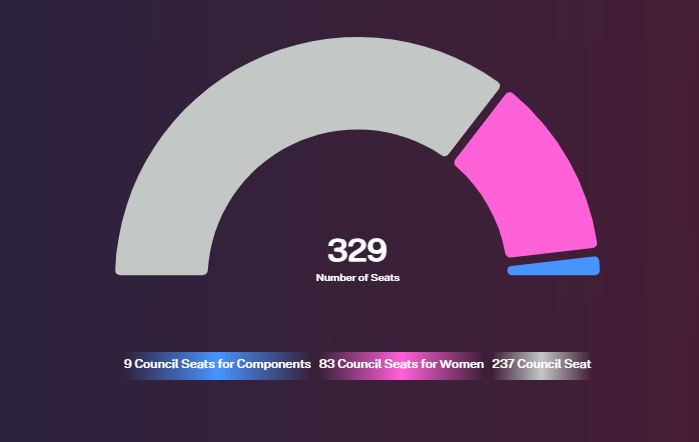
- Women and Minority Representation: Women hold 83 seats across provinces; minorities have dedicated quota seats firmly maintained at 9 seats.
A Democratic Success with Diverse Front-Runners
Despite the vociferous push by influential leaders and groups for a mass boycott of the November 2025 elections, the decision to keep Iraq on its democratic foot, however fragile, was finally taken by the people of Iraq. The election results indicate a diverse representation of the electorate’s choice between the established, the new, and emerging political actors. It also signals renewed hope for the future of political participation with voter turnout at 56.11%, a surprisingly high figure considering public frustrations with the ruling class and boycott campaigns. The November voter turnout offers a picture of continuum against the backdrop of internal competition and political wrangling. With analysts and outlier political actors predicting a low pre-election turnout of 30%, the high turnout came as the most surprising election result that will strengthen the democratic transfer of power as Iraqis remained committed to participating in their country’s democratic process.
The election results indicate a diverse representation of the electorate’s choice among established, new, and emerging political actors. They also signal renewed hope for the future of political participation with a voter turnout at 56.11%, despite public frustrations and boycott campaigns.
The second election highlight was the relative victory by the incumbent Prime Minister Mohammed Shia al-Sudani’s Reconstruction and Development Coalition by becoming the leading bloc with 46 seats. Led by former Prime Minister Nouri Maliki, the State of Law Coalition came in second and gained 29 seats. The Sunni parties also saw increased votes, with the Taqaddum party securing 27 seats. Baghdad leads as the largest province, commanding 71 seats, followed by Basra with 25 seats and Nineveh with 34. The election results show that the southern provinces mostly voted in favor of the Sudain’s coalition along with allied Shiite factions, specifically Sadiqoon with 28 seats and the Badr organization with 21 seats. On the contrary, the Nineveh and Anbar turnout indicated Sunni strongholds with significant support for the Taqaddum Party.
The Kurdish parties from the Kurdistan Region also fared well, with the Kurdistan Democratic Party (KDP) securing 27 seats and over 1 million votes, by far the highest number of votes gained by a single political party/coalition in the November vote. However, according to the amended Iraqi election law, which is based on the proportional system of representation, votes do not correspond with parliamentary seats. The Patriotic Union of Kurdistan (PUK) gained ground with 18 seats (up 1 seat from 2021), followed by the new entrant opposition party Halwest with 5 seats. The New Generation Movement (NGM) experienced a significant decline in the voter base, dropping from its 2021 secured 9 seats to only 3 seats. Despite the collective success of the Kurdish parties, their seats see a decline from 63 to a total of 58 in the 329-member parliament, and thus limiting their overall leverage and influence over policymaking in the next parliament.
While independent candidates secured 43 seats in the 2021 parliamentary elections, their inability to capture any seats in the 2025 vote stands out as one of the most striking outcomes of the election.
Quick snapshots:
• Turnout: 56.11%
• Votes Cast: over 12 million
• Valid Ballots: approximately 11,267,161
• Invalid or abstained Ballots: 729,923
While independent candidates secured 43 seats in the 2021 parliamentary elections, their inability to secure any seats in the 2025 vote remains one of the most striking outcomes of the election. Due to internal challenges around political organization and capability to mobilize voters outside deep-rooted party structures, where established parties and coalitions maintain strong bases, a swift decline/downturn for civil political forces is largely noticeable. Minority seats, which stand at 9 quota seats, also shifted noticeably given that candidates who were backed by larger parties gained ground such as the KDP in Duhok, while candidates backed by smaller parties like the Babylon Movement saw losses comparatively.
| Election Year | Total Registered Voters | Number of Independent Candidates | Seats Won by Independents | Invalid or Abstained Votes | Voter Turnout |
| 2021 | 22,116,368 | 789 | 43 | 775,576 | ~41% |
| 2025 | 21,404,291 | 75 | 0 | 729,923 | 56.11% |
Kurdish provinces recorded the highest voter turnout, ranging from 60% to nearly 78%, demonstrating strong voter mobilization, mostly due to nationalistic motives.
High Voter Turnout Comes as Biggest Surprise
Overall, the election process indicates a strikingly higher voter turnout rate compared to the 2021 elections, which stood at only 41%, the lowest since Iraq’s first parliamentary elections in 2005. Kurdish provinces recorded the highest voter turnout, ranging from 60% to nearly 78%, demonstrating strong voter mobilization, mostly due to nationalistic motives. In contrast, lower turnout was in Arab provinces like Najaf and Maysan, where turnout hovered around 43.67% and 42.18%. Additionally, the voice of dissent and boycott expressed through the cast ballots remains similar to the 2021 vote, where out of 8,854,025 valid ballots, 775,576 were invalid. In this election, out of approximately 21.4 million registered voters, more than 12 million Iraqis voted and 729,923 were invalid or abstained votes.
The numerical similarity between the invalid votes in 2021 and 2025 signals a trend rather than an anomaly, in contrast to the premature claims by some boycotting or opposition parties.
Nonetheless, while an invalid vote may indicate voter error in filling out the ballot accurately, it is also used as a deliberate tool for protest, hinting at political disengagement and dissatisfaction. The numerical similarity between the invalid votes in 2021 and 2025 signals a trend rather than an anomaly, in contrast to the premature claims by some boycotting or opposition parties. One of the distinguishing factors in this election, which in no way had bearing on the results and outcome of the process, was the absence of UNAMI as an active but independent partner or observer. As UNAMI’s mandate is winding down and expected to end by December 31, 2025, per Iraq's request and UN Security Council Resolution 2732, Iraq’s electoral success signals important progress toward the country’s capacity to oversee a democratic process more independently. The higher turnout also reflects heightened public trust and engagement in the election process, suggesting improved legitimacy and effectiveness of the electoral entity, namely the Iraqi High Electoral Commission ( IHEC).
Voter Turnout and Overall Results in Numbers
| Province | Voter Turnout (%) | Total Seats | Women Seats | Minority Seats |
| Baghdad | 48.86 | 71 | 17 | 2 |
| Nineveh | 65.22 | 34 | 8 | 3 |
| Kirkuk | 65.23 | 13 | 3 | 1 |
| Saladin | 66.98 | 12 | 3 | 0 |
| Sulaymaniyah | 60.47 | 18 | 5 | 0 |
| Erbil | 71.82 | 16 | 4 | 1 |
| Duhok | 77.61 | 12 | 3 | 1 |
| Najaf | 43.67 | 12 | 3 | 0 |
| Basra | 51.10 | 25 | 6 | 0 |
| Diyala | 57.45 | 14 | 4 | 0 |
| Dhi Qar | 48.97 | 19 | 5 | 0 |
| Karbala | 47.56 | 11 | 3 | 0 |
| Muthanna | 50.86 | 7 | 2 | 0 |
| Qadisiyah | 49.27 | 11 | 3 | 0 |
| Anbar | 66.81 | 15 | 4 | 0 |
| Maysan | 42.18 | 10 | 3 | 0 |
| Wasit | 47.72 | 12 | 3 | 1 |
| Babil | 50.86 | 17 | 4 | 0 |
The Sadiqoon Movement increased its seats from 9 in 2021 to 27 in the 2025 elections, gaining 18 seats-the largest increase among all parties compared to the previous election.
| Party/Coalition | Total Seats | Gains/Losses from 2021 |
| Reconstruction and Development (Al-Ima’ar Wal Tanmiya) | 46 | New |
| Taqaddum Party | 27 | -10 |
| State of Law Coalition (E’tilaf Dawlat al-Qanoun) | 29 | -4 |
| Badr Organization | 21 | New |
| Sadiqoon Movement | 27 | +18 |
| Kurdistan Democratic Party (KDP) | 27 | -4 |
| Patriotic Union of Kurdistan (PUK) | 18 | +1 |
| National State Forces Alliance Tahaluf Quwa al-Dawla al-Wataniyah) | 18 | +14 |
| Al-Azem (Tahaluf Azm al-Iraq) | 15 | +1 |
| Al-Asas | 8 | New |
| Ishraqat Kanoon | 7 | +1 |
| Hoqouq | 6 | Retained |
| Tasmim | 6 | +1 |
| Province | Total Minority Seats | Minority Groups / Seat Holders (examples) |
| Baghdad | 2 | Evan Faeq (Christian), Bassam Zuhairi (Sabean) |
| Nineveh | 3 | Waad al Qaddo (Shabak), Khaled Sido (Yazidi), Aswan Sawa (Christian) |
| Kirkuk | 1 | Imad Yokhana Yaqo Yokhana al-Imadi (Minority quota) |
| Erbil | 1 | Caldo Ramzi Shabu Ogna (Christian) |
| Duhok | 1 | Sami Oshana Korkis Anouya (Christian) |
| Wasit | 1 | Haidar Ali Mohammad Ali al-Hamoundi (Feyli Kurd quota) |
| Province | Invalid/Abstained Votes |
| Sulaymaniyah | 137,611 (highest) |
| Erbil | 116,900 |
| Baghdad | 105,384 |
| Nineveh | 48,131 |
| Duhok | 34,694 |
| Diyala | 34,177 |
| Basra | 29,733 |
| Kirkuk | 29,490 |
| Anbar | 26,782 |
| Dhi Qar | 25,303 |
| Salahaddin | 25,189 |
| Babil | 24,424 |
| Karbala | 18,078 |
| Najaf | 17,655 |
| Diwaniyah | 17,207 |
| Maysan | 15,499 |
| Wasit | 14,604 |
| Muthanna | 9,062 |
| Total | 729,923 |
The Road Ahead
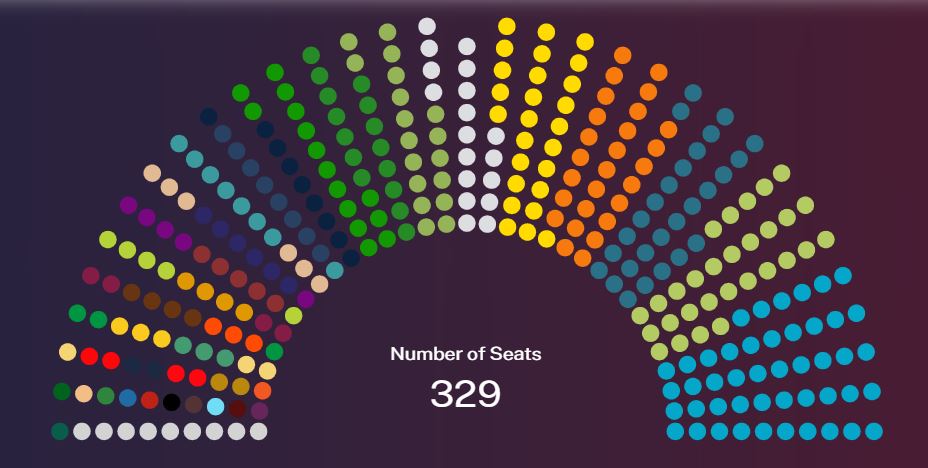
The new parliament is fragmented with no party or coalition winning an outright majority. This situation will make forming a functioning government challenging, as various groups, including Kurdish factions and southern Shiite blocs, must negotiate alliances and consider several pathways to form a majority bloc. The Kurdish parties and their divided stance mean their role in government formation will be both critical and unpredictable. In south of Iraq, Shiite Arab blocs aligned with Sudani’s coalition will likely seek to consolidate power, but the diversity of political actors means negotiations will be protracted. The possible tilt in the balance of power suggests that Iraq’s political stability and policy direction will depend on the ability of political elites to forge workable coalitions. And since no party commands a majority, coalition talks will likely be obstructed by deep divisions in the parliament.
Nonetheless, statements among parties and coalitions seem to hint at an overall agreement over a prime minister who is an administrator of the state rather than a political leader. The elections, similar to 2021, still underline the importance of coalition-building as the only way to form a stable government with a previously agreed upon arrangement under Iraq’s power-sharing conventions, also called the Muhasasa system, which gives the President of the Republic to the Kurds, the Prime Minister to the Shiia, and the Speaker of Parliament to the Sunni Arabs.
The elections highlight ongoing challenges for Iraq’s democracy and government, including political divisions and regional influence. The struggle between Baghdad’s central government and Kurdish regional authority remains important. International and regional powers like Iran and the US also influence political alliances in Iraq. Political fragmentation and voter distrust continue to slow democratic progress, highlighting the need for institutional reforms and greater political inclusion.
Constitutional procedures for the formation of a cabinet start after approval of all appeals through Iraqi High Electoral Commission (IHEC) and federal supreme court. After the complete ratification of the election results, the following are to take place:
- Parliament convenes: Within 15 days, the President of Iraq calls the new parliament to hold its first session, during which the parliamentary leadership is elected.
- Election of the President: Within 30 days, parliament must elect a new President of the Republic.
- Nomination of the Prime Minister: The newly elected President has 15 days to assign the candidate from the “largest parliamentary bloc” to form a government.
- Formation of the Cabinet: The designated prime minister then has 30 days to present the cabinet lineup and secure parliament’s confidence.
Appendix: Complete Breakdown of Seats by Province (IHEC data)
Baghdad: 71 seats
| Political Party/Alliance | Votes | Seats Won | Minority |
| Al-Ima’ar Wal Tanmiya (Reconstruction and Development) | 411,300 | 15 | |
| Taqaddum Party | 277,416 | 10 | |
| State of Law Coalition (E’tilaf Dawlat al-Qanoun) | 228,300 | 9 | |
| National State Forces Alliance (Tahaluf Quwa al-Dawla al-Wataniyah) | 138,904 | 5 | |
| Sadiqoon | 128,249 | 5 | |
| Al-Azm Alliance (Tahaluf Azm al-Iraq) | 128,122 | 5 | |
| Badr Organization | 116,704 | 4 | |
| National Sovereignty Alliance (Tahaluf Siyada al-Watani) | 110,037 | 4 | |
| Al-Asas Al-Iraqi | 104,164 | 4 | |
| Huqooq | 77,763 | 3 | |
| Al-Hasm al-Watani | 53,143 | 2 | |
| Absher Ya Iraq | 38,762 | 1 | |
| Khadamat alliance | 37,933 | 1 | |
| Ishraqat Kanoon | 23,288 | 1 | |
| Evan Faeq (Individual - Christian quota) | 13,137 | – | Minority quota |
| Bassam Zuhairi (Individual - Sabean quota) | 5,410 | – | Minority quota |
Najaf: 12 seats
| Political Party/Alliance | Votes | Seats Won |
| Al-Ima’ar Wal Tanmiya (Reconstruction and Development) | 56,464 | 2 |
| National State Forces Alliance (Tahaluf Quwa al-Dawla) | 45,224 | 2 |
| State of Law (Dawlat Al-Qanoun) | 41,173 | 2 |
| Sadiqoon | 40,338 | 2 |
| Khadamat (Services) | 33,000 | 1 |
| Abshir Ya Iraq | 32,706 | 1 |
| Foundation (Al-Asas) | 27,657 | 1 |
| Ishraqat Kanoon | 24,823 | 1 |
Muthanna: 7 seats
| Political Party/Alliance | Votes | Seats Won |
| Al-Ima’ar Wal Tanmiya (Reconstruction and Development) | 57,411 | 2 |
| State of Law (Dawlat Al-Qanoun) | 41,408 | 2 |
| Sadiqoon | 37,183 | 1 |
| National State Forces Alliance (Tahaluf Quwa al-Dawla) | 34,740 | 1 |
| Foundation (Al-Asas) | 32,817 | 1 |
Qadisiyah (al-Diwaniyah): 11 seats
| Political Party/Alliance | Votes | Seats Won |
| Al-Ima’ar Wal Tanmiya (Reconstruction and Development) | 70,953 | 3 |
| State of Law (Dawlat Al-Qanoun) | 52,568 | 2 |
| Badr Organization | 35,073 | 2 |
| Sadiqoon | 34,490 | 1 |
| National State Forces Alliance (Tahaluf Quwa al-Dawla) | 31,123 | 1 |
| Services (Khadamat) | 30,937 | 1 |
| Ishraqat Kanoon | 22,102 | 1 |
Al-Anbar: 15 seats
| Political Party/Alliance | Votes | Seats Won |
| Taqaddum Party | 212,838 | 5 |
| Al-Anbar Is Our Identity Alliance (Al-Anbar Huwiyyatuna) | 128,325 | 3 |
| Qimam Coalition | 97,635 | 3 |
| Al-Azm Alliance (Tahaluf Azm al-Iraq) | 78,446 | 2 |
| Al-Tafawwuq | 47,074 | 1 |
| Sovereignty Alliance (Al-Siyada) | 40,820 | 1 |
Nineveh: 34 seats
| Political Party/Alliance | Votes | Seats Won | Minority |
| Kurdistan Democratic Party (KDP) | 189,535 | 5 | |
| Taqaddum Party | 157,958 | 4 | |
| Al-Ima’ar Wal Tanmiya (Reconstruction and Development) | 146,859 | 4 | |
| Ninawa Li Ahliha (Nineveh for Its People) | 111,225 | 3 | |
| Al-Azm Alliance (Tahaluf Azm al-Iraq) | 101,035 | 3 | |
| Al-Hasm al Watani (Determination) | 86,656 | 2 | |
| Badr Organization | 77,046 | 2 | |
| Sovereignty Alliance (Al-Siyada) | 64,545 | 2 | |
| Ahl Ninawa (Nineveh's People Union) | 56,420 | 2 | |
| Al Mashrou' Al Arabi Fi al-Iraq (Arabic Project in Iraq) | 54,573 | 1 | |
| National Identity Alliance (Tahaluf al-Huwiyyah al-Wataniyah) | 50,200 | 1 | |
| Yazidi Cause Alliance (Tahaluf al-Qadiyah al-Yzidiyah) | 49,211 | 1 | |
| Al-Jamahir al-Wataniya | 37,381 | 1 | |
| Waad al Qaddo (Individual - Shabak minority seat) | 10,501 | - | Minority quota |
| Khaled Sido (Individual - Yazidi minority seat) | 9,687 | - | Minority quota |
| Aswan Sawa (Individual - Christian minority seat) | 6,234 | - | Minority quota |
Kirkuk: 13 seats
| Political Party/Alliance | Votes | Seats Won | Minority |
| Patriotic Union of Kurdistan (PUK) | 178,845 | 4 | |
| Taqaddum Party | 107,037 | 3 | |
| Iraqi Turkmen Front | 66,179 | 2 | |
| Kurdistan Democratic Party (KDP) | 59,374 | 1 | |
| Arab Alliance in Kirkuk | 53,046 | 1 | |
| Al-Azm Alliance (Tahaluf Azm al-Iraq) | 46,412 | 1 | |
| Imad Yokhana Yaqo Yokhana al-Imadi (Individual - Minority quota) | 17,680 | – | Minority quota |
Erbil: 16 seats
| Political Party/Alliance | Votes | Seats Won | Minority |
| Kurdistan Democratic Party (KDP) | 369,724 | 9 | |
| Patriotic Union of Kurdistan (PUK) | 97,411 | 3 | |
| National Stance Movement (Harakat al-Mawqif al-Watani) | 63,298 | 2 | |
| New Generation Movement (NGM) | 38,921 | 1 | |
| Caldo Ramzi Shabu Ogna (Individual - Christian quota) | 18,517 | – | Minority quota |
Salahadin: 12 seats
| Political Party/Alliance | Votes | Seats Won |
| Taqaddum Party | 82,870 | 2 |
| Al-Ima’ar Wal Tanmiya (Reconstruction and Development) | 80,528 | 2 |
| Al-Azm Alliance (Tahaluf Azm al-Iraq) | 74,783 | 2 |
| Al-Jamaheer al-Wataniya | 67,368 | 2 |
| Tahaluf Salahuddin al-Muwahad (Unified Alliance) | 57,150 | 1 |
| Tahaluf Sharakatuna | 50,980 | 1 |
| Al-Hasm al-Watani (Determination) | 41,378 | 1 |
| Tafawuq Alliance | 37,252 | 1 |
Sulaymaniyah: 18 seats
| Political Party/Alliance | Votes | Seats Won |
| Patriotic Union of Kurdistan (PUK) | 241,143 | 8 |
| National Stance Movement (Harakat al-Mawqif al-Watani) | 75,375 | 3 |
| New Generation Movement (Al-Jeel Al-Jadeed) | 69,781 | 2 |
| Kurdistan Democratic Party (KDP) | 68,834 | 2 |
| Kurdistan Islamic Union (KIU) | 65,312 | 2 |
| Kurdistan Justice Group | 34,563 | 1 |
Duhok: 12 seats
| Political Party/Alliance | Votes | Seats Won | Minority |
| Kurdistan Democratic Party (KDP) | 413,890 | 9 | |
| Kurdistan Islamic Union (KIU) | 72,986 | 2 | |
| Sami Oshana Korkis Anouya (Individual - Christian quota) | 22,838 | – | Minority quota |
Maysan: 10 seats
| Political Party/Alliance | Votes | Seats Won |
| Al-Ima’ar Wal Tanmiya (Reconstruction and Development) | 67,122 | 3 |
| Badr Organization | 41,029 | 2 |
| State of Law (Dawlat Al-Qanoun) | 34,706 | 2 |
| Sadiqoon | 34,590 | 2 |
| National State Forces Alliance (Tahaluf Quwa al-Dawla al-Wataniyah) | 31,744 | 1 |
Diyala: 14 seats
| Political Party/Alliance | Votes | Seats Won |
| Badr Organization | 105,346 | 3 |
| Taqaddum Party | 101,691 | 3 |
| National Sovereignty Alliance (Tahaluf Siyada al-Watani) | 77,496 | 2 |
| Sadiqoon | 55,409 | 2 |
| Al-Azm Alliance (Tahaluf Azm al-Iraq) | 54,939 | 2 |
| Diyala First (Diyala Awalan) Coalition | 53,469 | 1 |
| Thabitoon | 30,449 | 1 |
Wasit: 12 seats
| Political Party/Alliance | Votes | Seats Won | Minority |
| Wasit Al-Ajmal Alliance | 106,152 | 4 | |
| State of Law Coalition (E’tilaf Dawlat al-Qanoun) | 58,385 | 2 | |
| Al-Ima’ar Wal Tanmiya (Reconstruction and Development) | 51,269 | 2 | |
| Sadiqoon | 37,291 | 2 | |
| National State Forces Alliance (Tahaluf Quwa al-Dawla al-Wataniyah) | 35,794 | 1 | |
| Haidar Ali Mohammad Ali al-Hamoundi (Individual - Feyli Kurd quota) | 17,188 | – | Minority quota |
Basra: 25 seats
| Political Party/Alliance | Votes | Seats Won |
| Tasmim Alliance | 173,761 | 6 |
| Sadiqoon Movement | 151,274 | 5 |
| Al-Ima’ar Wal Tanmiya (Reconstruction and Development) | 126,077 | 4 |
| State of Law Coalition (E’tilaf Dawlatal-Qanoun) | 69,445 | 2 |
| National State Forces Alliance (Tahaluf Quwa al-Dawla) | 54,652 | 2 |
| Huqooq | 49,545 | 2 |
| Badr Organization | 47,327 | 1 |
| Absher Ya Iraq | 44,584 | 1 |
| Al-Faw Zakho Coalition | 31,972 | 1 |
| Al-Asas Al-Iraqi | 31,718 | 1 |
Dhi Qar: 19 seats
| Political Party/Alliance | Votes | Seats Won |
| Al-Ima’ar Wal Tanmiya (Reconstruction and Development) | 80,892 | 3 |
| State of Law (Dawlat Al-Qanoun) | 74,563 | 3 |
| Sadiqoon Movement | 61,696 | 3 |
| National State Forces Alliance (Tahaluf Quwa al-Dawla al-Wataniyah) | 46,607 | 2 |
| Badr Organization | 44,421 | 2 |
| Sumeriyoun Movement | 36,611 | 1 |
| Services (Khadamat) | 31,171 | 1 |
| Abshir Ya Iraq | 23,214 | 1 |
| Ishraqat Kanoon | 22,521 | 1 |
| Daam al-Dawla bloc | 21,615 | 1 |
| Huqooq | 21,184 | 1 |
Karbala: 11 seats
| Political Party/Alliance | Votes | Seats Won |
| Al-Ima’ar Wal Tanmiya (Reconstruction and Development) | 78,388 | 3 |
| State of Law (Dawlat Al-Qanoun) | 59,314 | 2 |
| Ishraqat Kanoon | 42,814 | 2 |
| Al-Asas Al-Iraqi | 27,715 | 1 |
| Sadiqoon | 26,816 | 1 |
| National State Forces Alliance (Tahaluf Quwa Al-Dawla) | 22,262 | 1 |
| Badr Organization | 20,299 | 1 |
Babil: 17 seats
| Political Party/Alliance | Votes | Seats Won |
| Al-Ima’ar Wal Tanmiya (Reconstruction and Development) | 91,424 | 3 |
| Sadiqoon | 79,566 | 3 |
| State of Law (E’tilaf Dawlatal-Qanoun) | 68,584 | 3 |
| Ishraqat Kanoon | 56,174 | 2 |
| National State Forces Alliance (Tahaluf Quwa al-Dawla al-Wataniyah) | 51,916 | 2 |
| Services (Khadamat) | 38,547 | 1 |
| Sumeriyoun Movement | 29,857 | 1 |
| Idrak | 28,491 | 1 |
| Badr Organization | 25,192 | 1 |
Editorial Note: The numbers reflect the official published numbers as of the time of this publication. This report is subject to editing in the event major amendments are made to the results by IHEC.
Content Type:Special Reports