 Hussein FALEH for AL-Monitor
 Water as National Security: Governance Lessons from Iran's Experience for Iraq
Executive Summary
Water scarcity threatens state stability across the Middle East. Iran’s 2025 water crisis showed how poor governance can turn climate stress into disaster-with five major dams running completely dry and Tehran’s main reservoir dropping to just 3% capacity. Iranian Energy Minister Abbas Aliabadi acknowledged "decades of mismanagement, corruption, and misplaced budgetary priorities” in the water sector. Iraq is now on the same path: upstream dams have reduced Tigris-Euphrates flows by 30%, the Marshes have mostly vanished, and Basra’s water supply is heavily salinized. Without urgent reforms, Iraq risks replicating Iran’s failure.
Introduction
Iraq ranks among the highest-risk countries for water scarcity globally, recently endured its worst drought since 1933, the rivers of Tigris and Euphrates flows by 30%, and still the urgent reforms remain absent.1 While drought and upstream dams impose significant pressure, the core issue is Iraq's deficient water governance. Iran's trajectory exemplifies how deficient water governance can turn climate stress into catastrophe: decades of mismanagement and overuse have left Iran on the brink. Nearly all provinces are facing shortages, and officials have even warned that Tehran might need mass evacuation.2
Iraq's nascent water governance lies at the heart of its water crisis, and without reforms to water pricing, agricultural policy, infrastructure management, and anti-corruption measures, the country's stability will steadily erode.3 This paper compares the key governance failures of Iran and Iraq, distills lessons from Iran’s failures, and offers policy recommendations to enable Iraq to avoid a comparable trajectory.
Key Takeaways
- Water scarcity in Iran and Iraq is primarily a governance failure, not a natural inevitability alone.
- Agricultural subsidies drive unsustainable water use in both countries.
- Infrastructure choices can worsen scarcity when politics overrides science.
- Iraq still has a narrowing window to avoid Iran’s “Day Zero” outcome.
Section I: Policy Failures –Mismanagement and Misaligned Incentives
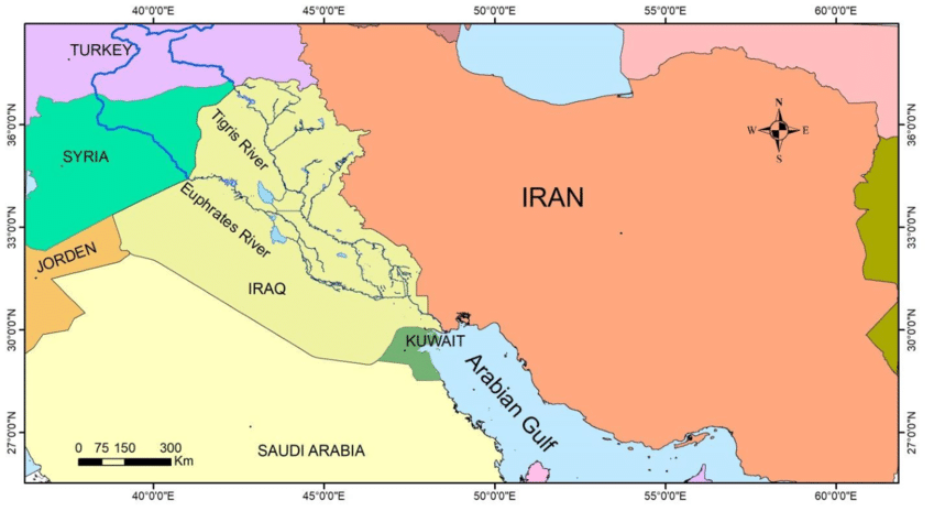
Iran and Iraq are two neighboring countries that suffer from water crises due to policy failures. These include the excessive water use driven by population growth, the constant extraction of groundwater, and misaligned agriculture policies. The following sections explain the structural failures of water management and the lessons learned in each country.
Subsidized Water and Over-Extraction
Iran and Iraq have treated water as a free commodity to exploit, rather than a finite resource to manage, disregarding the escalation of the Middle East climate crisis.5 In Iran, 90% of water withdrawal goes to agriculture, generating $40 billion in economic output while imposing an environmental cost of $44 billion.6 The government subsidized electricity for farmers to withdraw the groundwater and lowered the water fees to secure political support from the agriculture sector. This solution could be beneficial for farmers in the short term, but it has caused long-term environmental damage.
Around Lake Urmia alone, more than 70,000 illegal wells have been drilled for agriculture, driving one of Iran’s most extreme cases of water depletion7
Gulf International Forum
Iran‘s water consumption relies heavily on groundwater; aquifer recharge rates cannot keep pace with the rapid extraction. This is the primary factor causing falling water tables and land subsidence in most provinces. Despite the "water bankruptcy,” the government has avoided cutting the subsidies or controlling the wells because it views such measures as politically risky.
Overuse is exacerbated by multiple factors, like having virtually free electricity and water to pump, and even during the drought, farmers illegally drill deeper wells to access water canals.8
Iraq faces similar challenges regarding agriculture subsidization, with approximately 80-85% of the water allocated to agriculture.9 Farmers in Iraq continue to rely on flood irrigation, which encourages over-extraction of groundwater. The canal infrastructure is poorly constructed and deteriorated, resulting in substantial water loss.
Policy Note: The absence of comprehensive water pricing reform and sustainable management practices in Iraq and Iran has failed to incentivize the farmers to conserve water, resulting in unsustainable water use, and depleting finite resources for temporary gains. Addressing this crisis requires fundamental reforms to the water pricing structure.
Misaligned Agricultural Priorities
Agricultural strategies that undermine water scarcity exacerbate both countries' weak water policies. The government of Iran pursued self-sufficiency as a pillar of the “resistance economy,” which was meant to defy the international sanctions imposed on Iran. The government of Iran pushed for greater reliance on domestic production, such as by expanding agricultural projects into dry regions unsuitable for farming.10 Iran is encouraging farmers to grow water-intensive crops like pistachios and saffron to generate export revenue. The 2023-2028 government plan aims for 90% self-sufficiency in crops. However, this target is unrealistic since agriculture wastes 40 billion cubic meters of water annually due to inefficient farming practices.11
Meanwhile, Iraq also historically prioritized growing staple crops like wheat and rice through government purchases and subsidies. Iraq was exporting grains, but it was not sustainable due to declining water supplies. In 2018, the Iraqi government banned rice planting due to severe water shortages.12 The restriction led to increased pressure on limited irrigation supplies, especially since agricultural policy has not adapted to ongoing new climate changes. Despite projections showing 30-40% declines in river flows over four decades, agricultural planning has failed to adapt systematically—instead of relying on reactive measures like the 2018 rice ban rather than proactive water-conscious crop policies. This planning failure leaves farmers planting traditional crops with inadequate water allocations, resulting in recurring crop failures, including 37% wheat yield losses in 2021.13
Policy Note: Both countries share this experience, and agricultural planning must be based on actual water availability, especially during water crises exacerbated by climate change. Both governments must stop investing in short-term agricultural goals and instead maximize water use efficiency. They must invest more in modern irrigation to reduce waste, even though this transition might harm some rural communities.
Urban Usage and Water Losses
Despite the risks associated with climate change, both Iraq and Iran suffer from serious water mismanagement issues. Tehran, for instance, sustains pre-drought consumption rates amid reservoir depletion. The urban water is heavily subsidized for consumers, and the public is largely in denial of the severity of the crisis. Infrastructure in Iran in multiple cities is dilapidated14; Iraq’s water pipeline is not in the best condition either. For example, in Basra, water treatment and pipelines are so severely outdated that a significant amount of water is leaking before it reaches the taps.15 In Iraq, frequent power cuts during the summer disrupt the pumping and treatment of water.
The problem stems less from citizens' waste and more from systemic failure that leads to poor maintenance and insufficient investment in infrastructure.
Policy Note: socially, the Iraqi public lacks awareness regarding water and climate issues.16 The lesson for Iraq is to improve water management while possible and avoid Iran’s failure of delaying action until reservoirs are nearly empty-a point of noreturn. This includes implementing water pricing policies that reflect scarcity and penalize excessive use, which is a critical component of reform. Moreover, prioritizing climate adaptation and mitigation could give Iraq a strategic advantage over Iran as the country grapples with water management issues.
Corruption and Governance Gaps
One of the most significant causes is policy failure and weak governance in the water sectors in Iran and Iraq. In Iran, scholars and activists describe the phenomenon as the ”Water Mafia”- official companies and elites who profited from water projects while undermining long-term sustainability.17 The supreme water council of Iran, the country's top water policy body, has essentially functioned as a rubber stamp for elite interests controlled by the energy ministry and powerful construction companies rather than independent experts.18 The council has consistently favored large dams and irrigation projects while ignoring environmental damage.19 Khatam-al-Anbiya, the Islamic Revolutionary Guard Corps, (IRGC’s ) engineering arm, secured no-bid contracts for major dams like Khandab and Gotvand, transforming water infrastructure into multi-million-dollar revenue streams amid environmental collapse.20
In Iraq, corruption in water management is less centralized but still debilitating. Years of conflicts and politicization have resulted in weakened institutions. Water funding often disappears due to mismanagement or is diverted through patronage networks. For instance, powerful tribes and militias exert more control over water than the state itself.21
Policy Note: The lesson for water governance is transparency and the rule of law to secure water. For Iraq, Iran's experience warns that when decision-making is captured by narrow interests, the result is environmental disaster, as evidenced by Iran’s 2025 water crisis.
Section II: Climate Change as a Risk Multiplier
Climate change is often cited as a culprit in the Middle East’s water woes, and indeed it poses serious risks, but it is best understood as a risk multiplier rather than the sole cause. In Iran and Iraq, climate shifts (i.e. higher temperatures, more frequent droughts, erratic rainfall,etc.) have intensified water shortages in addition to governance failures. This table explores how climate change is impacting both countries and amplifying security risks, while emphasizing that effective governance could greatly mitigate these impacts.
| Impact Category | Iran Case Study | Iraq Case Study | Shared/Regional Trends |
| Rising Temperatures & Rainfall | - Persistent Drought: 5th consecutive year (2020-2025); Tehran at evacuation risk22. - Driest summer in 20 years (2024) 23 | - Driest year on record since 1933 (2025)24 - High UN vulnerability ranking25 | - Dust storms up 30%; 10,000+ hospitalizations26 |
| Hydrological & Supply Impact | - Dam storage down 15%; 60% dams <50% capacity (2025)27 | - Tigris/Euphrates flows down 27% 28 | - 2025 floods after drought29 - Irrigation demand up 20%30 |
| Governance & Security Multiplier | - Groundwater over-extraction; agriculture uses 90% water31 - 70%+ blame mismanagement32 | - Wheat harvests down 50-70%; imports doubled33 | - Transboundary disputes rising (Nile, Tigris-Euphrates, Helmand34 |
| Policy Implications | - Emergency rationing (2025)35 - National Climate Plan (Oct 2025)36 | - Drip irrigation plans (2025)37 | - "Structural crisis from mismanagement"38 |
Section II: Climate Change as a Risk Multiplier
Infrastructure plays a dual role in water management. Infrastructure can conserve water when efficient but poorly planned or neglected projects often worsen scarcity. This phenomenon happens when politics outweighs science. Iraq has historically suffered from low investment in water infrastructure due to war and persistent conflict. This has created a weak system with insufficient capacity to handle additional stress from climate change. This section explores how the infrastructure of dams, canals, and reservoirs affects both countries.
Iran’s Dam Construction Spree
Few countries have built as many dams as Iran has in recent decades. In 2015, Iran had 647 dams in operation: 523 of them were large dams with a capacity of 50 billion cubic meters.39 Local companies and Iran‘s Islamic Revolutionary Guard Corps, (IRGC), constructed most of the dams after 1979. The aim was to store water for irrigation and hydropower, but the system was unsustainable. The strategy prioritized construction over ecological systems.40 Lake Urmia and Hamoun wetland illustrate this problem. Dams built around blocked natural water flows, causing severe ecological degradation.41 In another case, the Gotvand Dam on the Karun River caused a major salinity problem due to an inadequate geological survey.42 The reservoir exerted pressure on underground salt deposits. As the reservoir filled, the stored water became brackish, damaging downstream farms.43 Experts in Iran note that many projects bypassed proper environmental studies; assessments only occurred after damage had already been done, which is the primary cause of dried wetlands across the country.
Policy Note: The lesson is that big infrastructure projects provide a false sense of security while offering only temporary benefits. Despite Iraq’s relatively few dams, Iran’s experience warns against pursuing large infrastructure projects without adequate environmental planning.
Iraq’s Infrastructure Challenges
Most of Iraq’s dams were built in the mid-20th century (Mosul, Haditha, Diyala, etc.), and they still provide the essential storage and hydropower. The issue with Iraq’s dams is that they are aging and need rehabilitation.44 The Mosul dam in northern Iraq, which is built on Karstic rock (soluble), has an unstable foundation and requires constant grouting to prevent collapse.
Ongoing conflict has systematically prevented essential maintenance, as detailed below:
| Conflict Periods | Impact on Maintenance |
| Iran-Iraq War (1980–1988) | Disrupted initial grouting |
| Gulf Wars (1991- 2003) | Resource diversion; halted programs45 |
| ISIS Insurgency (2014) | Occupied site; grouting stopped, worsening voids.46 |
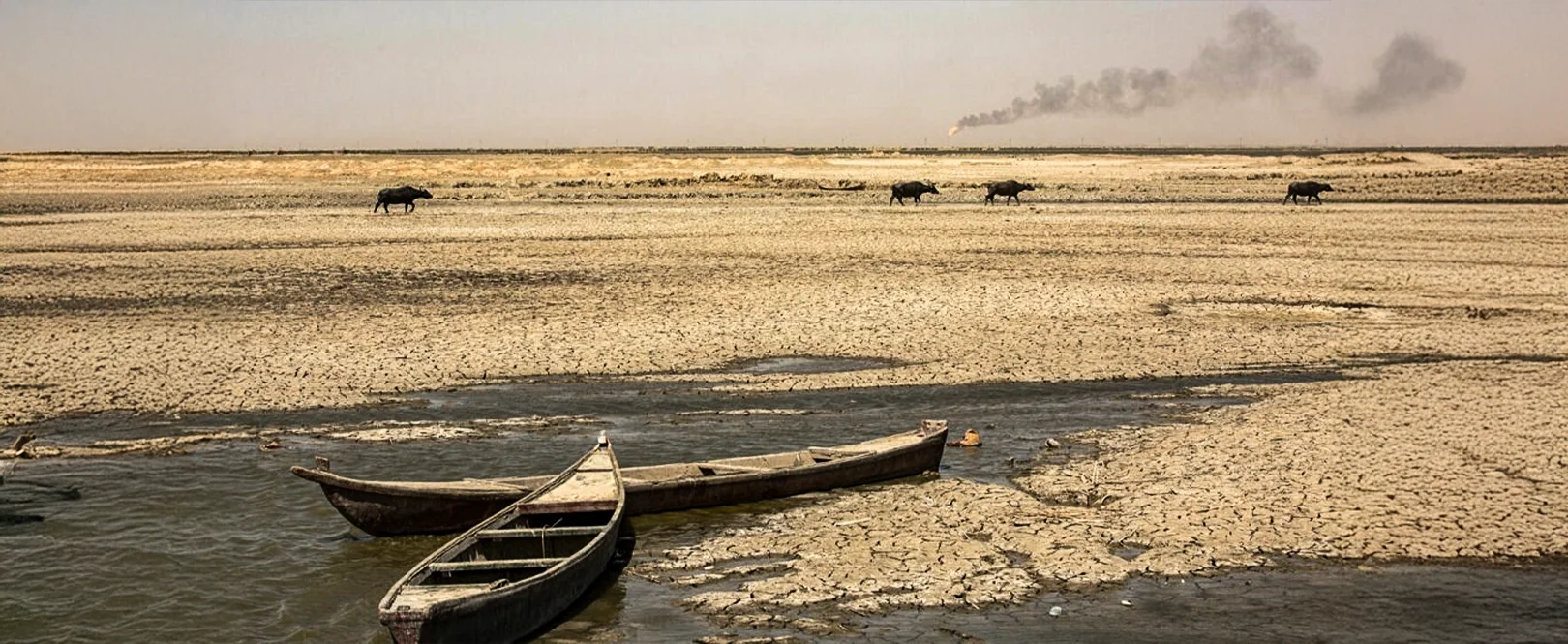
In agriculture, Iraq is not fully modernized; instead of using line canals or pipes, the country still relies on open earth canals. The negative effects of these open earth canals include losing large amounts of water through evaporation and seepage that occur before the water reaches its intended target. In southern Iraq during the Saddam Hussein era, the government constructed another form of maladaptive infrastructure: a drainage system that destroyed the Marshes beginning in 1990. It was one of the biggest projects, called the “Third River” drain, which diverted water away from the wetland.47 The project's aim was political; to punish Marsh Arab communities who live in that area. The result was; it destroyed the largest wetland ecosystem. Iran’s problem has been building the wrong infrastructure, but Iraq’s challenge is not having the right infrastructure.
Transboundary Infrastructure Issues
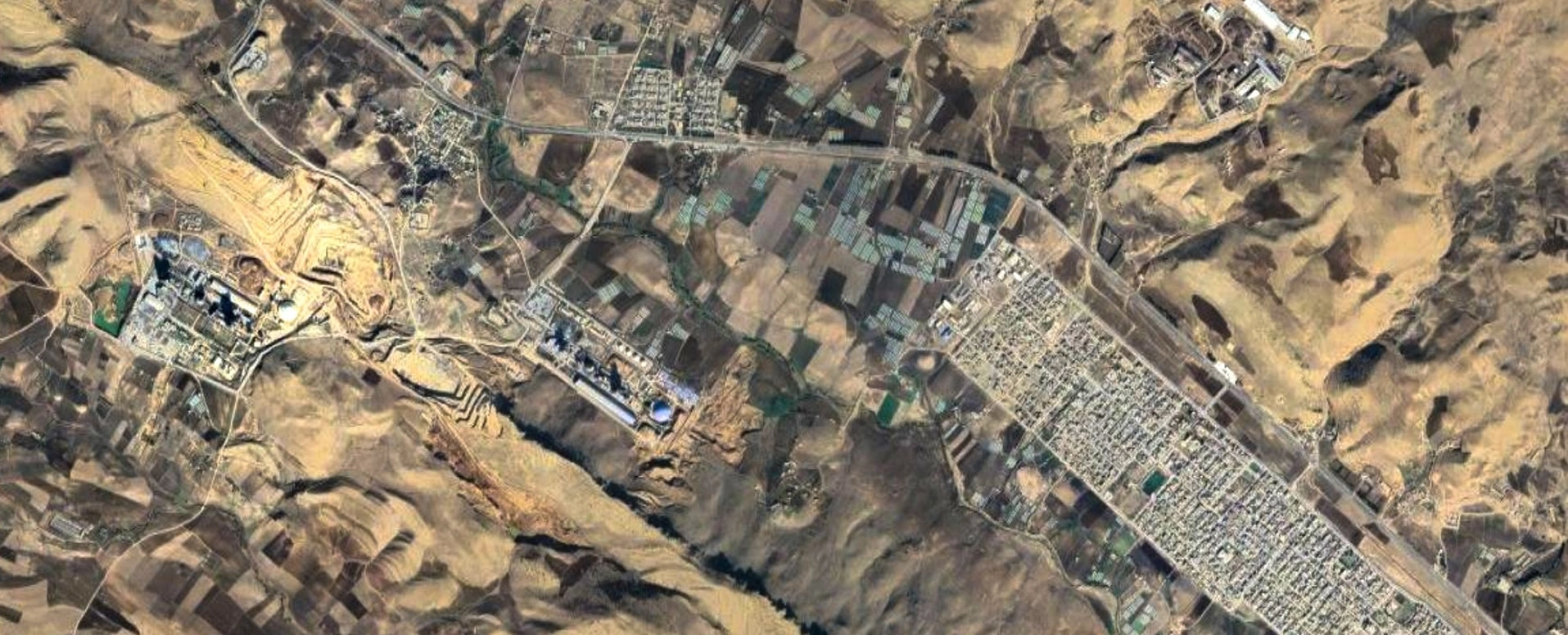
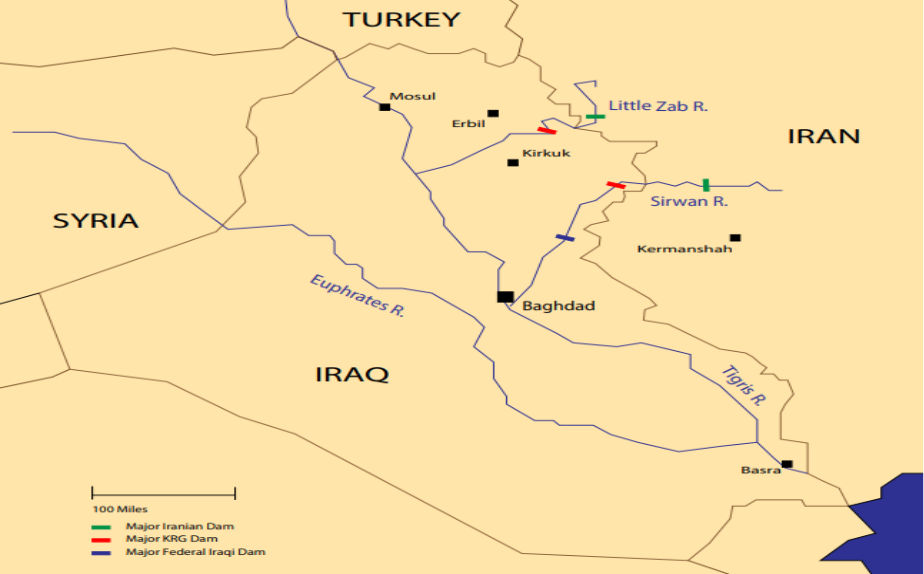
The issue of Iraq’s water infrastructure gaps is incomplete without acknowledging the role of upstream infrastructure controlled by the neighboring countries. Türkiye's Southeastern Anatolia Project (GAP) built more than 20 large dams on the Tigris and Euphrates that significantly reduced water flow to Iraq.48 Iran similarly faces concerns regarding Afghanistan’s dam projects, which may reduce water flows into Iranian territory.49 One of the most serious issues is the role Iranian dams play in reducing water flow to Iraq. Even though both countries share rivers, they must navigate their competing interests. The northwestern reaches of the Zagros Mountains flow into the KRI. The Little Zab flows through the Kirkuk governorate. The Sirwan River flows south through the Diyala Governorate and eventually meets the Tigris just below Baghdad. The Sirwan and the Little Zab are important for irrigation, while the Sirwan’s canal system is still linked to the Kirkuk Irrigation projects on the Little Zab. These two rivers alone supply about one-quarter of the Tigris's water in Iraq.50
Section IV: Socioeconomic Fallout – Migration, Displacement, and Unrest
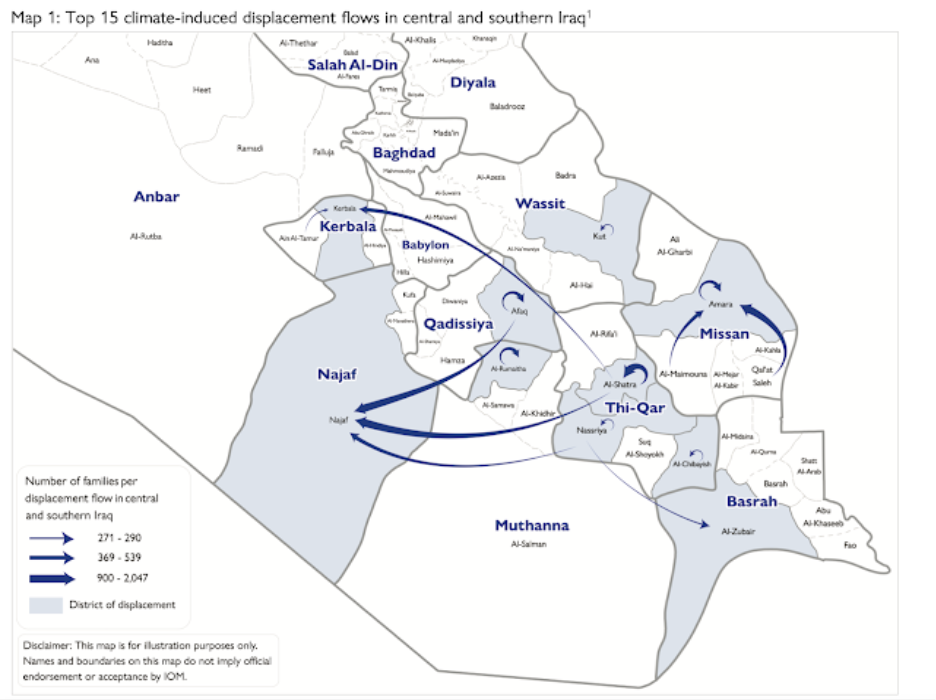
Water crises are not merely environmental or technical problems; they have profound human and social consequences. Iran and Iraq are witnessing how water scarcity can uproot communities, strain social fabric, and even fuel conflicts. This section examines the socioeconomic fallout of the water crises –focusing on migration (internal “water refugees” and displaced persons), the plight of vulnerable communities like the Marsh Arabs, and broader impacts on public health, livelihoods, and stability.
| Impact Category | Iran (The "Silent Exodus") | Iraq (Displacement & Instability) |
| Migration & Displacement | "Water refugees" failing to integrate into cities are intensifying social tensions, crime, and unemployment. Village Abandonment: Hundreds of villages in provinces like Sistan-Baluchestan have been emptied as water sources disappeared.52 | Mass Displacement: Over 140,000 Iraqis displaced by drought as of March 2024. Marsh Arabs: Over 2,000 families were forced to abandon the marshes between 2021–2022 due to drought and upstream cuts.53 |
| Livelihood Collapse | Government officials acknowledge that hundreds of thousands of farming jobs are at risk if the crisis persists. Poverty: Rural incomes have plummeted, leading to "massive internal migration" acknowledged by the President.54 | Farming Cuts: 60% of farmers were forced to reduce their planting area.55 |
| Public Health & Rights | Drying wetlands like Hamoun generate toxic dust, causing spikes in respiratory and eye diseases during storm seasons.56 | Iraq's climate and water situation is labeled a "human rights crisis" due to threats to health and living standards.57 Contamination: In Basra (2018), polluted water hospitalized over 118,000 people.58 |
| Social Unrest | Protests: Shortages in Khuzestan (2021) and Isfahan (2018) sparked anti-regime protests targeting corruption.59 | The 2018 Basra protests were directly triggered by the water contamination crisis.60 Tribes in southern Iraq have exchanged gunfire over disputed irrigation rights.61 |
Section V: Comparative Table –Iran vs. Iraq on Water Governance and Outcomes
To distill the similarities and differences between Iran and Iraq’s water crises, the table below provides a comparative overview of key factors, governance approaches, and outcomes in each country. This side-by-side comparison highlights where the challenges overlap and where they diverge, offering insight into lessons for Iraq.
| Feature | Iran | Iraq |
| Governance Structure | Centralized & Elite-Captured: Controlled by the Supreme Water Council, often serving "water mafia" interests rather than experts.63 | Fragmented & Weak: Decentralized in theory but suffers from poor coordination between ministries and weak enforcement of laws.64 |
| Policy Strategy | "Self-Sufficiency" Trap: Prioritized domestic food production ("resistance economy"), forcing water-intensive crops in dry regions.65 | Reactive Crisis Management: Policies are often short-term reactions to drought rather than long-term demand management strategies.66 |
| Agricultural Usage | High (~90%): Subsidies encourage over-pumping; ~70,000 illegal wells exist near Lake Urmia alone.67 | High (80-90%): Relies on wasteful flood irrigation; roughly 70% of farmers still use traditional methods.68 |
| Infrastructure Status | Overbuilt (Maladaptation): Aggressively built over 600 dams, often disrupting natural flows and drying wetlands.69 | Neglected: Infrastructure is aging and war-damaged, with unlined canals leading to high water losses.70 |
| Crisis Outcome | "Water Bankruptcy": 19 provinces in severe drought; reservoirs dropped to ~5% capacity in 2025.71 | Desiccation & Salinity: Marshes dried to a fraction of their size; saltwater intrusion ruins farmland in the south.72 |
Conclusion and Policy Recommendations
To avoid the dire outcomes of a continued water crisis, Iraqi policymakers —with support from regional partners and the international community—should urgently adopt the following measures:
- Strengthen water governance and anti-corruption policies.
- Invest in water infrastructure and quality.
- Adopt sustainable water usage and agriculture policies.
- Enhance crisis response and public engagement.
- Coordinate regional water cooperation.
To complement the comparative analysis, the following practitioner insights draw on an interview with an Iraqi Waterkeepers actively engaged in environmental monitoring and advocacy.
Nabil Musa
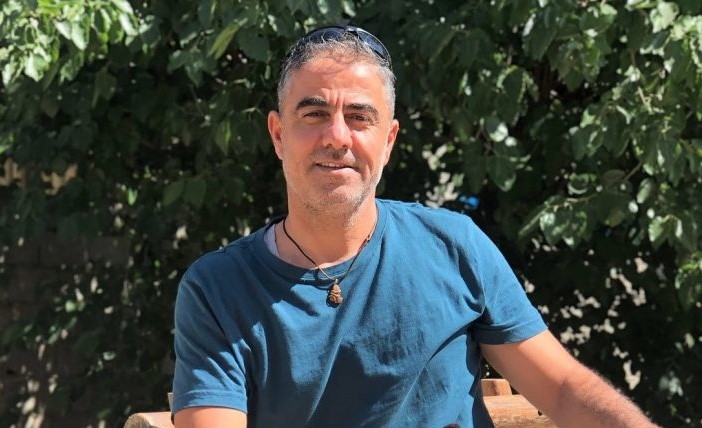
Nabil Musa: Holds a degree in Performance Arts (Theatre). Nabil left Iraqi Kurdistan in 1996 and traveled around Europe, where he became an actor and activist for refugee rights. He returned to Iraq in 2007 and remained there because of his passion for the environment and desire to protect the rivers of his homeland from pollution and destruction. To date, he is leading the non- government organization Waterkeepers Iraq-Kurdistan. Waterkeepers Iraq-Kurdistan focuses on advocacy and awareness raising for the protection of the rivers and waterways of the Tigris basin in Iraqi Kurdistan. The program is affiliated with the international Waterkeepers Alliance, which has 352 river, bay, sound, and coastal advocates across the globe. Waterkeepers Iraq-Kurdistan is the first affiliate Waterkeeper in the Middle East.
When you present evidence of drying rivers to officials, do they acknowledge the crisis, or does denial persist?
Despite presenting clear evidence, denial persists. Iraq is facing severe desertification and is ranked among the five most vulnerable countries in the world. Since the 1990s, there has been no proper plan to manage rainfall or contamination, and the consequences are everywhere—from the disappearance of birds in the skies to the drying of rivers.
Many officials still treat it as if we are exaggerating, but the situation is no joke. Children in Basra are dying of thirst, even though 80 percent of Iraq’s water flows through that region. Pollution from 19 cities ended there, and in summer 2018 alone, at least 118,000 people were hospitalized.
You often speak about the loss of “water culture” in Iraq. Do you fear the next generation will normalize dry rivers?
I already lost my childhood river—it’s gone, and people have normalized that loss. Today, 82 percent of Iraq’s water comes from neighboring countries, and instead of preparing sustainable solutions, we built dams that only made things worse.
The next generation is at risk of accepting dry riverbeds as normal—which would mean a permanent erasure of our water culture.
Was stopping illegal oil refineries difficult because of weak laws or political protection?
It was about powerful politicians and businessmen—a kind of authority that operates above the law. Iraq has strong environmental laws, but they are not applied equally. Those refineries were protected by political interests, not by a lack of legislation.
Since 2014, our team has been volunteering to monitor petroleum activities, and the fight has always been against entrenched power, not against the absence of rules.
Iraq is often said to have strong environmental laws that are not enforced. What is the biggest obstacle?
The biggest obstacle is not the absence of laws, but the fact that they are applied selectively. Iraq has strong environmental legislation, but enforcement is undermined by powerful networks that operate above the law.
Environmental Impact Assessments are supposed to be mandatory, yet most businesses bypass them illegally. We wrote the laws, but we don’t practice them—and that gap between paper and reality is the core of the problem.
Iran reached “Day Zero” despite building hundreds of dams. Is Iraq repeating the same mistake?
Yes, Iraq is repeating the same mistakes as Iran. We continue to build dams, but dams divide people, rivers, and ecosystems. In hot climates like ours, dams cause more water loss than storage, just as Iran discovered.
What we need instead are underground dams and underground lakes, which are far more effective for water management in this region.
- Gulf International Forum. "Iraq’s Water Emergency: Oil Dependency and the Erosion of State Capacity." Gulf International Forum, August 3, 2024. Read More ↩︎
- NBC News. "Iran Water Crisis: Taps Run Dry in Tehran as Evacuation Looms." NBC News, January 8, 2025. Read More ↩︎
- Gulf International Forum. "Iraq’s Water Emergency: Oil Dependency and the Erosion of State Capacity." Gulf International Forum, August 3, 2024. Read More ↩︎
- Al-Khafaji, Ahmed J., and Ali H. Al-Mukhtar. "Impacts of Climate Change on Water Resources in Iraq." IOP Conference Series: Materials Science and Engineering 881, no. 1 (2020): 012181. Read More ↩︎
- ORFME. "Iran’s Water Crisis: Historical Roots, Ideological Dimensions, and Policy Challenges." ORFME, September 19, 2024. Read More ↩︎
- Iran International. "Iran Faces Intensifying Water Crisis Amid Looming Shortages." Iran International, August 6, 2025. Read More ↩︎
- Gulf International Forum. "Iran’s Water Crisis: Governance, Climate, and the Politics of Survival." Gulf International Forum, October 17, 2024. Read More ↩︎
- Carnegie Endowment for International Peace. "Iraq’s Governance Crisis and Food Insecurity." Carnegie Endowment for International Peace, June 11, 2020. Read More ↩︎
- International Information and Engineering Technology Association (IIETA). "Water Crisis in Iraq: Challenges and Solutions." International Journal of Design & Nature and Ecodynamics, Vol. 19, No. 5, October 2024. Read More ↩︎
- Foundation for Defense of Democracies (FDD). "Iran’s Water Bankruptcy." Foundation for Defense of Democracies, November 22, 2025. Read More ↩︎
- Gulf International Forum. "Iran’s Water Crisis: Governance, Climate, and the Politics of Survival." Gulf International Forum, October 17, 2024. Read More ↩︎
- VOA News. "Water Shortages to Cut Iraq’s Irrigated Wheat Area by Half." VOA News, September 6, 2018. Read More ↩︎
- PreventionWeb. "Drought in the Land of Plenty: Impacts of Climate Change on Iraqi Security." PreventionWeb, August 29, 2023. Read More ↩︎
- ScienceDirect. "Water Scarcity and Security in Iraq: Climate Change, Governance, and Regional Implications." Environmental Science & Policy, Vol. 145, March 2023. Read More ↩︎
- Action Against Hunger. "Guaranteeing the Right to Water in Basra." Action Against Hunger, July 19, 2018. Read More ↩︎
- London School of Economics Middle East Centre. "The Disruptive Power of Open-Source Water Data: The Case of the Euphrates-Tigris Basin." LSE Middle East Centre Blog, January 13, 2023. Read More ↩︎
- Middle East Institute. "IRGC and Iran’s Water Mafia." Middle East Institute, July 25, 2023. Read More ↩︎
- National Council of Resistance of Iran (NCRI). "Iran’s Water Bankruptcy: A Crisis Manufactured by IRGC Corruption, Not Climate." NCRI, December 18, 2025. Read More ↩︎
- National Academies of Sciences, Engineering, and Medicine. "Chapter 3: Water and Agriculture." In Water for the Future: The West Bank and Gaza Strip, Israel, and Jordan. National Academies Press, 1999. Read More. ↩︎
- Middle East Institute. "IRGC and Iran’s Water Mafia." Middle East Institute, July 25, 2023. Read More. ↩︎
- Water, Peace & Security Partnership. "Iraq Water Security Risk Assessment." Water, Peace & Security, December 2021. Read More. ↩︎
- World Weather Attribution. "Human-Induced Climate Change Compounded by Socio-Economic Water Stressors Increased Severity of 5-Year Drought in Iran and Euphrates and Tigris Basin." World Weather Attribution, December 12, 2023. Read More. ↩︎
- Iran International. "Iran’s Water Crisis Deepens as Mismanagement and Climate Change Collide." Iran International, November 2, 2025. Read More. ↩︎
- World Weather Attribution. "Human-Induced Climate Change Compounded by Socio-Economic Water Stressors Increased Severity of 5-Year Drought in Iran and Euphrates and Tigris Basin." World Weather Attribution, December 12, 2023. Read More ↩︎
- Notre Dame Global Adaptation Initiative (ND-GAIN). "Country Ranking: Vulnerability." ND-GAIN, University of Notre Dame, accessed January 10, 2026. Read More. ↩︎
- Shafaq News. "Iraq’s Dust Storms: Deep Environmental and Political Fault Lines." Shafaq News, June 7, 2022. Read More. ↩︎
- Iran International. "Iran’s Water Crisis Sparks Protests Amid Growing Mismanagement." Iran International, November 2, 2025. Read More. ↩︎
- World Weather Attribution. "Human-Induced Climate Change Compounded by Socio-Economic Water Stressors Increased Severity of 5-Year Drought in Iran and Euphrates and Tigris Basin." World Weather Attribution, December 12, 2023. Read More ↩︎
- Reuters. "Rainfall Causes Floods in Parts of Drought-Stricken Iran." Reuters, November 17, 2025. Read More. ↩︎
- World Weather Attribution. "Human-Induced Climate Change Compounded by Socio-Economic Water Stressors Increased Severity of 5-Year Drought in Iran and Euphrates and Tigris Basin." World Weather Attribution, December 12, 2023. Read More ↩︎
- World Weather Attribution. "Human-Induced Climate Change Compounded by Socio-Economic Water Stressors Increased Severity of 5-Year Drought in Iran and Euphrates and Tigris Basin." World Weather Attribution, December 12, 2023. Read More ↩︎
- Al Jazeera. "As the Dams Feeding Tehran Run Dry, Iran Struggles with a Dire Water Crisis." Al Jazeera, November 12, 2025. Read More ↩︎
- United States Department of Agriculture, Foreign Agricultural Service. Grain: World Markets and Trade. USDA FAS, December 2025. Read More ↩︎
- Policy Center for the New South. "Water-Energy Nexus: A Path to Solving the Water Crisis in the Middle East and North Africa." Policy Center for the New South, July 2022. Read More ↩︎
- Reuters. "Rainfall Causes Floods in Parts of Drought-Stricken Iran." Reuters, November 17, 2025. Read More ↩︎
- World Weather Attribution. "Human-Induced Climate Change Compounded by Socio-Economic Water Stressors Increased Severity of 5-Year Drought in Iran and Euphrates and Tigris Basin." World Weather Attribution, December 12, 2023. Read More ↩︎
- Asharq Al-Awsat. "Iraq Approves Winter Farming Plan with Focus on Groundwater and Modern Irrigation." Asharq Al-Awsat, November 12, 2025. Read More ↩︎
- Council on Foreign Relations. "Iran: Climate-Driven Drought and Decades of Mismanagement Leave Tehran at Risk." Council on Foreign Relations, October 2025. Read More ↩︎
- Fanack Water. "Water Infrastructure in Iran." Fanack Water, accessed January 10, 2026. Read More ↩︎
- Free Iran SN. "How the IRGC’s Corruption and Monopolies Have Destroyed Iranian Industry." Free Iran SN, October 2025. Read More ↩︎
- National Council of Resistance of Iran (NCRI). "Iran’s Lake Urmia Drying Up: Tip of an Iceberg of the Country’s Environmental Crisis." NCRI, August 2022. Read More ↩︎
- Madani, Kaveh. "Water Management in Iran: What Is Causing the Looming Crisis?" Journal of Environmental Studies and Sciences 10, no. 1 (2019): 1–15. Read More ↩︎
- Madani, Kaveh. "Water Management in Iran: What Is Causing the Looming Crisis?" Journal of Environmental Studies and Sciences 10, no. 1 (2019): 1–15. Read More ↩︎
- Madani, Kaveh, and Nasim Farahbakhsh. "Iran’s Water Crisis: The Urgent Need for a Paradigm Shift." Journal of Geoscience and Environment Protection 10, no. 4 (2022): 1–18. Read More ↩︎
- Madani, Kaveh, and Nasim Farahbakhsh. "Iran’s Water Crisis: The Urgent Need for a Paradigm Shift." Journal of Geoscience and Environment Protection 10, no. 4 (2022): 1–18. Read More ↩︎
- Al-Ansari, Nadhir, Sven Knutsson, and Varoujan Sissakian. "Karstification Effect on the Stability of Mosul Dam and Its Assessment, North Iraq." Academia.edu, 2021. Read More ↩︎
- Congressional Research Service. "The Iraq Marshes: Restoration Activities." Congressional Research Service Report RL32433, May 2004. Read More ↩︎
- Al-Ansari, Nadhir, and Varoujan Sissakian. Iraqi Waters: Past, Present and Future. Target Exploration Consultants, 2019. Read More ↩︎
- SpecialEurasia. "Helmand River Dispute Between Iran and Afghanistan: Water Security and Geopolitical Implications." SpecialEurasia, January 30, 2025. Read More ↩︎
- Washington Institute for Near East Policy. "How Mangled Dam Diplomacy Is Shaping Iraq’s Water Crisis." Washington Institute for Near East Policy, December 18, 2024. Read More ↩︎
- Washington Institute for Near East Policy. "How Mangled Dam Diplomacy Is Shaping Iraq’s Water Crisis." Washington Institute for Near East Policy, December 18, 2024. Read More ↩︎
- National Council of Resistance of Iran (NCRI). "Water Refugees in Northern Iran Signal a Regime Entering a Structural Crisis." NCRI, September 2025. Read More ↩︎
- International Organization for Migration (IOM). "Climate-Induced Displacement in Iraq – March 2024." Displacement Tracking Matrix (DTM), May 8, 2024. Read More ↩︎
- Carnegie Endowment for International Peace. "Iran’s Water Crisis: A Warning from Climate." Carnegie Endowment for International Peace, November 2025. Read More ↩︎
- Norwegian Refugee Council (NRC). "Iraq Drought Slashes Seasonal Harvest, Water and Food Supply." NRC, November 2024. Read More ↩︎
- Ghadimi, Parviz, and Zahra Mohammadi. "Climate Change Impacts on Water Resources and Agricultural Productivity in Iran." Scientific Reports 15, no. 27607 (2025). Read More ↩︎
- Human Rights Watch. "Iraq’s Climate Crisis Is a Human Rights Crisis." Human Rights Watch, March 27, 2025. Read More ↩︎
- Human Rights Watch. "Iraq: Water Crisis in Basra." Human Rights Watch, July 22, 2019. Read More ↩︎
- Wikipedia contributors. "2021 Iranian Water Protests." Wikipedia, last modified January 2026. Read More ↩︎
- Human Rights Watch. "Iraq: Water Crisis in Basra." Human Rights Watch, July 22, 2019. Read More ↩︎
- Save the Tigris. "Tribal Disputes Flare in Southern Iraq Over Water Disputes." Save the Tigris, August 2023. Read More ↩︎
- International Organization for Migration (IOM). "Climate-Induced Displacement in Iraq – March 2024." Displacement Tracking Matrix (DTM), May 8, 2024. Read More ↩︎
- National Research Council. Water for the Future: The West Bank and Gaza Strip, Israel, and Jordan. Washington, DC: National Academies Press, 1999. Read More ↩︎
- Reuters. "Iraq’s Dreams of Wheat Independence Dashed by Water Crisis." Reuters, December 16, 2025. Read More ↩︎
- Observer Research Foundation Middle East (ORFME). "Iran’s Water Crisis: Historical Roots, Ideological Dimensions, and Policy Challenges." ORFME, 2024. Read More ↩︎
- Reuters. "Iraq’s Dreams of Wheat Independence Dashed by Water Crisis." Reuters, December 16, 2025. Read More ↩︎
- Madani, Kaveh, and Shirin Malekpour. "Iran’s Water Crisis: Mismanagement, Drought, and Climate Change." Scientific Reports 12, no. 10159 (2022). Read More ↩︎
- ReliefWeb. "Water Scarcity and the Environmental Peacebuilding Lens in Southern Iraq." ReliefWeb, 2024. Read More ↩︎
- Wikipedia contributors. "List of Dams and Reservoirs in Iran." Wikipedia, last modified January 2026. Read More ↩︎
- ReliefWeb. "Water Scarcity and the Environmental Peacebuilding Lens in Southern Iraq." ReliefWeb, 2024. Read More ↩︎
- Rudaw. "Iraq’s Water Crisis Deepens Amid Rising Temperatures and Scarcity." Rudaw, August 5, 2025. Read More ↩︎
- CRG Review. "The Mesopotamian Marshes: A Case Study of an Ecology in Peril." CRG Review, 2024. Read More ↩︎