Strong Societies, Weak Institutions: State–Clan Relations in the Kurdistan Region of Iraq
Executive Summary
This paper examines the relationship between the state and clans, focusing on the persistence of informal institutions despite the establishment of formal ones within the Kurdistan Regional Government (KRG). The study’s theoretical framework is based on Joel S. Migdal’s "Strong Societies and Weak States" paradigm. This paper examines how clan-state relations have shaped political dynamics and power structures within the KRG. Employing a historical and analytical lens, the research collected and analyzed both primary and secondary data. Although historical and contemporary documents related to the topic were relied upon profoundly, the study conducted a series of confidential interviews with participants who identified themselves as members of different clans. Furthermore, the study explores how clans established political roles and served as essential functional units within the state and how this dynamic contributed to the development of modern state institutions in the Kurdistan Region of Iraq (KRI). Additionally, the study provides a detailed analysis of state and power structures in developing countries, offering a comprehensive overview of legitimacy and power dynamics in newly formed states. Under this framework, the study explains how the mutually reinforcing relationship between informal institutions and state authorities creates a unique matrix that contributes to stability and mobilization. The study also highlights the potential for state-clan confrontations driven by resource dependence, patronage networks, and conditional alliances between them. The region’s resource-dependent economy further exacerbates authority fragmentation and interest clashes, adding another layer of complexity to this case study. The study uses a reasoning line to demonstrate that the coexistence of strong clans within weak institutional structures results in layered, web-like power relations that challenge the traditional paradigms of state and highlight the subversive consequences inherent within this system.
Background and Context
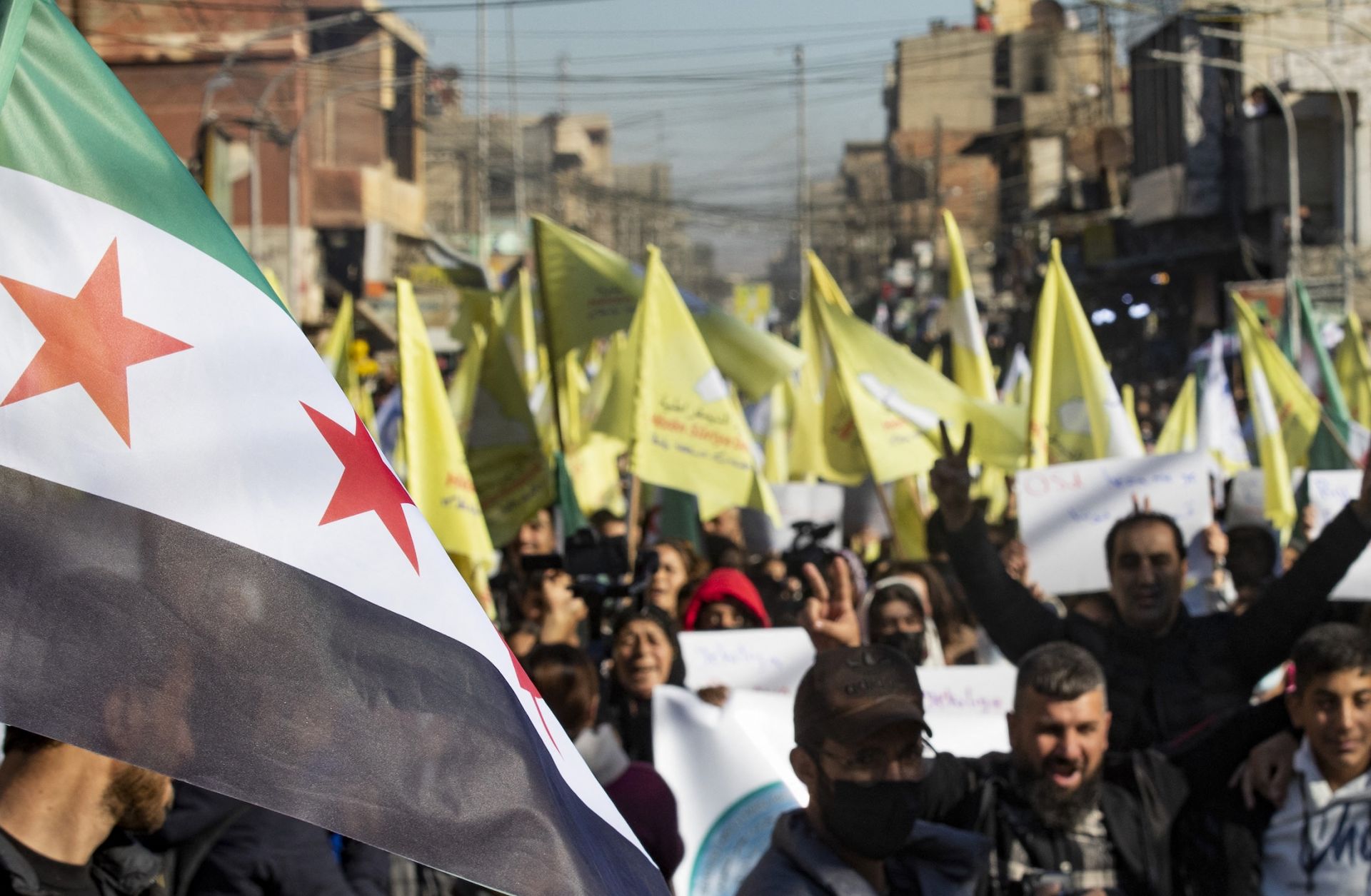
In the context of the Third World, especially the Middle East, the power structure has been shaped by its unique socio-political conditions. Investigating its unique power dynamics is a strategy for examining state-society relations and political paradigms across various cases. Understanding and analyzing power dynamics and societal structures requires understanding political subjects and main actors. Different groups, units, or so-called institutions have played their significant roles in the display of politics and power hierarchies. While in some cases the state has successfully monopolized power and become the main dominant player, it has been observed that, in many cases, informal institutions such as clans, tribes, families, and religious groups remained dominant political forces. The establishment of formal modern institutions was aimed at building this hierarchical power matrix; however, it was not uniform across all cases. In numerous instances, especially among Third World countries, informal institutions have persistently maintained their status and presence rather than being replaced by formal modern institutions. This phenomenon brought several consequences and features that urged a critical reassessment of the state and its ability to maintain its predominance. What made the concern more acute were the recurrent clashes and conflictual interactions observed between societal groups and formal state institutions, portraying a unique yet complex theme in state-society relations. In the context of the KRI, clans have sustained their significance and have been preserved as powerful players in the political landscape. Understanding the current significance and influence of clans requires a comprehensive and historical understanding of their roles and positions long before the establishment of the KRG. Recent events in the KRI have problematized the issue of clans and tribes as powerful political forces once again. By July 2025, conflict escalation had intensified in the town of Khabat, near Erbil province. The tension was between the Harki tribe and security forces, after a chronic disagreement over land disputes and political alignment.
The disagreement triggered a standoff involving the Harki clan president and his supporters.1 Not long after the events in Khabat, in November of 2025, another security tension erupted in Lajan Village, whose residents are mostly from the Harki tribe. Residents demanded employment and prioritized job opportunities from the nearby Lanaz oil refinery, as promised, leading to the escalation. This escalation resulted in casualties and injuries.2 Before it was too late, the KRG Prime Minister intervened in resolving the issue and reaching an agreement. It was then that the tribal leader of the Harkis declared, declared the urgent need for peacekeeping and agreement with security forces.3 Despite formal attempts to resolve and de-escalate the tension in a timely and appropriate manner, disputes and violence between clans and the state have demonstrated that clans can become an uncontrollable force that undermines state predominance.4 After years of neglect regarding the relationship between clans, the KRG, and political elites, such conflicts have shifted the focus of debate and public discourse toward questioning the legitimacy of the government and the role of clans in power dynamics. The conflict escalated and was resolved quickly, yet it left a lasting impression on the presence and influence of clans in the modern era of political practice. This experience leads us to question why clan powers persist despite the existence of modern formal institutions and why clashes between clans and the government remain a recurring issue in the context of the KRI.
Clans remain a powerful force in the political landscape despite formal state institutions.
Theoretical Background: Strong Societies, Weak State?
The structures of modern states and their pertaining capabilities are debated and approached variously within political and social sciences literature. Particular attention is given to the intricate capabilities and functions of the state. While many approaches view states as dominant, powerful, and centralized entities, this model falls short when applied in many third-world and developing countries, where state formation is influenced by their unique conditions and faces their unique challenges. Joel S. Migdal’s theory of strong societies and weak states offers a critical yet holistic perspective, highlighting the intricate interactions between states and social organizations. The Migdal approach developed from studying state creation and legitimacy building in the context of third-world countries. And this framework challenges the traditional states’ paradigm and highlights a need to reevaluate the state’s role and authority within the context of the global south. A context where colonization and empires ended, yet the newly formed states were left with political subjects who had little experience of governing and a fragile authority.
Migdal portrayed a set of unique ties between state and social organizations that were examined across many cases in this context. In which, within newly formed states, the limited capabilities of the state were recognized by state leaders and political elites. In response, state leaders sought to collaborate with organizations and already strong institutions to function properly and fill the authority gaps that exist. Therefore, clans, tribes, and strongmen in society became alliances that helped the state penetrate it effectively. These social organizations were already powerful and influential in society. Therefore, states relied on their social influence to form complex ties with society, especially in contexts where the state’s power centralization was not possible.5 This relationship between social organizations and the state was characterized by mutual benefits for both sides. While the state enjoyed influence, political mobilization, and tax collection through clans, the clans gained status, participation, wealth, and strong relations with political elites and state officials. These mutual benefits sustained the relationship over the years. Even with the state’s increasing capacity, the relationship became highly interdependent, so attempts to replace the old complex came with the risk of political backlash and instability.
A key priority that Migdal emphasized is the state’s power and ability to dominate the rules of the game and implement its preferences. To this end, state leaders build a complex to incorporate various social groups. These efforts eventually formed a matrix that carried out the state's preferences and functions, eventually increasing the level of social control. Furthermore, the established alliance between the state and powerful social organizations helped facilitate and maintain compliance, participation, and legitimacy.6 In other words, social penetration is the preferred end, through which new states create a complex means to achieve it, even if their formal central power alone cannot do so. This is also the simplest explanation Migdal provides for why informal institutions are preserved and empowered in many third-world countries. However, achieving this end was never without consequences. For weak states, empowering large social organizations carried the risk of power imbalances and backlashes from those empowered organizations to the state itself.
Migdal explained a dilemma in which weak states benefited from clans to enforce their preferences and build a complex of compliance and legitimacy. However, once clans became part of the power mechanism, the status and the influence that clans gained led to further empowerment of clans and tribes. This arrangement eventually brings the risk of undermining the state's predominance, which state leaders sought to resolve. These developments created a situation in which state leaders had to behave very delicately to maintain a preferred power balance. States were positioned in a dilemma where they needed to restrain social organizations to control them on one hand and keep them powerful enough to perform their preferred tasks when the state could not do so.7 Migdal argued that in many cases; to maintain the preferred relationship and build political loyalty between the state and social organizations, state leaders relied on co-optation and presenting clans’ and tribes’ favorable discriminatory policies and rewarding them financially.8 Ironically, the privileges granted will further empower clans, creating a series of power imbalances between the state and social organizations. These strategies eventually result in a conditional alliance between clans and states. And furthermore, a consequence is fragmented authority instead of a hierarchical top-down power dynamic.
Conditional alliance, fragmented state authority, and limited state capacity are all useful and practical analytical tools to explain clan-state relationships within the context of the KRI. The existence of clans has played a significant role in Kurdish identity politics and national struggles historically. However, even after the formation of a regional government within a federal system in Iraq, clans continue to preserve their social influence and legitimacy. The recent clashes between clans and the state revived questions regarding the legitimacy of clans, their relations with the government, and recurring conflicts with state dominance.
For weak states, empowering large social organizations carried the risk of power imbalances and backlash from those empowered organizations to the state itself.
Clans and Tribes: Between Legitimate Social Organization and Significant Political Actors
Understanding the existence of clans and how their status has evolved over time will help in understanding the roots of their legitimacy and persistence. The role clans played historically continues to shape their influence today. The resources they accessed, the influence they wielded, and the strong personal connections and ties with the state and political elites are all essential factors for understanding the influence and significance of clans in a political landscape. Understanding clans as only simple societal groups with cultural roots represents one part of the whole picture; understanding how they functioned as political actors will offer a whole new perspective. The story begins with a long history of Kurds in the Middle East. Clans gained significant political status when Kurds were under Safavid and Ottoman rule. The mentioned empires delegated administrative authority rather than imposing direct central rule. Due to the wide jurisdiction of the empires, enforcing rules, maintaining security, and collecting taxes could not be ensured or done properly and centrally by the state alone. Central rules functioned satisfactorily in urban and near-central regions; however, when it came to remote places far away from the center, especially rural areas, the former empires were unable to function as effectively as they did in central regions. Therefore, they sought a way to fill this administrative gap, and for this purpose, they relied on clans, tribes, and their leaders for the necessary functions.9 Furthermore, the indirect rule of states helped clans solidify their hierarchical design, mobilize their status and influence, and build strong alliances with states and state officials. This transformed social organizations into functional units, along with the states that eventually consolidated the power and legitimacy of clans and tribes within their regions of influence. The newly given functions to clans and their chiefs empowered them both socially and politically, allowing them to play a crucial role in the governance of their regions. Thereafter, clans and tribes were not simply cultural phenomena with a handful of social preferences but a set of political subjects using adaptive tools to ensure survival and security, thereby becoming legitimate for their members and trustworthy for the state. After the end of the Ottoman Empire and the British colonial mandate, clans, tribes, and their chiefs gained a tremendous area of influence based on a strategy used by the British colony to incorporate them into the new British state apparatus. The British mandate co‑opted the tribal elites as well as the Sheikhs into the government hierarchy and turned them into powerful administrators over their residents. These leaders acted as intermediaries between the colonial authorities and Kurdish populations.10 The political status they gained, along with the lands they owned and the strong patronage and connections they maintained with the colonial authorities, granted clans and their chiefs a substantial political significance as well as economic privileges. In the context of modern Kurdish history and the establishment of the new Iraqi state, another political event solidified the power and legitimacy of clans and tribes. With the formation of a new Iraqi regime and a series of political upheavals that Kurds disagreed with, a new strong Kurdish nationalist movement was sparked. Especially, Barzani’s struggle for the Kurdish nationalist cause marked the dawn of a new nationalist political movement for Kurds.11
Although some clans and tribes remained outside nationalist movements, many others formed alliances with Barzani's movement. And therefore the tribe leaders, Sheikhs, and Aghas (feudal lords) fueled the power of this movement tremendously, as they became the primary sources of mobilizing members into the Kurdish cause and providing military support in the Kurdish national struggle. Thereafter, the legitimacy of clans, tribes, and their leaders grew stronger, as their efforts evolved from clan-based and personal initiatives into a broader and more legitimate nationalist movement. The political leaders of the Kurdish national movement in the new Iraqi state partly relied on cooperating with clans and tribes and gaining their loyalty to build a broader effort and influence for the Kurdish national cause. The tribal alliances and their respective roles in the formation of the two major political parties guaranteed tribal leaders and chiefs an essential political status within Kurdish political structures. Even after the formal formation of a semi-independent federal entity for the Kurds in Iraq, many clan-based patronage ties persisted within political parties or the newly established government.12 The historical role of clans and tribes in the context of Kurdistan clarifies the significant influence they hold today. Clans and tribes were not simply social groups with cultural influence; rather, their influence and status had deep roots in political mediation and resource mobilization, and they played a significant military role in national movements and the Kurdish cause in Iraq. Investigating the historical background of Kurdish clans and tribes reveals and confirms that they were not confined to narrow cultural roles but played significant roles in the formation of political regimes as well as their subsequent political trajectories. The mediation they performed between the state and the people, as well as the security roles they provided, along with resource mobilization and allocation, inherited their social legitimacy and political influence. This significant role has made them targeted allies for both nationalist movements and newly formed regimes throughout modern Iraqi history.
The Dawn of a Fragmented Authority in Iraq
The legitimacy and significance of tribes in Kurdish history are understood via a careful examination of the fundamental functions of tribes and their leaders served within the framework of the Kurdish national cause and a wider political dynamic. The establishment of the Kurdistan Regional Government, constitutionally recognized by Iraq, marked a significant expansion and consolidation of the tribes' influence and role. The formation of formal regional institutions did not replace the traditional tribal institutions but rather incorporated them into the new government structures. Political parties benefited from the strength and legitimacy of clans and their chiefs throughout the history of the national struggle. When formal institutions were formed, political parties started to mobilize support and gain their initial legitimacy from the existing tribal networks.13 The newly formed system required a significant amount of support from local communities; for this end, strong alliances with tribal leaders were needed to ensure authority consolidation over a wide jurisdiction. Furthermore, clan alliances were partly aimed to guarantee the loyalty of the population’s large segments toward the new political system.14 While this political practice seemed justifiable and understandable given the newly formed and fragile capacity of the government, the approach was never without consequences. While Kurdistan government officials gained legitimacy and wider support as successors of Kurdish tribal loyalty, the segmented nature of Kurdish tribes meant that new agencies became a reflection of attempts to win clan loyalty rather than a united national agenda on many issues. Eventually, nepotism and clientelism became the limits of bureaucratic development and meritocracy.15
This pattern has become recurring throughout the political processes of the KRI. Voter turnout and parliamentary elections have become arenas where clans and tribes strive to participate. Since no single tribe is large enough to dominate parliament, parties tried to form various tribal coalitions and recruit candidates from their loyal tribes and clans as a way to mobilize votes for their parties.16 The nepotistic appointment of party members and government officials reinforced tribal privileges into formal institutions, and as a result, hampered the hierarchical and pluralistic structures of government, limiting the state's ability to act as a cohesive, impartial system. This scenario vividly illustrates the previously discussed: the emergence of a fragmented authority. While the hierarchical structure of state institutions enables the state to maintain its predominance, this hierarchy was never fully established due to the layers of legitimacy reinforced within formal institutions. Clan members' perspectives add another dimension to this analysis. “Tribes and clans prefer to protect and defend their own members when an issue arises; furthermore, they usually communicate available opportunities to their members first, reflecting a shared identity and loyalty among them.” 17
Across several interviews with members from different clans, they referred to their clans as sources of protection and opportunities when asked why clans seem important to their members. This finding indicates that the support and mobilization of people for parties or the government are layered and mediated by their clans and chiefs in many cases. This explains why power structures look more like a web-like scheme rather than a pyramid or hierarchy, an issue that Joel S. Migdal has discussed as previously mentioned here. Once policy implications and participation become layered rather than hierarchical, the state's predominance becomes harder to preserve. An important aspect of power and authority—the ability to penetrate society—is ultimately fragmented between the state and other influential forces in society, such as clans. The capacity and significance of clans and their chiefs are at the heart of the functions and mediations they perform. Once clans position themselves as channels for resource allocation, such as jobs, land, and credit, they eventually limit the state's ability to carry out this mobilization politically and impartially. The relationship that must connect the state and society tightly and directly would involve clans as a mediator. This ultimately positions clans and their leaders at the center of social power mobilization, which the state prefers to co-opt. Because, for the state, power involves the ability to mobilize legitimacy and maintain social control, and they strive to achieve this end either directly or indirectly. The mobilized support and legitimacy for the state, coupled with tribe and clan chiefs, place clans in the constructed network of state-society relations. Such an arrangement makes the state-society relationship layered and mediated rather than direct and simple.
The nepotistic appointment of party members and government officials reinforced tribal privileges into formal institutions, and as a result, hampered the hierarchical and pluralistic structures of government, limiting the state's ability to act as a cohesive, impartial system.
Recurring Pattern of State-clan Clashes: Reflection of a Conditional Alliance
The intersection between state, clans, and their mutual dependency becomes a recurring phenomenon across regimes and political movements in Iraq, including its contemporary federal system. While tribes provide local legitimacy and mobilization, states supply authority, patronage, and reward. However, clashes and confrontations between states and clans become an anomaly, challenging the expected peaceful settlement between states and clans. Understanding the nature of this built relationship explains conflicts between state, clans, and tribes. A careful consideration would reveal the interest-based nature of state-clan partnerships that make it inherently conditional. In the context of the post-2003 KRG, parties have formally reinforced clans’ loyalty and dependency on formal state institutions.18 This further empowered clan and tribe influence to maintain and consolidate their power and influence, leading to episodic confrontation when state politics jeopardizes the clan’s promised privileges and assets. Here, while a strong state could successfully subjugate the clan’s confrontation, weak states usually treated such issues via further co-optation and reward, which in turn made them further vulnerable to tribal power.19 Therefore, the clashes and confrontations are a reflective pattern of states trying to centralize their power, recognizing the importance of their predominance, and clans that mobilize their achieved power to protect their traditional authority and position. The result of this pulling and hauling is the emergence of recurring conflicts and clashes.
Economic Structures and Legitimacy: Fuel for Civil Unrest and State Confrontations
For many resource-dependent countries, generating negative political legitimacy occurs when states use their resource revenues and wealth distribution to secure political support and stability. This behavior reduces the chances of building positive political legitimacy, rooted in public consent and strong state-society relations20. After the passing of the constitution in Iraq and subsequent economic development, the KRG received a large share of oil revenues and financial reserves. However, a pattern of non-taxation and rentier policies primarily channeled the economic boost, resulting in broader economic favoritism and clientelism. Amid years of considerable economic growth, public employment reflected an attempt to satisfy public needs and maintain stability rather than address real labor requirements. Hence, the economic structure facilitated a large degree of patron-client networks that were reinforced within the institutional heritage of the KRG.21 However, experts recognize this paradigm as unsustainable, particularly given the volatile nature of oil prices. While states used substantial oil income to buy stability and support via patronage,22 when oil prices drop and the state cannot afford the established reward expectations, the fiscal squeeze weakens the built-in legitimacy and triggers confrontation, as tribes and clans seek to defend their guaranteed privileges and influence derived from it. In other words, for a large segment of the society, such as the clans, legitimacy and stability are coupled with financial rewards and patronage. This legitimacy erodes when the state cannot provide the necessary financial support, and, consequently, conflict is triggered.23 The post-2014 KRG economic situation is characterized by a lack of sufficient budget and financial needs, signaling the establishment of cohesive policies and a strong economic structure as the only solution for KRG's survival. Baghdad attempts to centralize resource refinement and exportation, especially after 2017, cut out the wealth and sovereignty of the KRG over the hydrocarbon production process, and further its control over employment and financial affairs24. These actions further squeezed the financial base of the established resource-based legitimacy in the KRI. However, centralization of power, tax-free access halts, and public employment freezes come with political backlashes and instability. The protesters claiming to represent grievances over unmet promises of employment and specialized job vacancies indicate how people's expectations from the government and political parties are unaligned with the state's current economic capacity and model.
When negative political legitimacy is generated,; legitimacy erodes when the state cannot provide the necessary financial support. and, consequently, conflict is triggered.
Conclusion
The persistence of the influence of clans and tribes within the context of the Kurdistan Regional Government limits the consolidation of formal state institutions’ power and legitimate state-society relations. The significance of clans is rooted in a historically layered social fabric and a series of political regimes with limited political power and social influence. The research demonstrated that the relationship between the state and clans in the KRI is characterized by mutual needs, patronage, and resource control, reflecting a broader sense of a conditional alliance. This conditional alliance resulted in authority fragmentation and fostered recurrent conflicts between the state and clans. Furthermore, these recurrent conflicts revealed the absence of a cohesive, impartial state with strong hierarchical power dynamics. Within this context, informal institutions such as clans are legitimized and entrenched through a historical political process. The region’s oil-dependent economy further complicates the development of these dynamics. Economic booms further deepened patronage connections and increased financial rewards as tools for fostering favoritism-based stability or legitimacy. However, economic downturns and minimization of authority fueled conflicts as various social segments attempted to preserve their existing influence and wealth. It is essential to understand that long-term stability and legitimacy cannot be guaranteed without establishing strong institutions and impartial governance. Only through such sustainable mechanisms can the Kurdistan Region create a political environment where state predominance is maintained, and legitimacy is achieved through inclusive governance and social cohesion. Achieving this goal requires genuine political will and a comprehensive recognition of conditions that enabled fragmented society initially.
- Mohammed Jangadost, "Tensions in Erbil’s Khabat Town as Security Forces Move on Tribal Leader Khurshid Harki," Channel 8, August 7, 2025, Read More. ↩︎
- Daban Mohammed, "Lajan Village Residents in Erbil Evacuate Amid Security Crackdown," Channel 8, December 1, 2025, Read More. ↩︎
- "کێشەی گوندی لاجان چارەسەر دەکرێت و گیراوان ئازاد دەکرێن," Ava Media, December 1, 2025, Read More. ↩︎
- Clashes in Iraqi Kurdistan Show Power of Tribes Acting Outside State Control," Amwaj Media, July 16, 2025, Read More. ↩︎
- Joel S. Migdal, Strong Societies and Weak States (Princeton: Princeton University Press, 1988), 31–32. ↩︎
- Ibid, p 32. ↩︎
- Ibid, p 227. ↩︎
- Ibid, p 235. ↩︎
- Van Bruinessen, "Kurds, States, and Tribes," Utrecht University, Read More., 6-7 ↩︎
- Degli Esposti, M. "Land Reform and Kurdish Nationalism in Postcolonial Iraq." Research Online at LSE, 2023. PDF, 3. Read More. ↩︎
- Ofra Bengio, The Kurds of Iraq: Building a State Within a State (Lanham, MD: Rowman & Littlefield, 2012), 15. ↩︎
- Gunter, M.M. (2013) 'The contemporary roots of Kurdish nationalism in Iraq', Kufa Review, 2(1), Winter, pp. 1-20. Available at: Read More ↩︎
- Brian A. Kennedy, (2015) "The Shaikh’s Republic: The Kurdish Regional Government’s Incorporation of Tribalism," honors thesis, Politics, University of Ursinus College, p. 53, Read More.
↩︎ - Ibid. ↩︎
- Degli Esposti, M. (2023) 'Land Reform and Kurdish Nationalism in Postcolonial Iraq’, Research Online at LSE, 22, ,Available at: Read More ↩︎
- Van Bruinessen, M., n.d. Kurds, states, and tribes. Utrecht University, p. 24. Available at: Read More.
↩︎ - Confidential clan member interview. Conducted by Poshya Ayub. February 1, 2026. ↩︎
- Brian A. Kennedy, (2015) "The Shaikh’s Republic: The Kurdish Regional Government’s Incorporation of Tribalism," honors thesis, Politics, University of Ursinus College, p. 3, Read More. ↩︎
- Joel S. Migdal, Strong States, Weak Societies (Princeton: Princeton University Press, 1988), 235. ↩︎
- Uriel Abulof, "Can’t Buy Me Legitimacy”: The Elusive Stability of Mideast Rentier Regimes," August 9, 2025, ResearchGate,8. Read More. ↩︎
- Leezenberg, M. (2017). Iraqi Kurdistan: A porous political space. Anatoli, 8, 107-131. Read More
↩︎ - Diane E. King, The Global Stage: Kinship, Land, and Community in Iraq (New Brunswick, NJ: Rutgers University Press, 2014). ↩︎
- Uriel Abulof, "Can’t Buy Me Legitimacy”: The Elusive Stability of Mideast Rentier Regimes," August 9, 2025, ResearchGate, Read More. ↩︎
- International Crisis Group. IRAQ AND THE KURDS: THE HIGH-STAKES HYDROCARBONS GAMBIT. International Crisis Group., 2022.
↩︎
Content Type:Analyses