Peshmerga Reforms: The Building of a National Force
To read the exclusive interview on Peshmerga reform click here. This policy paper draws on the insights and perspectives shared in this interview to further examine and better understand the reform process within the Peshmerga forces.
Executive Summary
Peshmerga reform has been studied, debated, and documented for more than three decades. There is no shortage of literature on the political obstacles between the Kurdistan Democratic Party (KDP) controlling Unit 80 and the Patriotic Union of Kurdistan (PUK) controlling Unit 70 of Peshmerga forces. There are also ample analyses on the structural weakness of the Ministry of Peshmerga Affairs and the limitations of international support. This paper does not rehearse that familiar diagnosis. Rather, it offers an alternative approach to understanding how reform in Peshmerga forces will need to adopt international standards for security sector reform (SSR) for the reform to succeed.
The central argument here is threefold. First, the reform process has repeatedly stalled not because the right steps were taken under the wrong conditions, but because the steps were taken in the wrong order. Command unification has been treated as the starting point of reform when it is properly understood as its end state, or outcome. Before a unified command can function, the financial, administrative, and governance systems that will sustain it must already be in place. This scenario is not the case in the Kurdistan Region.
Second, the international advisory mission, namely the Multi-National Advisory Group (MNAG), which is the specialized arm within the broader Coalition of Operation Inherent Resolve (OIR) that supports the reform process, has, with good intentions, reinforced this particular sequencing error by rewarding political theater. The correct pathway for continued support to the Peshmerga forces should be directly linked to institutional preconditions to make the reform process meaningful. Third, the information environment surrounding reform is systematically distorted by party-affiliated media reporting on the status of the reform, and analyses that treat those media sources uncritically reproduce the distortion rather than correct it. Together, these three arguments produce a different policy conclusion than most existing reform literature reaches. The answer does not involve providing more support for the existing reform model. It is a restructured model with a holistic reform approach based on international standards of security sector reform and defense institutionalization. A holistic approach here applies to the Organization for Economic Cooperation and Development’s (OECD) Security Sector Reform (SSR) principles and NATO’s Defense Institution Building (DIB) for Peshmerga reform, in addition to combat readiness.
Through this approach, reform is meant to include steps that sequence financial consolidation and institutional depoliticization before command integration, apply genuine and transparent conditionality to international assistance, and read the information environment with greater analytical skepticism. This paper advocates for Marshall Plan-style logic for Peshmerga reform. This logic by no means applies because history is analogous but because the structural principle is the same. Reconstruction of institutions must precede their operational deployment, especially in fragmented political systems like the Kurdistan Region of Iraq. The contribution of the paper brings forth a sequenced SSR model that prioritizes financial and administrative consolidation, institutional depoliticization, defense governance reform, and then command integration under the Ministry of Peshmerga Affairs (MoPA). These reform milestones can only be achieved through close coordination with Iraqi government partners to consolidate the Peshmerga forces as a unified national force.
Why the Existing Diagnosis Falls Short
What the Literature Gets Right
Existing scholarship on Peshmerga reform has produced a coherent and largely accurate account of the political obstacles to unification and integration efforts. The dominant political parties, the Kurdistan Democratic Party (KDP) and the Patriotic Union of Kurdistan (PUK), each view their control over armed Peshmerga units as central to their political survival.1 That assessment is not irrational given the history of the Kurdistan Region, particularly the Kurdish Civil War of 1994-98.2 The Kurdistan Region operates as what scholars call a consociational polity, in which two dominant parties maintain a careful and often fragile balance of power.3 Given this context, the Peshmerga are not simply a military force for the Kurdish population in the Kurdistan Region. Rather, they are a guarantee of each party's ability to protect its territorial, economic, and political interests if the political balance shifts.
The literature also correctly identifies the heroic status of the Peshmerga within the Kurdish and international communities as a complicating factor. Unlike conventional militaries in stable states, the Peshmerga are not subject to the ordinary assumption that institutional reform is a technical matter. They carry the weight of national identity, even in the absence of an independent Kurdish state. This is why any reform that appears to diminish their status or disrupt the structures around which that identity has formed generates political costs that party leaders are reluctant to bear.
The Peshmerga forces are not subject to the ordinary assumption that institutional reform is a technical matter. They carry the weight of national identity.
Peshmerga Reforms in 2026
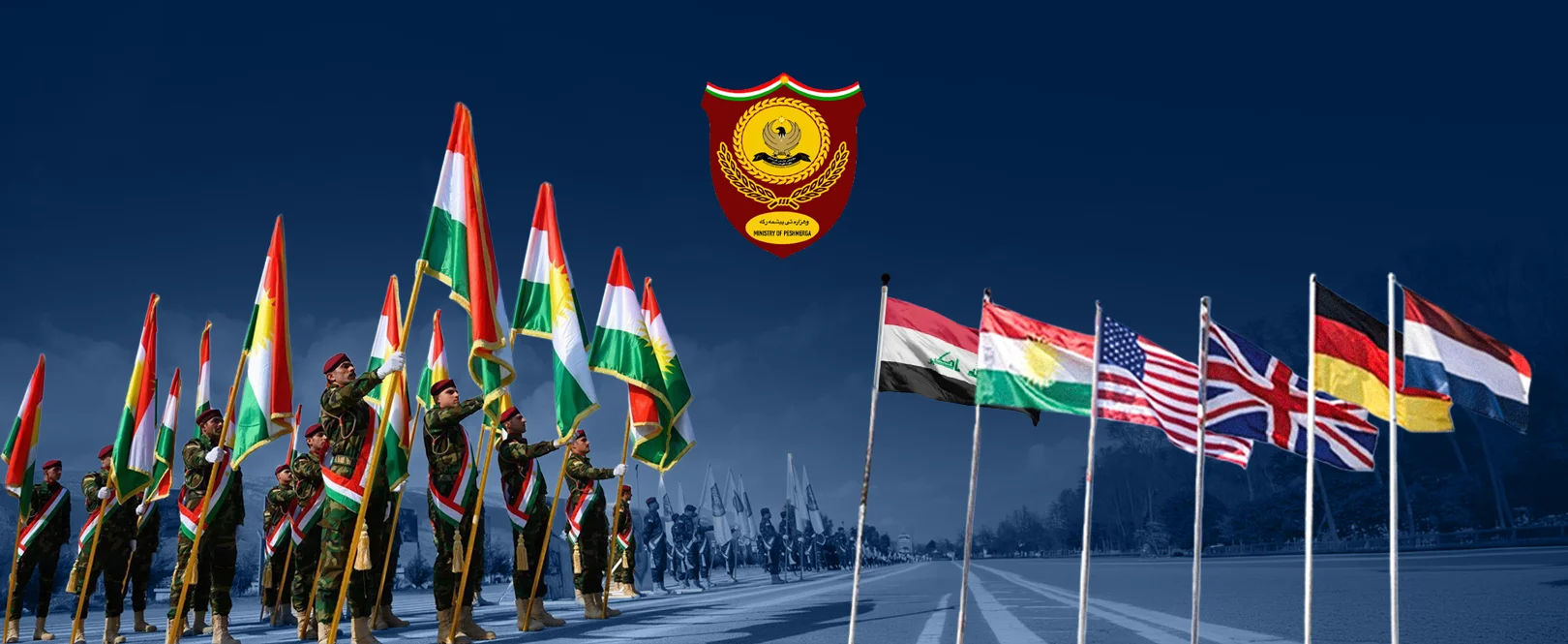
Peshmerga reform began as a formal and internationally supported process in 2017, when the so-called Islamic State in Iraq and Syria (ISIS) was territorially defeated in Iraq. The United States, the Netherlands, the United Kingdom, and Germany partnered with the Kurdistan Regional Government (KRG) around a structured 35-point agreement aimed at professionalizing and bringing all Peshmerga units under a single, depoliticized ministry command.4 That partnership operates through two distinct but related mechanisms. It includes the Combined Joint Task Force (CJTF), Operation Inherent Resolve (OIR), which provides the regional security umbrella and funds equipment through the Counter-ISIS Train and Equip Fund, and its specialized subordinate arm, the Multi-National Advisory Group (MNAG), which works directly inside the MoPA on the administrative, financial, and structural reforms that unification requires.5 For the Kurdistan Region, the stakes are not merely a matter of institutionalizing its security and military forces. Rather, a unified and professional Peshmerga force is the Kurdistan Region’s primary guarantee of territorial security, its most visible instrument of legitimacy, and a critical stabilizing factor in Iraq.
In 2022, the Ministry of Peshmerga Affairs signed a bilateral non-binding Memorandum of Understanding (MoU) with the US Department of Defense (now Department of War) that renewed US commitment to assist the KRG in further implementing the ongoing reform program within the ministry.6 The MoU set September 2026 as the deadline to mark the completion of full Peshmerga integration under a unified ministry command. The September deadline is now months away, with its central objective remaining unfulfilled, and no agreed-upon path forward in sight. The Ministry of Peshmerga Affairs currently commands twenty unified brigades, two of which were established with direct U.S. facilitation, comprising a total force of approximately 150,000 to 155,000 Peshmerga under formal ministry authority.7
Direct US assistance was given to the Peshmerga and Iraqi forces in the summer of 2014, when ISIS overran large parts of northern Iraq and advanced toward the Kurdistan Region’s borders.8 With the creation of the Counter-ISIS Train and Equip Fund (CTEF), both the Peshmerga and Iraqi security forces directly received support under a single framework that enabled US local partners on the ground to conduct operations against ISIS, covering training, equipment, and logistics. In 2021, the CJTF coalition transitioned from a combat role to a purely Advise, Assist, and Enable (AAE) role. Since then, the latest aid statistics to Peshmerga forces highlight the shift from US-funded salaries to equipment-based assistance from 2026 onward with significant implications for financial reform and command responsibility, as indicated in the tables below:
| Category | 2024 | 2025 | 2026 | Key Change |
| Salary Support | $135M | $60M | $0 | Fully terminated |
| Non-Salary Support | $4.9M | $57.8M | $61M | Shift to equipment & logistics |
| Type | Quantity | Value |
| Ammunition | 17,000 rounds | $5.3M+ |
| Weapons | 10,000 light arms + accessories | $11.08M |
| Vehicles | 250 service + 52 armored | $27.5M |
| Gear & Logistics | 11,295 armor, 49,589 uniforms, 13,000 kits, 12 generators | $17.1M |
| Area | Direction |
| Funding Model | From salaries to equipment-based support |
| Financial Responsibility | Shift to Baghdad (Possibly KRG included) |
| Force Structure | Planned transition to 6 operational commands |
| Reform Condition | Support tied to unification under Ministry |
The way the US Defense funding is structured for 2027 means folding of Peshmerga support into the broader Iraqi funding envelope rather than carving out a dedicated line.
Peshmerga Forces and US Defense Budget Projections (2027)
The U.S. allocation of $119 million to Iraqi security forces in FY2027, which explicitly includes Kurdish security forces,9 confirms that Washington remains invested in the counter-ISIS mission. But the way that funding is structured means folding of Peshmerga support into the broader Iraqi funding envelope rather than carving out a dedicated line. The United States seems to be enforcing a model in which the Peshmerga remains financially tied to Baghdad rather than recognized as a distinct security actor.
Funding the Peshmerga through Iraq signals a continued American preference for absorbing Kurdish forces into a unified national defense architecture, which is a legitimate long-term goal. The problem is that this preference is being expressed through the budget before the institutional conditions for genuine integration exist on the ground. This gap between formal objectives and operational reality is not lost on those inside the institution. As Staff Lieutenant General Bakhtiar Sidiq, Secretary General of the Ministry of Peshmerga Affairs, put it directly in an interview that was conducted for the purpose of this research, until dedicated and transparent funding lines define the role of Peshmerga as a force with its own command, its own institutional needs, and its own reform trajectory, the budget will keep telling a different story than the policy.10
What the Literature Misses
Where the existing literature falls short is in its treatment of the reform process itself as a largely well-designed effort being blocked by Kurdish political recalcitrance.11 That framing places all analytical weight on the question of political will. When political will is identified as the problem,12 the implicit policy conclusion simply calls for more pressure on Kurdish leaders, more leverage, more conditionality, and more international disappointment expressed at the slow pace of the reform process or its lack of political backing. The literature and policy analysis on Peshmerga reform here miss a crucial factor in how the reform process should be approached and instead merely focus on how it can be measured or implemented.13
It overlooks the structural sequencing problem that is embedded in the reform design itself. It misses the way international partners have contributed to the problem by treating formal milestones as substantive progress. And it misses the epistemological problem created when reform assessments rely on sources with direct partisan interests in how reform is perceived.
The paper argues that Kurdish political leaders bear some responsibility for stalling reform at a certain level. It also argues that the reform program itself, as designed and implemented, has compounded rather than resolved the underlying structural problems.
This paper addresses all three gaps. It argues that Kurdish political leaders bear some responsibility for stalling reform at a certain level. It also argues that the reform program itself, as designed and implemented, has compounded rather than resolved the underlying structural problems and that honest policy analysis requires acknowledging that. It proposes a different analytical entry point. Rather than asking why Kurdish political leaders have failed to deliver reform commitments, it asks whether the reform program itself was designed in a sequence that made failure structurally likely. The answer, this paper argues, is yes, and recognizing this reality changes both the diagnosis and the prescription in ways that the existing literature has not yet explored.
More importantly, significant aspects of the reforms are not carried out under the Kurdistan Region’s Peshmerga Ministry Law No. 19, 2007,14 which does not address reform in any meaningful operational sense. The Peshmerga law is the foundational organic law of the Ministry of Peshmerga Affairs that explicitly defines the ministry's structure, responsibilities, and institutional mandate. The other relevant law is the KRG’s Law No. 2, of 2020 concerning ”Reform of Salaries, Allowances, Grants, Privileges & Retirement“ in the Kurdistan Region,15 dealing specifically with the financial and personnel consolidation of Peshmerga and security forces.
The point of analysis is both legal and political because the KRI has had a law for the Peshmerga under the MoPA since 2007 with a legal mandate to govern the force. Yet, thirteen years later, in 2020, the legislature saw it necessary to pass a separate salary and financial reform law specifically because the MoPA’s foundational authority had never been sufficient to consolidate financial control over party-affiliated units. In short, that sequence of events that started with the 2007 Peshmerga affairs law, the reform process agreement in 2017, the financial reform law of 2020, and then the MoU with the US DoD in 2022, absent an enforcement mechanism, is in itself a timeline of accumulated legislative intent without necessary institutional follow-through. This alone shows that the literature fails to connect the legal and political aspects of Peshmerga reforms. While the sequence shows that each new agreement or law temporarily absorbs international concern and domestic criticism, it still falls short of a legal code that requires the parties to surrender financial and command control over their units.
In SSR literature, this is called “reform ritualism,” often termed isomorphic mimicry,16 representing the gap between formal compliance and substantive reform, where reform becomes a theatrical exercise to satisfy international donors or local political image. The concept explains why the KRI, like other governments in developing or post-conflict states, mimics the outward forms of successful institutions without implementing the functional changes necessary to improve security.
Here, the policy recommendations draw on two important international precedents. First, the OECD's Security Sector Reform principles require financial accountability and holistic institutional reform as preconditions for sustainable security structures.17 Second, NATO's Defense Institution Building (DIB) framework18 specifically identifies unified budgeting, genuine civilian oversight, and institution-bound command as the foundational prerequisites for a professional armed force. Applied to the Kurdistan Region, these frameworks provide more than a description of what reform should look like. They reveal, with considerable accuracy, why the current sequence has produced the results it has.
Why “Command First” is the Wrong Order
The Sequencing Problem
The OECD's foundational framework for Security Sector Reform identifies four non-negotiable conditions for sustainable reform: (1) local ownership; (2) good governance; (3) accountability; and (4) holistic reform that extends into financial and political systems, not just military structures.19 NATO's Defense Institution Building approach adds three specific institutional prerequisites for professional armed forces, including transparent and unified budgeting, genuine civilian oversight, and command structures tied to institutions.20 What this means is that post-conflict SSR consistently finds that sequencing institutional consolidation before operational integration is essential. When command integration precedes institutional consolidation, the result is typically a formal structure that the real distribution of power most likely ignores.
A unified command that sits atop fragmented financial systems, party-loyal officers, and separate logistics chains is not a unified command in any operationally meaningful sense.
Applying this framework to the Peshmerga reform record indicates a specific finding. The 35-point reform plan (which was later reduced to 31), launched formally in 2017 and reinforced in the 2022 US DoD MoU with the MoPA, treated the integration of Units 70 and 80 into a unified ministry command as the primary reform objective. Everything else, such as financial consolidation, payroll unification, mixed-brigade formation, and professional education, was configured as supporting steps toward that command objective. That sequencing is backwards. A unified command that sits atop fragmented financial systems, party-loyal officers, and separate logistics chains is not a unified command in any operationally meaningful sense. It is an organizational chart that can be produced relatively quickly. However, the institutions that would give it substance would take years to build. Placing command integration first means announcing success before it is possible, which is the exact cycle that has repeated itself across multiple reform efforts since 1992.
The Financial System Gap
The most concrete expression of this sequencing failure is the state of Peshmerga’s financial administration. Chapter IV of the KRG's legal framework for Peshmerga Affairs explicitly requires that all accounting units across all Peshmerga formations, whether formally under the ministry or any entity operating outside of it, be consolidated under a single General Directorate of Budget and Programs, which is subject to audit by the Financial Supervision Council (Diwan). That law has been on the books for years. Its non-implementation is a political choice as well as mistrust between the parties, as Staff Lieutenant General Bakhtiar Sidiq, the Secretary General of the MoPA, noted in his interview as part of this research effort. He also added that even the salary support the Peshmerga receives from coalition partners is not, strictly speaking, salary funding at all but rather modest assistance and falls well short of what the force operationally requires.
The digital salary system known as “My Account” represents genuine progress in this domain, and the reported figure of over 85 percent biometric enrollment of Peshmerga personnel is meaningful.21 General Staff Major Sidiq also noted that while electronic payroll is now nearly one hundred percent complete within the Ministry itself, a portion of Unit 70's forces and elements of Area Command One remain outside the system. This is a candid recognition that the benchmark cited as evidence of progress is not yet fully realized.22
The Marshall Plan's distinctive structural contribution goes beyond the scale of its resources. It was the sequencing logic embedded in its design that gained recognition and entered history as the most successful American foreign policy project since World War II.
A Marshall Plan Logic for Reform
The Marshall Plan, formally the European Recovery Program of 1948, is frequently invoked as a model for post-conflict reconstruction.23 It is invoked here for a more specific reason than historical analogy. The Marshall Plan's distinctive structural contribution goes beyond the scale of its resources. It was the sequencing logic embedded in its design that gained recognition and entered history as the most successful American foreign policy project since World War II.24 European nations were required to develop coordinated economic recovery plans before funds were disbursed. The administrative and institutional architecture of recovery was treated as a prerequisite to the deployment of resources, not as a beneficiary of them.
That sequencing principle is what the Peshmerga reform program has lacked, as reflected in the NATO DIB and the OECD’s SSR principles. The international community has provided resources, training, equipment, and advisory capacity in advance of the institutional consolidation that would make those inputs durable. The Marshall Plan analogy suggests reversing that sequence, making institutional consolidation the condition for continued support, rather than an objective to be pursued alongside it. In this regard, this paper proposes a three-phase sequenced reform model built on a single structural principle, which is that institutional consolidation must precede operational integration.
Phase One: Financial Structure Before Command Structure
The first phase of a sequenced reform model is the one that existing reform efforts have treated as a supporting element rather than a foundation. Every Peshmerga fighter, regardless of which unit or political affiliation they currently serve under, must be enrolled in a single, independently auditable payroll system before any discussion of command integration can be treated as substantively meaningful. The MyAccount system is the right mechanism. Its completion, verified by independent audit rather than government announcement, should be the non-negotiable threshold for continued international financial support.
The Peshmerga reform and integration process require a substantial budget share from both the KRG and the Iraqi government, which must be the foundational pillar of its future expenditure after the MoU expires.
Alongside payroll consolidation, the legal requirements of KRG Law No. 19 of 2007 regarding unified financial administration of all Peshmerga units must be enforced, not referenced in an aspirational manner. This means that the General Directorate of Budget and Programs at the Ministry of Peshmerga Affairs must exercise actual financial authority over units currently operating outside ministry command, with the Financial Supervision (Diwan) conducting independent reviews. Until this step is in place, the ministry's command authority is nominal because its financial authority is nominal. More importantly, the Peshmerga reform and integration process require a substantial budget share from both the KRG and the Iraqi government, which must be the foundational pillar of its future expenditure after the MoU expires.
Phase Two: Institutional Depoliticization
The second phase addresses the officer corps and command culture. A transparent, internationally supervised process must retire senior Peshmerga commanders whose positions reflect party loyalty rather than professional merit. This is the step that virtually every reform analysis identifies as necessary, and all previous reform efforts have avoided addressing it with the required directness because it obligates the international partners to use their leverage tools in ways that Kurdish political leaders will read them as genuinely costly to ignore.
Professional military education, developed through the Staff College with the support of Coalition advisors serves as the generational instrument here. It does not produce results within a single MoU cycle, but it shapes the officers’ cohort that will lead the force in the decades after the current political generation's influence recedes. Investing in that pipeline is not a substitute for the harder work of retiring unqualified commanders now, but it is the complement to it that makes reform durable.
Phase Three: Mixed Brigade Formation as the Measure of Integration
Command integration becomes operationally real only when KDP and PUK fighters serve together in common units under Ministry command, with logistics, pay, and operational authority flowing through institutional rather than party channels. The formation of genuinely mixed brigades is therefore the correct measure of reform completion, not the signing of integration decrees or the formal redesignation of partisan units under new organizational names.
The distinction is critical. For example, a unit that is redesignated as Area Command One, but whose officers were appointed by the KDP, whose logistics still flow through KDP channels, and whose soldiers understand themselves as KDP Peshmerga serving under a new label is not an integrated unit. It is a rebranded partisan force. The international advisory mission should define its success metrics accordingly and should say so publicly, because public clarity about what counts as genuine integration is itself a form of pressure on parties that benefit from the ambiguity.
Policy Recommendations
For the Kurdistan Regional Government (KRG) and both parties (PUK and KDP): Accept an independent financial audit as a condition of continued international support. Complete MyAccount enrollment across all units, including those not yet formally under the Ministry’s command, and submit to verification by a body that is not affiliated with either party. Pass a formal timeline for Unit 70 integration, negotiate it with international partners, and establish legal accountability mechanisms instead of announcing it unilaterally after the fact.
For the MNAG and international partners: Establish conditionality around institutional prerequisites, not demanding milestones. Specifically, tie the continuation of Counter-ISIS Train and Equip Fund allocations to independent verification of financial consolidation benchmarks. Establish a public reporting mechanism, accessible in Kurdish, Arabic, and English, that communicates reform progress against agreed benchmarks in terms that civil society, Kurdish citizens, and international observers can read and evaluate. Opacity in reform assessment serves party interests, not institutional ones.
For the US government and Department of War: Treat the September 2026 MoU endpoint as a decision point requiring a strategic review, not a declaration of outcomes. The review should assess not only how many units have been formally integrated, but whether institutional preconditions for durable integration exist. If they do not, the honest policy conclusion is not to declare the mission accomplished and withdraw advisory presence, but to restructure the support model around the sequencing logic described in this paper.
Conclusion
A unified Peshmerga force is an institution to be built, one that the Kurdistan Region and its citizens deserve and that the broader security of northern Iraq requires. The fighters who bled against the so-called Islamic State, who held the line when the front lines approached Erbil, deserve a force structure worthy of their sacrifice. What they have instead is a force divided between two political parties, assessed through a media ecosystem those parties largely control, and supported by an international advisory mission that has sometimes rewarded the appearance of reform rather than its substance.
This change requires Kurdish political leaders to accept the costs of genuine integration. The real loss of control over armed units is less if compared to the long-term costs of a security sector that remains structurally void. It requires international partners to apply the sort of conditionality that conditions, not conditionality that signals concern, while funding continues regardless. And it requires analysts to view the information environment with the skepticism it demands rather than the convenience it offers.
The Marshall Plan rebuilt Europe by funding governments and ensuring they used the resources well. It required institutional architecture as a precondition for support. The Peshmerga reform program can learn from that logic. We need to emphasize financial consolidation before command integration and verify outcomes before continued funding. That is the sequence that will lead to long-term outcomes for a consolidated security and defense sector in the Kurdistan Region and Iraq. As such, the 2026 deadline should not be treated as the end of the story but the beginning of a more holistic approach to Peshmerga reform in coordination with local and international partners.
Acknowledgements
This paper would not have been possible without the generosity and openness of those who agreed to be interviewed. The author is particularly grateful to Staff Lieutenant General Bakhtiar Sidiq, Secretary General of the Ministry of Peshmerga Affairs, whose candid and detailed account of the reform process from inside the institution provided the empirical foundation on which much of this paper's analysis rests.
The views expressed in this paper are solely those of the author. The interviewees bear no responsibility for the analytical conclusions drawn from their accounts, nor for any errors of fact or interpretation that may remain.
- Hama Hasan, Hawre. “Politicized Forces and the Issue of an Independent Kurdish State.” The Washington Institute for Near East Policy. March 14, 2017, Read More ↩︎
- Arif, B. H., & Mokhtar, T. M. (2022). The Kurdish Civil War (1994–1998) and its Consequences for the Governing System in the Kurdistan Region of Iraq. Asian Affairs, 53(3), 671–689. Read More ↩︎
- Aziz, S., & Cottey, A. (2021). The Iraqi Kurdish Peshmerga: military reform and nation-building in a divided polity. Defence Studies, 21(2), 226–241. Read More ↩︎
- Rodgers, Winthrop. “Peshmerga Reform Hangs in the Balance i Iraq’s Kurdistan Region.” Middle East Institute. August 17, 2023, Read More ↩︎
- Rudaw English. “Peshmerga reforms need ‘crucial’ political decision to continue: Dutch advisor Col. Jan ten Hove.” Rudaw English, August 30, 2021, Read More
↩︎ - The Kurdistan Region. “Ministry of Peshmerga Affairs and US Department of Defense sign Memorandum of Understanding.” Kurdistan Region, September 21, 2022, Read More ↩︎
- Bakhtyar Sdiq, Secretary General of the Ministry of Peshmerga Affairs, interview by author, Sulaimaniyah, April 2026. The estimate of 150,000–155,000 Peshmerga forces operating under the ministry was obtained in this exclusive interview. ↩︎
- Shafaq News. “EXCLUSIVE: Pentagon axes Peshmerga pay in Iraq anti-ISIS aid shift.” Shafaq News. October 8, 2025, Read More ↩︎
- US Department of War. FY 2027 Department of War Budget Overview Book. Chapter 2. Read More ↩︎
- Bakhtyar Sidiq (Secretary General, Ministry of Peshmerga Affairs), interview by the author, Sulaymaniyah, Kurdistan Region of Iraq, April 2026. ↩︎
- Here, the term refers to resistance to change or authority in political contexts; see Mark E. Button, “Political Recalcitrance: Vice of Exceptionalism,” in Political Vices (New York: Oxford University Press, 2016), Read More ↩︎
- Fliervoet, Feike. “Fighting for Kurdistan? Assessing the nature and functions of the Peshmerga in Iraq.” Clingendael. March, 2018, Read More ↩︎
- Helfont, Samuel. “Getting Peshmerga Reform Right: Helping the Iraqi Kurds Help Themselves in Post-ISIS Iraq.” Foreign Policy Research Institute (FPRI) and The Institute for International Studies (IRIS). 2017, Read More ↩︎
- The Kurdistan Region Parliament. Kurdistan Region of Iraq, Law No. 19 of 2007 (Law of the Ministry of Peshmerga Affairs), Articles I-XI. The Kurdistan Region Parliament. 2020, Read More ↩︎
- The Kurdistan Region Parliament. Law on Reform of Salaries, Allowances, Grants, Privileges & Retirement in Kurdistan Region (Law No. 2 of 2020). The Kurdistan Region Parliament. 2020, Read More ↩︎
- Reform Ritualism or isomorphic mimicry is developed by Lant Pritchett, Michael Woolcock, and Matt Andrews in their work on security sector reform. Chapter 2 specifically details the concept of isomorphic mimicry and "capability traps." It explains how reform becomes a ritualistic performance of "best practices" to secure international legitimacy while the actual security apparatus remains unchanged or predatory. To read more, Andrews, M., Pritchett, L., & Woolcock, M. (2017). Building State Capability: Evidence, Analysis, Action. Oxford University Press. Read More ↩︎
- The Organization for Economic Cooperation and Development (OECD). “OECD DAC Handbook on Security System Reform SUPPORTING SECURITY AND JUSTICE.”OECD,2007, Read More ↩︎
- The North Atlantic Treaty Organization (NATO). ”Partnership Action Plan on Defence Institution Building (PAP-DIB).” NATO. May 16, 2025, Read More ↩︎
- The Organization for Economic Cooperation and Development (OECD). “OECD DAC Handbook on Security System Reform SUPPORTING SECURITY AND JUSTICE.” GSDRC, 2007,Read More ↩︎
- The North Atlantic Treaty Organization (NATO). ”Partnership Action Plan on Defence Institution Building (PAP-DIB).” NATO. May 16, 2025, Read More ↩︎
- Caggins III, Myles. ”Peshmerga Reforms: Navigating Challenges, Forging Unity.” Foreign Policy Research Institute. October, 31, 2023, Read More ↩︎
- Bakhtyar Sidiq (Secretary General, Ministry of Peshmerga Affairs), interview by the author, Sulaymaniyah, Kurdistan Region of Iraq, April 2026. Sidiq stated that the Memorandum of Understanding contains no reference to Baghdad's financial obligations, that Peshmerga salaries have historically come from Baghdad alongside in-kind support including food, fuel, weapons, and medical supplies, and that coalition financial assistance constitutes modest support rather than salary provision. ↩︎
- ELLWOOD W. DAVID. ” THE MARSHALL PLAN A Strategy That Worked.” Marshall Foundation. April, 2006, Read More ↩︎
- Ibid. ↩︎
Content Type:iNNOV8 Policy Briefs