20/02/2025
Events Collaborative Event with ENS During the AI Action Summit
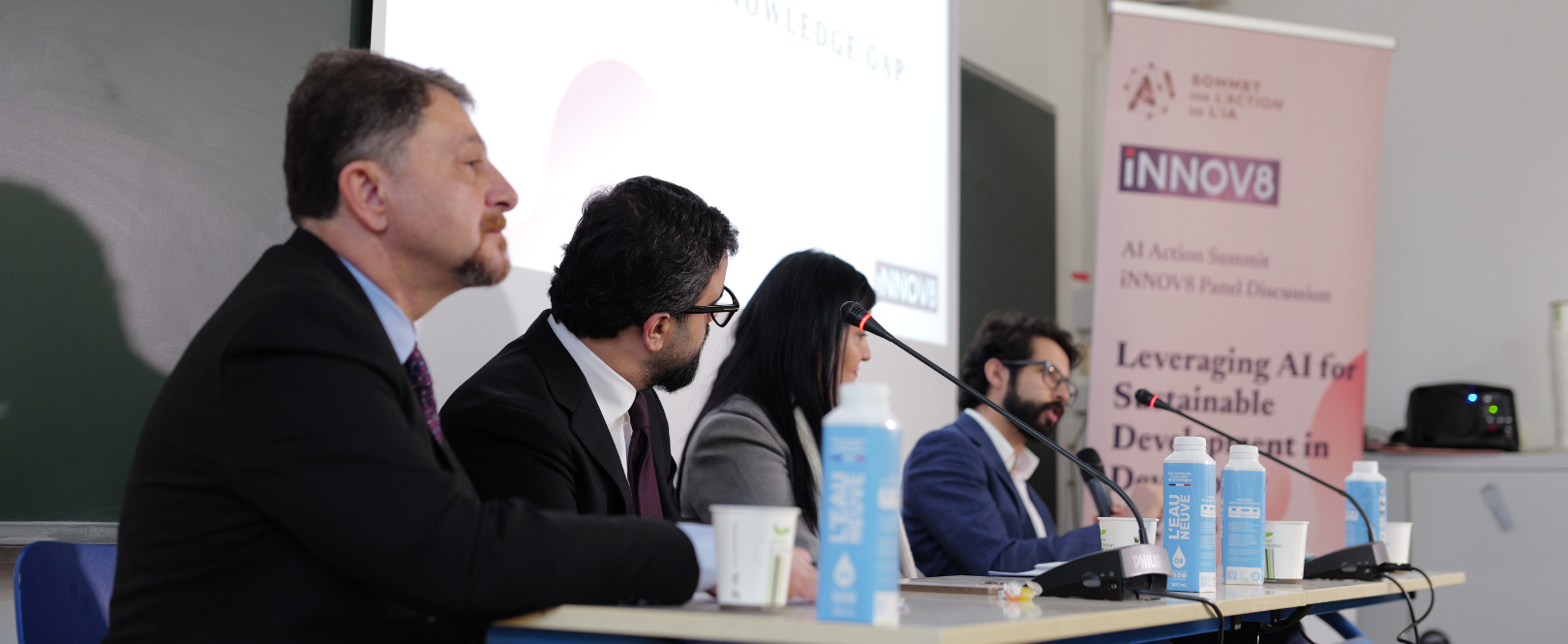
On February 11th, 2025, iNNOV8 Research Center, in collaboration with École Normale Supérieure (ENS), hosted an insightful side event during the AI Action Summit Week in Paris, bringing together experts to discuss "Leveraging AI for Sustainable Development in Developing Regions."

The panel delved into critical themes, including knowledge gaps, ethical considerations, governance frameworks, media influence, workforce transformation, and regulatory challenges of AI. While skepticism toward AI remains prevalent, especially in regions grappling with fundamental socio-economic issues, the discussion underscored the necessity of proactive adaptation. Ignoring this paradigm shift could further entrench disparities, leaving these regions perpetually behind in the global innovation race.

A pivotal point of discussion was the role of education in demystifying AI and equipping future generations with the necessary knowledge to navigate an AI-driven world. Panelists emphasized that integrating AI literacy into educational curricula, ranging from fundamental concepts to ethical and practical applications, can empower individuals in developing regions. Furthermore, the media can play a crucial role in fostering AI awareness, shaping public perception, and ensuring that AI is not seen as an inaccessible force but rather a tool for progress.

The impact of AI on the workforce was another critical theme. While AI is expected to disrupt certain industries by automating routine and low-skilled jobs, the discussion highlighted how it can also act as a catalyst for job transformation. If leveraged strategically, AI can create new avenues of employment, redefine traditional roles, and enhance human productivity and imagination rather than replace them. The key lies in adapting labor markets to this shift, ensuring that workers are equipped with the skills necessary to collaborate with AI rather than compete against it.

The panelists emphasized that while the human-level adoption of AI may seem secondary to immediate struggles, strategic engagement with this technology is imperative in many of these regions. Without forward-thinking policies and inclusive governance, these regions risk repeating the very patterns that have historically hindered their progress. AI, if harnessed effectively, can serve as a transformative force, fostering innovation and unlocking new possibilities for growth rather than deepening existing inequalities.