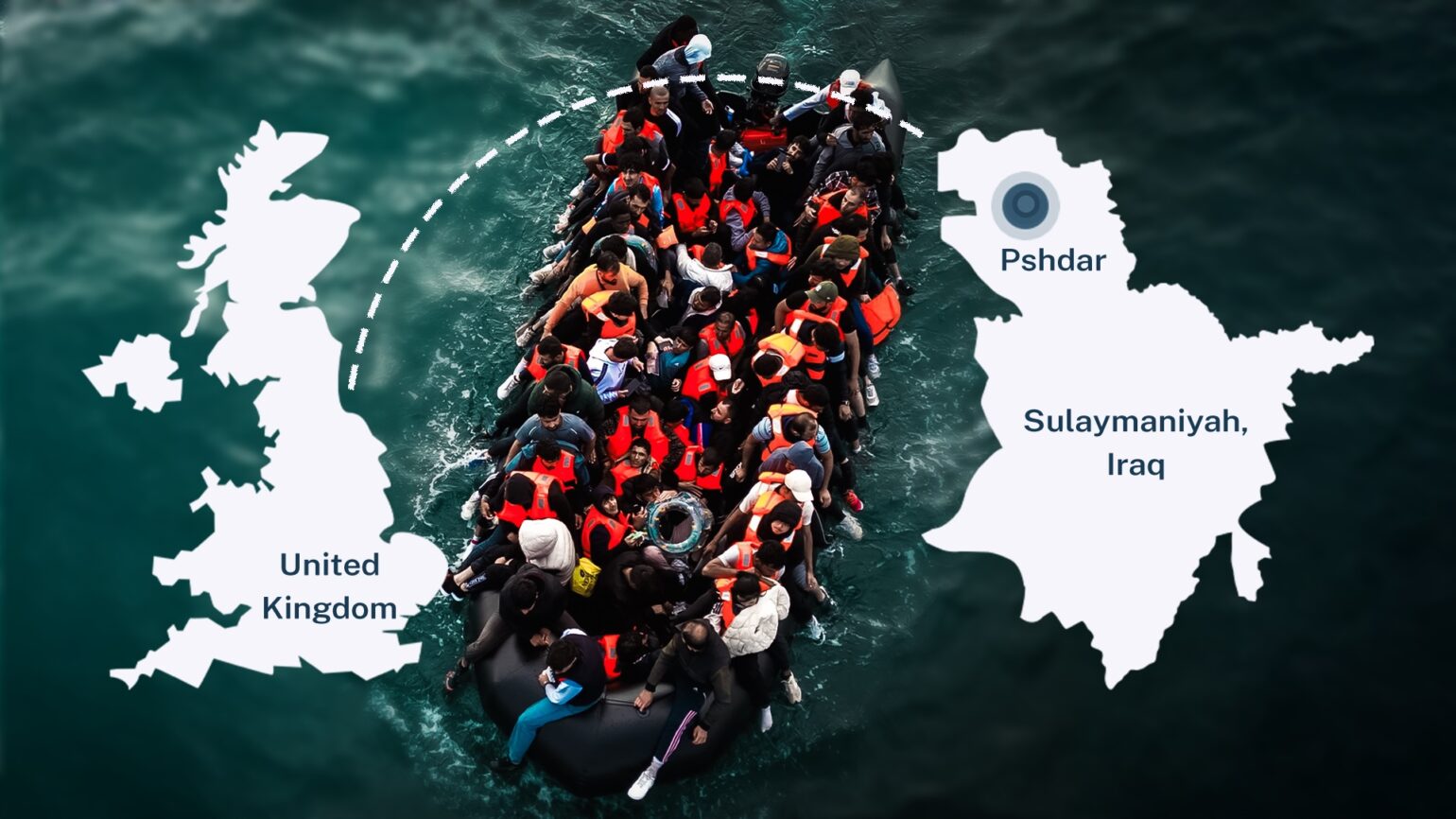
From Pshdar to UK – The Factors and Motives that Drive this Organized Exodus
Preface
Lack of prospects, a stagnant economy, negligence of certain areas by the government, and the continuous political and security instabilities in the Kurdistan Region of Iraq (KRI) have led a specific group in a somewhat defined geographic area of the Kurdistan Region of Iraq to leave their homeland and seek refuge elsewhere. For most of the young men of the Pshdar region of KRI, the UK is the ultimate destination. The United Kingdom serves as a good place for the new arrivals of Kurds due to the established community of Pshdaris (people from Pshdar –Ranya and Qaladiza) who, unlike most of the other Kurdish groups, rally around each other and support newcomers by finding them jobs, places to stay, and a sense of community, which projects safety and stability.
This community network has roots at home, in the cities, towns, and villages of Rania, Qaladiza, and the surroundings. The process of selecting the next migrant begins at home; a personal decision is made, family consensus is gathered, funds for travel are allocated, smugglers and route(s) selected through established contacts, and the new immigrant is sent away proudly. The news of the arrival of the new immigrant at the host country, namely the UK, is often met with joy back at home and becomes talk of the town for a while.
The new immigrant is expected to send money back home to support family and possibly the next person in line to migrate, a brother or a cousin. At some point this new immigrant will pick a young woman from back home, again through familial and community contacts, and will “pull” the new bride-to-be to the UK through the same established routes. This economy is self-sustaining and works for this group of closely knit individuals from the same region. Unless the Kurdistan Regional Government addresses the issues of unemployment, lack of prospects, and lack of investment in the Pshdar region; and as long as the UK offers the “better” alternative for this same group, this migration of youth, wealth, and heritage from Pshdar to the UK will continue for decades to come.
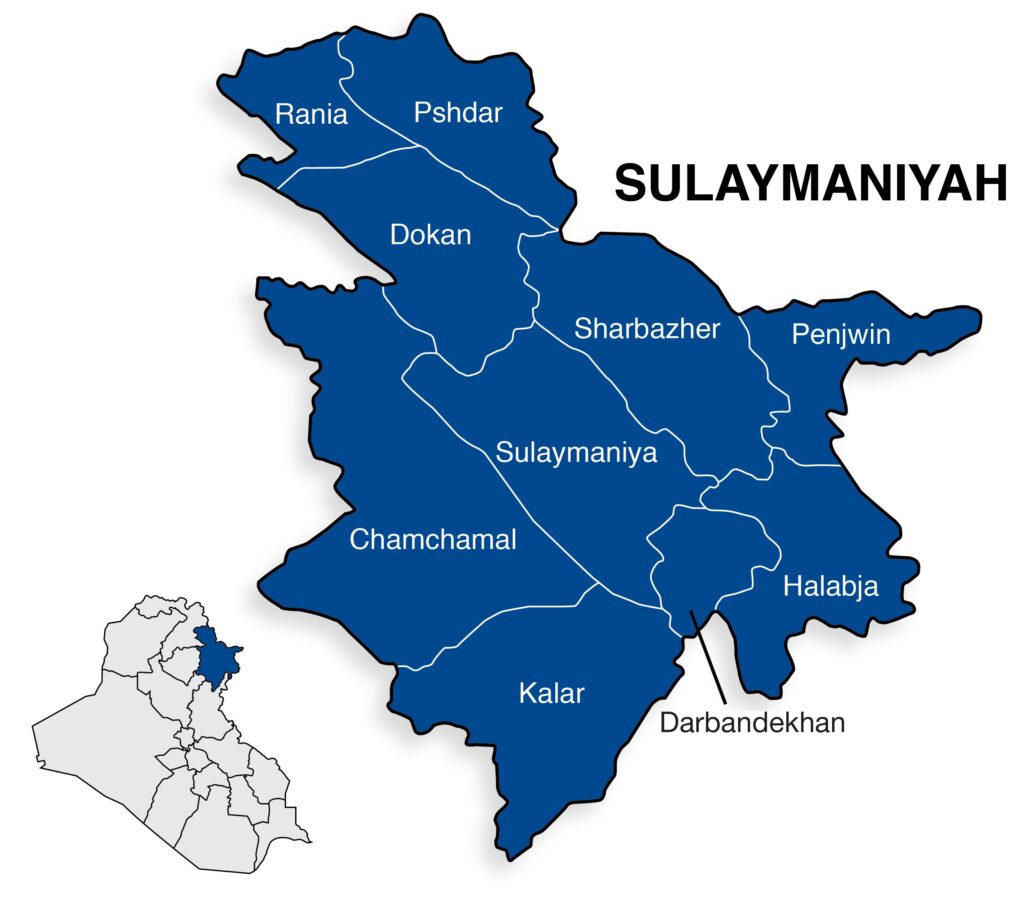
Figure 1: Map of Pshdar area, the independent administration of Raparin, Sulaymaniyah Province. Credit: Iraqesque, platform X.
Key Background
There is a steady stream of migration of male youth from a certain part of the Kurdistan Region of Iraq, known as Pshdar, into the United Kingdom. This phenomenon began in the 1990s and has not let up since. The trend ebbs and flows depending on political climates at home and in the host country. Instability and economic uncertainties are the main drivers of this migration; however, there are hidden forces behind this steady and organized process. Societal pressure, ease of transit through well-established networks, and a proven mechanism for guaranteed job opportunities, albeit low-paying jobs, in the host destination are also some of the factors behind this migration process that has gutted the region and deprived it of its most valuable assets. The young men and the young women who follow them at a later time, could be the muscle and the brains to develop and build their region and propel it into a new era. However, lack of prospects, mostly due to the lack of local government’s attention to the region, has fueled the migration of human assets.
This paper will examine the obvious factors as well as the hidden ones. It aims to provide a picture of what triggers migration among a certain group of people. What feeds the continuation of the process, and how could it be stopped?
Methodology
This paper employs a qualitative approach to understand the factors and motives driving the migration of young people from the Pshdar area of the KRI to the UK, using the established transit routes of some European countries, such as Greece, Germany, Italy, and France. Given the sensitivity and confidentiality of obtaining qualitative data, the research designed a focus group, including four randomly selected families with members (namely sons) who had emigrated from Pshdar to the UK. Through structured interviews, the data was collected between February and May 2025. The questions prioritized key factors and motives, focusing on the participants’ and migrants’ experiences, social and familial dynamics, economic considerations, and the existing smuggling networks surrounding migration decisions. The research design focuses on thematic analysis to identify patterns and, most importantly, contextual influences within the data.
In terms of ethical considerations, the research project ensured informed consent from all participants. Recognizing the sensitivity of migration topics in the KRI, measures were taken to ensure strict confidentiality, participant anonymity, and voluntary participation from the members of each family. The research project takes into account that the project’s qualitative design and small sample size limit the statistical generalizability of the findings. However, the depth of the inquiries and detailed responses highlight the rich insights and conclusive findings needed to underline social and economic processes sustaining this organized migration network. The qualitative findings also provide necessary context for the work on migration that often falls outside the main academic arguments or is lost in academic indoctrination, especially in the KRI.
Focus Group
For the purpose of understanding the dynamics and processes of emigration from Pshdar to the UK, a focus group of four families with family members who have emigrated to the UK was randomly selected. A set of purposely crafted questions was asked of each head of household or more than one person in the families. The focus groups were conducted between February and May of 2025. For privacy reasons, the data collected from the interviews do not include the names of the family members in KRI nor the name of the immigrant family member in the UK. An analysis of the data was performed, patterns and trends were recognized, and an image of the emigration phenomenon emerged.
The number one driver of this emigration process is the bad economy in the home country, which translates into a lack of job opportunities and the absence of a promising future.
Cause and Effect
One of the areas that this study focused on was the continuous cycle of emigration from the particular region of KRI especially to the UK. It must be clear that emigrants from all over Iraq and KRI choose the UK as their destination, and it is not limited to people from Pshdar. However, based on empirical evidence, the two factors that were critical drivers of keeping the emigration more attractive in Pshdar were one: the existence of tried and tested routes of immigration and two: the abundance of immigrants from the region who have established themselves in the UK since the 1990s.
The data obtained from the focus groups indicate that the number one driver of this emigration process is the bad economy in the home country, which translates into a lack of job opportunities and the absence of a promising future.
The Economics of Emigration
Gleaning from the focus group interviews, there appears to be a set structure to the emigration process. Economy and finance are the two major players in this process. The following is a simplification of the process:
- Son has no job, is bored with life, and wants to leave and discover better opportunities somewhere else. [Financial]
- “Somewhere else” is the UK because the son has friends or relatives there who can help him locate the right smugglers and a job once he arrives in the UK. [Established support system]
- The family decides to support the son’s decision to leave and help him with the cost of his emigration. [Societal Norm]
- The family sells land, a car, or jewelry for their son’s trip. [Economy and welfare]
- The son embarks on a journey, arrives, and finds a job with the help of relatives and friends. [Network]
- The son pays back the debt he owes to the family, possibly with some extra money. [Economy]
- Son continues to support the family back home with regular remittances. [Return on Investment]
However, the intricacies of the process are much more nuanced and have many influencing factors. The following three sections illustrate these various influencing factors:
1-The Immigrant-to-be
The son (immigrant-to-be) has no job and no prospect of employment. This study has shown that 100% of the emigrants are male, single, and still living with their parents prior to leaving home. The son is either a fresh graduate or has left school and has been scouring the local job market without luck.
This same individual decided to seek job opportunities outside of the local environment. His local environment includes immediate local and major cities such as Erbil and Sulaymaniyah. This individual is aware that he will have a very slim chance of succeeding in an extremely competitive job market in these two big cities, complicated by party affiliation and familial nepotism, and many individuals before him have tried and failed to succeed in the job market.
This individual is thinking, if he were to venture outside of his immediate surroundings, why not venture further? He is considering venturing to a place where many others have tried and succeeded before him. These alternative places are Europe and the UK, and specifically the latter. The UK is home to many Kurds, and in particular to Kurds from the Kurdistan Region of Iraq and more specifically from Pshdar. This future emigrant has many friends and relatives who are in the UK and are well-established. He contacts them to ask about the situation. They encourage him to try his luck and join them in the UK. They often even recommend a “good smuggler” and offer to find him a job once he arrives in the UK. But that may not be the case given that individuals in some of the small boats’ arrivals are labeled as victims of modern slavery by the UK government, including human trafficking or slavery, servitude, or forced or compulsory labor.
Preventing the son from emigrating is by far more expensive, money-wise, than funding his trip. There is careful calculus in the background while dealing with the decision to allow or prevent the son from emigrating.
2- The Family
Several factors dictate how the family deals with the decision of the immigrant-to-be son.
The family, and specifically the head of the family (in most cases the father), will weigh his options. If he refuses to let the son embark on this perilous journey, then he will have to deal with several issues. One issue is securing the future of this son. This means guaranteeing him a decent job (which has already proven to be futile) and setting up a family for him, i.e., helping him get married and finding him and his new family a place to live. Many in the focus group would prefer to avoid this. Preventing the son from emigrating is by far more expensive, money-wise, than funding his trip. As is clear from the research, there is careful calculus in the background while dealing with the decision to allow or prevent the son from emigrating.
The Pshdar area is a well-known and well-established smuggling corridor for all sorts of goods to and from Iran. With its proximity to the border with Iran and the hard-to-control rugged terrain, it has served this role before, during, and long after the eight-year-long war between Iraq and Iran in the 80s. More recently, cigarettes, alcohol, and lately drugs have become the commodities of choice for this route. As a result, the use of drugs has become a major issue for the locals, like most drug routes around the world. Some cases of drug use have been recorded in elementary school-aged children. Now, if the son is prevented from emigrating, the father would risk that his son will either become a smuggler, transporter, or user of abundantly available drugs, including the newly introduced Captagon pills coming from Syria on their way to Iran.
3- Societal Pressures
Back in the 90s, when the first wave of emigration from the Kurdistan Region to Europe and the UK began, the political and economic conditions were extremely unstable, and emigration offered a way for the youth, and in some cases middle-aged men and even rarer cases entire families, to leave behind their land and venture towards the unknown.
Unknown, it truly was. The rates by which people perished on the way were much, much higher than today; the routes were not well established. Türkiye, the main exit point, was locked in a fierce battle with the Kurdistan Workers Party (PKK), and the land paths through Türkiye were much more controlled.
Gradually the routes were established through Greece and beyond. Sweden was among the first countries to grant asylum to Kurdish refugees with credible cases of fear for life and persecution. Sweden became the favored place for a very long time until other routes were established to places like Germany and the UK. For the most part, Greece has served as the launching pad, and the connecting countries such as Italy, Germany, and France have only served as transit points, until Germany started accepting, or tolerating, the presence of Kurdish immigrants. Thessaloniki in Greece and the port of Calais in France, the two ends of the land route to the UK, have become household names in Kurdistan for their significance in the emigration process.
During this period, a distinct societal pattern emerged. Most families became fixated on sending at least one family member overseas. There was a clear shift in priorities. Before these smuggling routes were available or accessible, families usually were focused on sending their children overseas to further their education, but when emigration became an option, the focus shifted to securing immigration status in a European country.
Even back then, the allure of being settled in a safe country with the added benefits of free housing, monthly stipends, and free healthcare were among the top attractions. Furthermore, the ability to work, whether legally or under the table, gave the immigrant the financial ability to send remittances to family back home. Considering the dire financial conditions of the 90s, even a small amount of money sent frequently made a great deal of difference to the recipients at home.
Immigration status, which is not guaranteed, replaced academic achievement as a priority for society. This phenomenon had a double-edged impact. Fewer people were seeking higher education overseas, and more people with degrees were fleeing the Kurdistan Region and were settling for lesser-fitting jobs overseas. However, being able to support a family member to go abroad and settle in Europe replaced academic achievement as a point of pride for families.
The focus group notes from four Kurdish families in Pshdar provide rich insights into migration motivations including job challenges, financial burden, and the strength of migrant social networks.
Discussion and Analysis
The Focus Group Responses in the Broader Context of Immigration Push-Pull Factors
The focus group notes from four Kurdish families in Pshdar in the Kurdistan Region of Iraq provide rich qualitative insights into the motivations, experiences, and family dynamics associated with emigration to the UK. The data reflect common themes that are critical to understanding migration patterns specific to Kurds from the area of study; the factors include post–high school or post-university employment challenges, financial burdens, and the transnational ties migrants maintain with their families, and the abundance of, and ease of access to, smugglers.
Motives
Across all families, a central driver for seeking to emigrate to the UK was the acute lack of employment opportunities in the Kurdistan Region after graduation. Males of an average 20-35 years of age made their decisions to leave home in search of perceived better livelihoods, often after exhausting attempts to secure travel through legal channels such as obtaining an entry visa. These economic insecurities act as catalysts for costly and dangerous migration undertakings, indicating noticeable issues in local labor markets and limited prospects for returning youth.
Migration Routes and Their Costs
The methods of migration varied from air travel with substantial delays in arrival to dangerous and extended journeys by boat, truck, and other overland routes. Land routes mostly originated from their hometown to Türkiye and then through a number of European transit countries depending on the routes used by the smugglers. On average, the duration of the migratory trip ranged from 2 to 4 months and often included multiple attempts and risks, detention, deportation, or failed border (including the channel) crossings. Financially, families incurred high costs between $16,000 and $20,000 per emigrant, usually funded through the sale of family assets (cars, land) and borrowing from family or friends. Despite these expenses, immigrants frequently repaid their families and began providing remittances, becoming vital economic contributors to their households.
Family Dynamics and Social Networks
In some cases, the migrants had pre-existing friends or relatives in the UK; many initially traveled alone without companions, relying on broader Kurdish diasporic networks upon arrival. The family members left behind often had mixed feelings, from relief for improved economic stability for the emigrant and themselves to sadness and concern about disintegration of the family. Matrimonial decisions remained a locus of family interest, emphasizing cultural continuity despite geographic distance.
Immigrants’ Status and Integration
Most immigrants reported relative happiness or comfort in their new UK locations, largely due to employment, often unreported, and relative income stability. Regular communication and remittances often are equalizing factors, enabling families to sustain themselves amid otherwise difficult financial conditions in the Kurdistan Region. In general, assimilation into UK society is difficult and not a priority for the immigrants.
Addressing governance issues in the KRI through anti-corruption policies, anti-nepotism policies, and providing equal employment opportunities to graduates regardless of their political party affiliation or favoritism is critical to creating conditions that could reduce migration from Pshdar.
Conclusion and Policy Recommendations
The continuation or worsening of some of the same factors that were catalysts for a process that was very foreign to Kurdish culture has normalized the migration trend that began in the 90s. A bad economy, bad governance, political and security instability, and lack of prospects are still the same push factors that encourage the youth to emigrate. Guaranteed work opportunities, security and stability, and an elevation of cultural status among family members and friends are some of the pull factors that contribute to the continuation of this migration. The only variable that deters many youngsters and their families is the actual journey to the host country. With access to a network of skilled and experienced smugglers from within their own circles, the fear of demise on the treacherous journey is alleviated, and the plan to uproot and relocate becomes easier to execute.
The British government has tried to address the issue from its source by trying to strengthen the KRG institutions, maintain security of the region in partnership with allied countries, and fund NGOs to help create small business opportunities. The British Home Office went as far as funding an expensive social media campaign targeted towards the youth in KRI, highlighting the dangers of illegal migration. The campaign ran for several months, and its effectiveness is yet to be measured.
To address this issue, efforts should be bilateral between the British government and the KRG to address the root causes and for finding solutions at the source. Below are some recommended courses of action:
- Addressing governance issues in the KRI through anti-corruption policies, anti-nepotism policies, and providing equal employment opportunities to graduates regardless of their political party affiliation or favoritism.
- Revamping the education system in KRI to produce quality graduates that are employable by the private and public sectors or are able to establish their own business.
- The UK and KRI governments should conduct a joint study on the social and economic impacts of this type of migration on both the source and host countries. The findings would serve as a base for corrective action on both sides.
Recommended Research Opportunities
During this qualitative research, we have found the need to address some of the research gaps that exist and could be filled with quantitative research as follows:
- A study into the number of failed vs. successful migration attempts. As of now, most of the focus is on the successful attempts that are being measured by the officially reported arrival of the migrant on UK shores.
- A study to gauge the effectiveness of the British government’s deterrence campaigns: fear of deportation to Rwanda and the social media campaign on lowering the number of attempted migrations.
Content Type:Expert Insights