 Credit: The Institute for National Security Studies (INSS)
Kurdistan Region and the Regional Conflict: Security, Sovereignty, and Strategic Constraints
Key Background
There is a sense that the Kurdistan Region of Iraq (KRI) has been pulled into this conflict not by choice, but by circumstance, primarily due to its geographic position and the presence of Iranian Kurdish opposition groups within its territory.
At the same time, KRI has consistently communicated a unified message: it does not want to be part of this conflict. There is no desire to become a proxy actor or a launching pad for attacks into Iran.
This position was briefly challenged by leaks from Washington suggesting that certain Kurdish party leaders had made promises to President Trump to help with the US-led war. However, these claims were quickly diffused. Despite the denial, accusations and attacks did not stop. External actors and internal proxies within Iraq have continued to promote a long-standing narrative portraying KRI as an extension of Western and U.S. policy in the region. This narrative is not new, but it has been significantly amplified by the current conflict.
A Deeper Structural Issue: KRI’s Ambiguous Status
At its core, this situation reflects a deeper structural issue: KRI’s ambiguous political identity. While it is recognized as a federal entity within Iraq, that recognition is frequently contested or undermined. This creates a fundamental challenge. KRI must operate within Iraq’s broader security framework, yet it lacks full sovereignty over its own defense.
The Peshmerga forces are formally part of Iraq’s security system. However, due to this arrangement, KRI cannot independently procure advanced weapons, establish its own defense systems, or conduct autonomous security operations. As a result, KRI is almost entirely dependent on Baghdad for its defense capabilities.
The Baghdad Constraint and Proxy Dynamics
This dependency becomes particularly problematic given the current political situation in Baghdad. The absence of a strong and functioning central government limits its ability to control armed actors, restrain so-called “rogue elements,” or enforce a coherent security policy. Whether these groups are truly rogue or indirectly tied to elements within the Iraqi state remains debated. However, their impact is clear: they represent one of the primary security threats to KRI. This vulnerability defined the situation until recently.
A Turning Point: From Proxy Activity to State Action
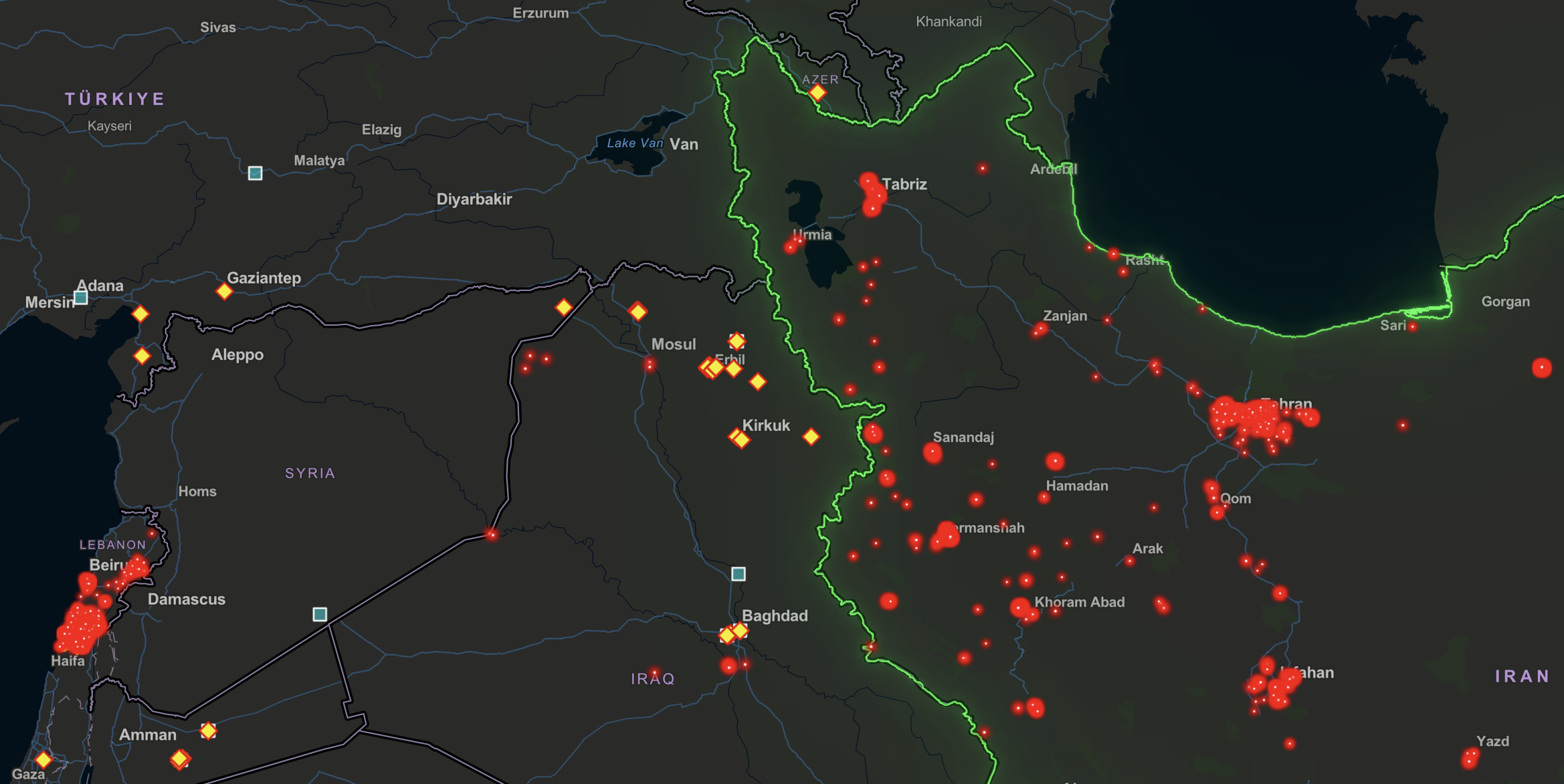
The attack on Peshmerga bases on March 24, 2026, marked a critical transition. Previously, the threat environment was largely shaped by proxy actors projecting power within the regional conflict. However, this attack represented direct state action. Initially, Iranian sources suggested the strike was a mistake. This narrative was quickly undermined by affiliated media channels, which asserted that the attack was deliberate and targeted.
The manner in which the attack was conducted reportedly in two successive waves further reinforces the assessment that it was intentional rather than accidental. This event represents a clear escalation and a turning point in the conflict dynamic.
The Question of “Truth”: Between Accusation and Reality
A central question emerges: where does the truth lie between KRI’s claims of neutrality and Iran’s accusations?
The answer likely lies somewhere in between. There has indeed been a presence of international actors in KRI, particularly in the context of the anti-ISIS coalition. This includes:
- intelligence cooperation,
- limited military deployments,
- and training missions.
Importantly, much of this activity was not secret. It was conducted openly and often with the knowledge, if not full approval, of both KRI and Baghdad. Examples include known U.S. military contingents in specific bases and joint training programs with Kurdish units. While some smaller operations may have remained undisclosed, as is typical in their line of work, there is no evidence of hidden agreements aimed at targeting Iran or undermining Baghdad.
However, perception matters as much as reality. Iran’s strategic posture appears driven not only by confirmed intelligence but also by suspicion, distrust, and worst-case assumptions. This creates a dangerous dynamic where even ambiguous or outdated signals can justify escalation.
Neutrality Under Pressure: How Long Can It Hold?
KRI’s strategy of neutrality faces growing strain. While leadership continues to emphasize restraint and de-escalation, internal pressures are mounting. Public sentiment increasingly questions why KRI appears defenseless, why there are no mechanisms to prevent repeated attacks, and how long this posture can be sustained.
Even in periods of relative calm, security disputes have been expressed through indirect attacks, such as rocket strikes on energy infrastructure, rather than formal negotiations. This suggests that neutrality alone may not be sufficient as a long-term strategy. At some point, KRI may need to do either of the following:
- engage more directly with Iran.
- adopt a firmer diplomatic posture.
- or reassess its security approach
The Core Constraint: Defense Limitations
A critical limitation remains KRI’s lack of defensive capability. The region does not possess advanced air defense systems, sufficient anti-aircraft capacity, or independent procurement channels. This vulnerability is starkly illustrated by past incidents, where even basic threats were met with improvised responses rather than structured defense systems.
Without Baghdad’s active support, KRI’s ability to defend itself remains severely constrained.
Regional Dimensions: The Role of Türkiye
Any analysis of the situation must also consider Türkiye. Türkiye has a strong interest in maintaining stability in KRI, particularly given its proximity, ongoing security concerns related to the PKK, and its broader regional strategy. An unstable KRI could disrupt Türkiye's security calculations, reignite dormant conflicts, and undermine ongoing peace processes. For this reason, Türkiye is likely to play a stabilizing role within the limits imposed by international law and its own strategic priorities.
Economic Considerations: Trade with Iran
On the economic front, trade between KRI and Iran, particularly through Sulaymaniyah Province, remains largely intact. Border crossings have experienced temporary closures, but there has been no sustained shutdown. This reflects mutual dependence: where KRI relies on Iranian imports, Iran benefits from the economic exchange.
However, risks remain:
- potential border closures as a political tool,
- disruptions in dollar liquidity and currency exchange,
- and the possibility of increased informal or smuggling channels.
While markets have not yet been significantly affected, the situation remains fragile.
Internal Unity: Crisis as Opportunity
Interestingly, the crisis has produced a degree of political unity within KRI. Historically, internal divisions have been pronounced. Yet in moments of external threat, Kurdish actors tend to converge. Current messaging from major political parties has been notably aligned on key issues:
- rejection of involvement in the conflict,
- opposition to being used as a launch platform,
- and emphasis on regional stability.
While this unity is driven by necessity, it may offer an opportunity for longer-term political consolidation if sustained beyond the crisis.
Conclusion
KRI stands at a precarious intersection of regional conflict, internal limitation, and structural ambiguity. It is neither fully sovereign nor entirely subordinate. It seeks neutrality but operates in an environment that does not always respect it. It is strategically important, yet militarily constrained. The recent escalation marks a shift from indirect pressure to confrontation.
What follows will depend on several factors:
- Baghdad’s capacity to reassert control,
- KRI’s ability to navigate diplomacy under pressure,
- and the broader trajectory of regional conflict.
For now, KRI remains exposed geopolitically, militarily, and structurally.
Disclaimer: This is a brief summary of a discussion between the iNNOV8 Research Center and a group of international stakeholders about the current security situation in the Kurdistan Region in the context of the Iran/US-Israel war unfolding in the Middle East.