Unequal Impact: Women and Climate Change in Iraq
Executive Summary
This paper examines the impact of climate change on women and identifies the degree and specific areas of their vulnerability to the effects of climate change. It concentrates on Iraq and analyzes how the pre-existing social and gendered norms are exacerbating the effects of climate change on women and girls. Moreover, it identifies the areas in which women are affected mostly by climate change, such as health, natural hazards, water scarcity, economics, and livelihood. Through exploring these correlations, this paper aims to provide a thorough understanding of how climate change disproportionately affects women.
Iraq is classified as the fifth most vulnerable country to climate change effects. Rising temperatures, floods, desertification, decreased rainfall, and dust storms are the main climate change trends that Iraqis greatly suffer from. However, women are more vulnerable and face multilayered implications of climate change due to the traditional gender roles and social norms. Within Iraqi society, men and women maintain distinct roles and responsibilities. Women's traditional role is to manage household tasks, such as cooking, cleaning, raising children, and taking care of family.
This paper finds that climate change trends disproportionately impact women and girls in Iraq. Additionally, entrenched gender norms and patriarchal structures that enforce distinct roles and responsibilities for men and women exacerbate these impacts, particularly for rural women, due to limited access to resources and severe traditional and gendered norms.
Introduction
Climate change is considered the most pressing challenge for human society globally. Rising temperatures, low perception, drought, evaporation, and natural hazards are threatening the well-being and health of millions of people around the world. Yet its impacts are not experienced equally. Substantial research shows that climate change affects marginalized groups disproportionately, particularly women who are already dealing with gendered norms, patriarchal structures, and discriminations that exclude women socially, politically, and economically.
Women's vulnerability to the impact of climate change is closely associated with gendered norms; women are more heavily reliant on natural resources for their livelihood, have less access to resources, and are often excluded from the decision-making roles, which makes them disproportionately affected and more vulnerable to the consequences of climate change.
These climate dynamics are particularly obvious in less developed countries that are undergoing climate change trends and environmental degradation. Iraq is ranked as the fifth most vulnerable country to climate change. The climate change trends have increased pressure on women who already encounter gendered and patriarchal social norms that deprive them of economic opportunities, access to resources, participation in public life, and decision-making roles. This scenario is particularly the case for those women living in rural areas, where gendered norms are stronger, and they are deprived of education and work and largely depend on natural resources and agriculture for their livelihood.
1. Conceptual and Theoretical Framework
1.1. Defining Climate Change
Climate change stands as a universal issue that impacts humanity; however, these impacts vary based on economic, geographical, and social circumstances.1 According to the United Nations (UN), climate change refers to "long-term shifts in temperatures and weather patterns." Such shifts can be natural, due to changes in the sun's activity or large volcanic eruptions."However, the same definition indicates that human activities have been the main cause for climate change since the 1800s because of the burning of fossil fuels like coal, oil, and gas.2
The main greenhouse gases that contribute to climate change are carbon dioxide, methane, halocarbons, and nitrous oxide. "These gases accumulate in the atmosphere and allow radiation from the sun to pass through but trap some of the heat radiating back from the Earth." This is known as the "greenhouse effect." As time passes, the amplified greenhouse effect contributes to global warming, which means an increase in the average temperature of the planet.3 According to resources, over the past 200 years the planet has undergone significant and continuous climate change, these rises particularly being felt in the form of rising global temperature, as since 1800 the global temperature has increased by 0.85 degrees Celsius.4
Climate change discourse centers around two main ideas: vulnerability and resilience. Vulnerability refers to exposure, sensitivity, and adaptive ability to respond to the climate change crisis; in other words, it means the degree of susceptibility to the impacts of climate change. Socio-economic conditions largely shape a person or community's vulnerability to the impact of climate change. Conversely, the idea of resilience means "the ability to prepare for, recover from, and adapt to the impacts of climate change." Similar to vulnerability, climate resilience can also be a limiting framework by placing an individual's or a community's behaviors within a predetermined model of how they are expected to respond.5
Climate change impacts are "expected to exacerbate poverty in most developing countries and create new poverty pockets in countries with increasing inequality, in both developed and developing countries."6 In order to determine the effects of climate change, one should take into account the location and context of the countries because some countries are located in geographical areas that are more prone to being affected by extreme climate change events.7 Additionally, countries with limited institutional capabilities are more prone to experience societal conflict and instability given the effects of climate change, whereas countries with strong institutional and technological abilities are capable of responding to climate change implications and mitigating its risks.8
1.2. Gender and Climate Change: An Ecofeminist Perspective
The gender analysis in the context of climate change highlights that women and men possess distinct capabilities, life experiences, and vulnerabilities that lead them to experience different impacts of climate change.9 Gender "serves as an important dimension of both vulnerability and adaptation, that is, whether and how women, men, boys, and girls are affected by and respond to climate change vulnerability."10 The term "gender" is a social construct that assigns distinct roles and responsibilities to girls and boys or men and women in society. In other terms, social norms shape gender and "determine what is allowed, expected, and valued in a woman and a man in a given context."11
Feminist perspectives on climate change show the intersectionality of gender and environmental issues, arguing that women are disproportionately affected by climate change due to existing social inequalities. Thus, they put gender norms as the foundation for the analysis of men and women's vulnerability to climate change.12
One of the most prominent and widely debated schools of thought that links women's position and environmentalism is called ecofeminism, which emerged from a branch of environmental philosophy known as radical ecology. Radical ecology asserts that humans are an interconnected part of the biosystem, equal to all other species and not superior to any other species. Ecofeminism is defined as "bringing together (of) feminism and environmentalism, which argues that the domination of men and the degradation of the environment are consequences of a patriarchal system."13 From an ecofeminist perspective, women are inherently more connected to nature than men, and gender inequality and environmental exploitation are sourced from patriarchal domination.14
The term "Ecofeminism" comes from two words: "ecology" and "feminism," and both maintain overlapping purposes. The core idea of this school of thought revolves around women being vulnerable to climate due to gender norms and social expectations. These gendered roles and responsibilities shape men's and women's access to resources, knowledge, and power, which in turn influences how they cope with a changing environment. Ecofeminism further suggests that, the main factor contributing to women's disproportionate vulnerability include, Illiteracy and low skills, Lack of access to assets, social isolation, Low socio-economic status, restricted access to energy, and inadequate warning systems for impending disasters.15 As a result, women often face greater difficulties in recovering from climate change-related events such as flooding, heat waves, and tornadoes, particularly in developing countries.16
These theoretical arguments are reflected in several real-world studies and disaster cases. Ahmad and Fajber's 2009 research found that women are unequally affected by climate change-related events and natural catastrophes due to their limited access to early warning systems. For instance, the United Nations Office for Disaster Risk Reduction (UNDRR), 2008, found that during the 2004 Indian Ocean tsunami, a large number of women lost their lives due to social isolation and lack of access to early warning systems, and they prioritized rescuing their children before their own safety.17 Therefore, as per the ecofeminist view, limited access that women experience significantly constrains their ability to face climate-induced challenges.
Intersecting feminism and climate change is important due to several factors. Firstly, gender norms and dynamics mainly determine access to resources, as well as impacting vulnerability and resilience to climate change. Secondly, the feminist perspective emphasizes principles like equality and justice, which align closely with protecting the environment and running businesses responsibly. Therefore, by incorporating feminist principles into climate action frameworks and policies, better strategies can be developed to tackle climate change while addressing the dual challenges of climate degradation and social inequality.18 The ecofeminism movement strives to present climate change not solely as an environmental issue, but rather as a fundamental feminist concern, because women suffer more due to gender norms. Furthermore, this theory argues that as women are under additional threat from a changing climate, they can also be at the center of the climate response, and their contribution is as critical to addressing it as men's.19
2. Climate Change Trends in Iraq
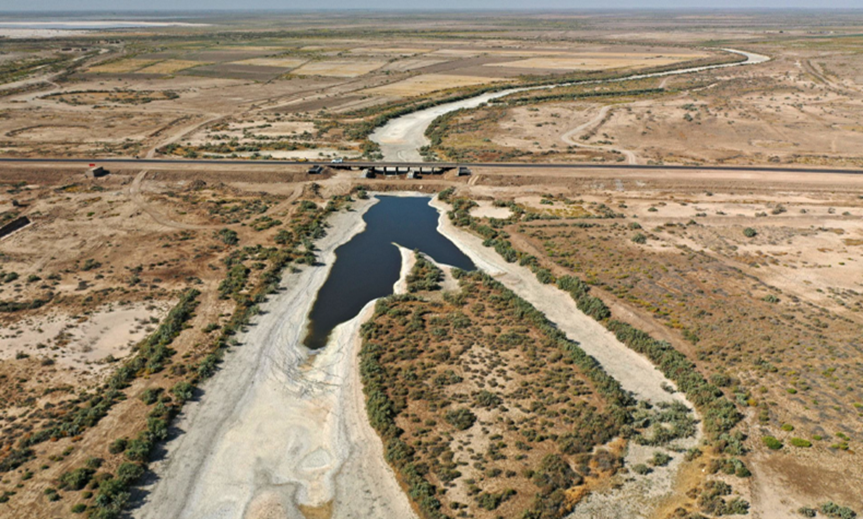
Iraq is classified as the fifth most vulnerable country to climate change effects. Rising temperatures, floods, desertification, decreased rainfall, and water scarcity are the main climate change trends that Iraqis greatly suffer from.20 These climate change trends have had adverse effects on human health and critical sectors, such as water and agriculture, aggravating problems of food insecurity and hindering efforts to reduce poverty and enhance common welfare.21
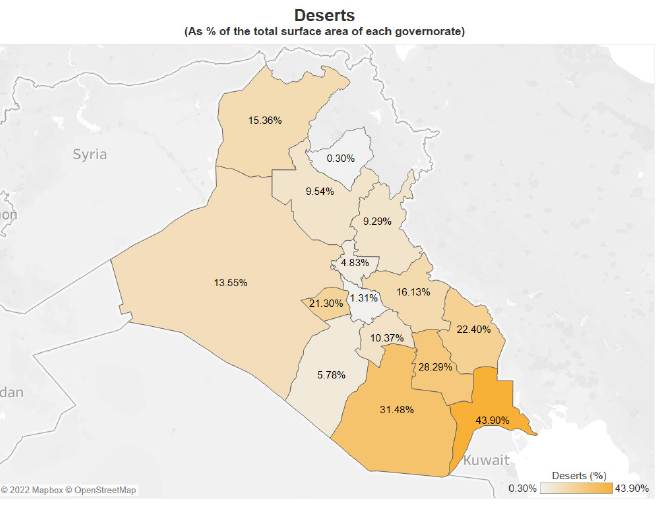
Desertification is considered one of the prominent climate change trends in Iraq, which refers to "land degradation in arid, semi-arid, and dry sub-humid areas resulting from various factors, including climatic variations and human activities."22 The Iraqi Ministry of Agriculture has indicated that an astounding 92% of Iraqi land faces the risk of desertification, with 15% of the land, or about 10,400 square miles (26,936 square kilometers), already desertified.23
Desertification in Iraq is caused by a combination of environmental and human-related factors. The climate elements that contribute to this weather pattern include high temperatures, water scarcity, and soil erosion. The condition is furthermore intensified by human-led activities such as population growth, which results in the depletion of natural resources. Ineffective farming methods, insufficient water, and uncontrolled tree falling are contributing significantly to deforestation.24 Water scarcity is another major climate-induced trend. This is impacting the water security of millions of people.
In Iraq, the water scarcity level is alarming. As per a report by the United Nations Educational, Scientific, and Cultural Organization (UNESCO), "Iraq faces an unprecedented water crisis that threatens every aspect of life—health, food security, energy, and economic stability."25 In addition to declining rainfall, inadequate water management, increased population demand, and inefficient water consumption in the oil and agricultural sectors have exacerbated water scarcity in Iraq. Moreover, constructing dams by the upstream countries, like Iran and Türkiye, is another factor that affects water availability in Iraq.26
Water quality has also been severely impacted due to the increase in water salinity and pollution, which has decreased the amount of clean and potable water. Such pollution puts the health of Iraqi citizens at risk. Additionally, it also further weakens the agricultural sector and its ability to irrigate crops.27 Water scarcity triggers climate-induced displacement in Iraq. As per a UNESCO report, around 31,001 families (186,006 people) remain displaced as of September 2025 as a consequence of climate change trends, and 63 percent of these people have moved from rural to urban areas.28
Climate fluctuation in Iraq has caused a notable rise in temperature, and the country is 0.7 hotter than it was 100 years ago. Nowadays summer in Iraq experiences temperatures of above 50°C. According to resources, "these temperature increases will adversely affect water availability and exacerbate the risk of longer and more severe droughts, dust storms, and soil degradation."29 Iraq also suffers from declining precipitation. Its rainfall is characterized by variability depending on the season and region. For instance, the greater amount of rainfall that Iraq receives is in the north and northeast, with between 400 and 1,000 millimeters per year, and it mostly starts in November and ends in March, whereas the steppe receives between 40 and 60 millimeters of precipitation annually. The southern part of Iraq receives only between 40 and 60 millimeters of precipitation, primarily from October to December. "The winter season of 2020–2021 has been marked as the second-lowest on record in four decades due to below-average rainfall, notably in Iraq's northern governorates."30
One of the implications of changes in precipitation and temperature levels is the occurrence of natural hazards, such as floods, wildfires, landslides, and extreme heat waves. Climate change leads to heavier precipitation, which can cause flooding. "Flooding is an accumulation of water over dry land in response to rising water levels in rivers, lakes, and seas. River flooding can result from high snowmelt and heavy rains."31 In December 2021, Iraq experienced flash floods that occurred due to heavy rainfall that hit the country's northern Kurdish region, particularly in the Erbil and Kirkuk governorates. The incident caused widespread damage to houses, infrastructure, and vehicles, and 14 people were reported dead from the floods, with more than 7,000 people affected.32
These ongoing climate change trends in Iraq, particularly declining precipitation and changes in the timing of rainfall, have substantial implications for the agricultural sector, the second-largest sector that contributes 25 percent of the country's gross domestic product. Agriculture is considered one of the largest water consumers, accounting for 85%. Increasing water demand for agriculture has put more pressure on currently available water resources in Iraq.33 As per a UN report, "Climate change in Iraq not only affects Iraq's agricultural sector but also is a severe threat to fundamental human rights, creates barriers to sustainable development, and worsens the country's environmental, security, political, and economic challenges."34
3. Key Areas of Climate Change Impact on Women
3.1. Health
The occurrence of climate change is highly affecting women's health due to water scarcity, pollution, heat waves, and flooding, particularly those from marginalized groups who suffer from a lack of healthcare infrastructure, socioeconomic restraints, and cultural barriers. Climate change poses both immediate and long-term threats, especially for pregnant women and newborns.35 Globally, women are more prone to suffering from anemia and malnutrition and are sensitive to climate-driven food insecurity due to increased nutritional needs during menstruation and childbirth. "Anemia is related to poor iron levels and red blood cell conditions that can negatively affect the brain and memory."36 Resources have indicated that "50 percent of the pregnant women suffer from iron deficiency in developing nations, where yearly 315,000 women die during childbirth."37
Tuğçe Sönmez and Enes Karaman, in a study, attempted to determine the factors relating to climate change anxiety in women. They indicated that climate change triggers mental health issues in women, which manifest as depression, post-traumatic stress disorder, and other neuropsychiatric symptoms. According to their belief, this implication cannot be ignored because of its repercussions on "reproductive and sexual health; toxic exposures may cause adverse obstetric outcomes such as infertility, abortion, preterm birth, low birth weight newborns, and neurodevelopmental delays such as autism and attention deficit hyperactivity disorder."38
Recent studies have found a relation between increased visits to psychiatrists and suicides at high temperatures, especially among pregnant and working women.39 Furthermore, the effects of climate change on women's psychology have also been associated with mental health issues such as anxiety, antisocial behaviors, and suicide attempts. Mainly, there are two major causal pathways between mental health consequences and climate change impacts. Severe climate-induced events directly result in depression or psychological trauma. Indirect consequences happen with passing time and cause variations in ecosystems through different determinants, such as economy, migration, or social structures. Women are more prone to both pathways, however, particularly to the direct one, as they already suffer from gendered norms that make them have less access to health care, shelters, resources, and support during times of climate-induced hazards, particularly in developing countries and among marginalized groups.40
3.2. Natural Hazards
Natural hazards that happen due to fluctuation in climate change have a disproportionate effect on women compared to men. According to research by Soroptimist International of the Americas, the death rate of women and children is 14 times greater than that of men in natural disasters.41 Women also maintain ecological vulnerability, which means that in the aftermath of natural hazards, women encounter serious challenges that make them move in search of food and livelihood, and they struggle in adapting to the new environment due to the degradation of the environment. Furthermore, natural hazards such as storms have been associated with higher risks of "maternal hypertensive disease" and "significant mood disorders such as depression and post-traumatic stress." Such events have also been linked with increasing the risks of premature birth, low birthweight, and adverse neurodevelopmental outcomes in offspring.42
There are a number of factors that contribute to women vulnerability to natural disasters. For instance, in the aftermath of natural disasters, women are at a higher risk of being placed in unsafe, overcrowded shelters due to a lack of access to assets such as savings and land ownership. This situation makes them more vulnerable to physical, sexual, and domestic violence, and these effects are amplified when women already suffer from low socioeconomic status. Additionally, during occurrences of natural disasters such as floods, tornadoes, and other disasters that require mobility, "cultural constraints on women's movements may hinder their timely escape, access to shelter, or access to health care." These circumstances are further aggravated by women's fear of domestic and sexual violence that happens in those shelters.43
3.3. Economic and Livelihood
Climate change is disproportionately affecting the incomes of rural women due to their unequal capacity to respond and adapt to climate change events, particularly those who suffer from delayed economic development and already live in poverty.44 Women's reliance on natural resources increases their vulnerability to climate change, as "two-thirds of the global female labor force is employed in agriculture, producing almost 45–80% of the food of developing countries and spending up to 5 hours a day collecting fuel and water at the expense of education and health."45
The main harm of climate change can be seen in the agriculture sector when crops are poised to fail due to climate and weather trends, such as changes in rainfall patterns and high temperatures. Subsequently, all key dimensions of food security, which are food availability, food accessibility, food utilization, and food system stability, are under threat. "All these are largely affecting women in rural areas, who are responsible for securing, storing, and preparing food."46 When climate change diminishes these resources, women must work harder and travel farther. These conditions also might put pressure on young girls to drop their education and support their families to manage the increased burden.47
According to a report from the Food and Agriculture Organization of the United Nations (FAO), annually, in low- and middle-income countries (LMICs), rural female-headed households incur greater financial losses compared to men. "On average, female-headed households lose more than eight percent of their income due to heat stress and three percent more due to floods compared to male-headed households."48 In the less economically developed countries, women usually begin to work and earn money after they are married; that's why their income is small (a meager livelihood), which is mostly spent on basic daily needs like food, medicine, and education. However, the circumstances in economically developed countries vary, and women start working before marriage, which in turn provides them greater financial independence and different life choices and makes them more resilient to climate change shocks.49 This implies that the socioeconomic level has a significant role in exacerbating the vulnerability of women to climate change.50 Compared to men, women's economic status is more severely harmed, and according to a report published by UN Women, it will push over 158 million women and girls into poverty, while 236 million more will face food insecurity.51
3.4. Water Scarcity
Women are among the hardest hit by water scarcity. Their susceptibility to water scarcity can be observed by looking at their daily lives, as they generally perform the roles of finding, collecting, carrying, storing, securing, purifying, and distributing water. Water scarcity for women means laborious, time-consuming water collection; increases the risk of facing violence; and prevents them from pursuing education.52
Globally, women are responsible for collecting water for households, and young girls are bearing this burden with their family and are nearly twice as likely as boys to spend more time taking on the responsibility. According to a report by the United Nations International Children's Emergency Fund (UNICEF) and the World Health Organization (WHO), "Women and girls are responsible for fetching water in 7 out of 10 households without supplies on premises."53
Collecting water has physical implications for women, particularly for pregnant women. Carrying water buckets for a long distance puts stress on the lower back and neck of women, as well as muscle fatigue, which, with passing time, can lead to chronic pain and physical disabilities. Women also encounter heightened risks, breaks, and physical injuries due to carrying water loads. Additionally, fetching water constantly causes mental issues that appear as feelings of stress, frustration, and low self-esteem.54 It's also highlighted as a life-threatening experience for women and young girls, as it keeps them away from schools and enjoying their childhood. "Every step a girl takes to collect water is a step away from learning, play, and safety," said Cecilia Sharp, UNICEF Director of WASH and CEED.55
4. Women and Climate Change in Iraq
Environmental degradation and climate change are undermining Iraq's stability and threatening the livelihood of the population. Nevertheless, Iraqi women, particularly those who reside in rural areas, are at a higher risk. Iraqi women are already encountering pre-existing gender norms and patriarchal conditions.56
Within Iraqi society, men and women maintain distinct roles and responsibilities. Men are expected to serve as the protector and provider for their families, perform work outside the home, and act as family representatives. Conversely, women's traditional role is to manage household tasks, such as cooking, cleaning, raising children, and taking care of family.57 "Men are pressured by social norms and stereotypes to adhere to the cultural and social traditional roles around the idea of a 'real man' in their silent, daily lived experiences. For example, a man who fails to protect his wife, daughter, or sister from working in the field is exposed to criticism, blame, and threats of losing his social status."58 The gendered and cultural norms have reinforced the idea of male superiority. Men hold the decision-making power both within the home and in the community. Women are required to respect these norms and standards, which often goes against their interests due to a lack of alternatives and options.59
Iraqi women are vulnerable and face multilayered implications of climate change due to these traditional gender roles and social norms. The Iraq National Strategy for Iraqi Women 2023–2030 identified "school dropout, early marriage, desire to reduce economic burden, and the decline in the economic and social conditions of women in rural areas" as the prominent outcomes of climate change that affect women and girls.60 Women in Iraq often have fewer livelihood opportunities and incomes than men. Iraq ranked 154 out of 156 countries in the Global Gender Gap Report 2021, with women experiencing less access to political, educational, and economic opportunities, which heightens their vulnerability to climate change dynamics.61 Consistent with these findings, as per a survey conducted by the ILO in July 2022, Iraqi women's participation in the labor force is among the lowest in the world. Out of 13 million women who appeared, only one million—10.6%—are employed compared to 68 percent for men. The unemployment rate for women remained at 28.2 percent, which is double the unemployment rate for men.62
In Mosul, Ninewa, for example, women reported adversely experiencing "farm droughts"; nearly half cited desertification, and over one-third had lost their livelihoods entirely, which pushed many of them to turn to negative coping strategies such as selling personal assets to finance their relocation to the city.63 As rural populations mainly depend on agriculture and land for living, they experience immediate implications of climate change. Women in these locations are more vulnerable as they experience distinct forms of challenges and forced gender roles.64
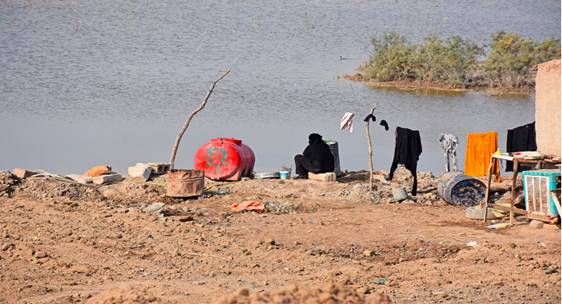
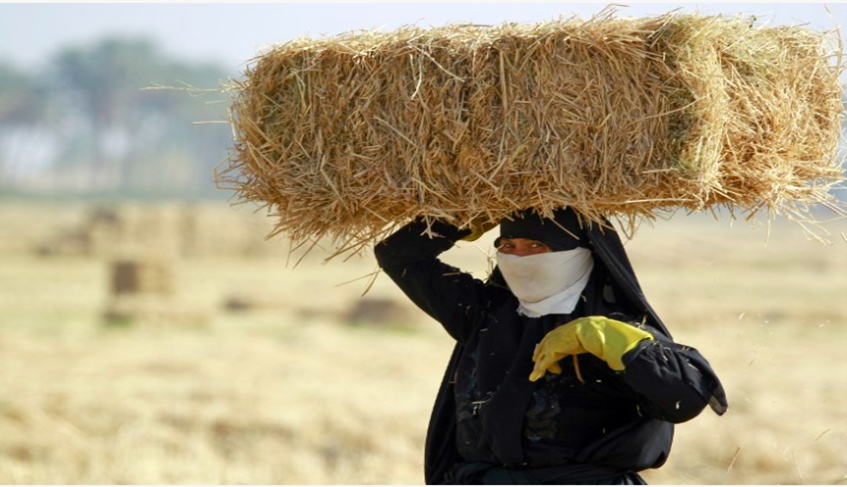
Rural women are severely impacted by water shortage and drought because of their traditional roles in managing household water. In the Hawizeh marshes, for instance, women have to walk for considerable distances from their homes to water wells or water plants to collect water for their families. Additionally, when livelihood sources decline, men frequently migrate to cities to find other job opportunities. Leaving women to support their families and livestock, adding an extra burden of responsibility in times of distress.65 Marshland women, similar to men, have daily activities that include cutting and collecting reeds as fodder for their buffalos, preparing milk and dairy products, herding the cattle, and looking after their children and family needs.66 Um Issa, who lives along with her ten children in the Hawizeh Marshes, illustrates the damaging effects of drought and climate change in a depressing manner. "When the marshland dries up, we nearly starve, because droughts affect humans and animals alike. Men leave the marshland for the cities and seek other jobs in the police force or the army, leaving their families in sordid poverty and hunger, which forces us to shoulder greater responsibilities to support our families."67 Moreover, families in these rural areas often have to purchase water. If the purchased water doesn't last for a specific period of time that is usually set by them, women will be penalized by men, and they refuse to purchase additional water while they still expect women to meet the household's water needs.68
Climate change in Iraq has also contributed to displacement and migration, as the decline in resources forces people to move to other locations to endure its effects. "From the social perspective, climate-induced migration is increasingly displacing families from their traditional homelands and placing them in unfamiliar environments where social safety nets, such as trusted neighbors and tribal networks, are absent."69 Families who are displaced or migrate because of environmental degradation rarely find themselves in a better position after migrating. For women in particular, climate-induced displacement is particularly disruptive, as relocating from rural to urban areas frequently results in the loss of daily routines, social networks, and livelihood skills that previously supported household well-being. Women face more barriers in integrating into hostile urban environments.70
Climate-induced displacement also deepens women's economic and social marginalization in urban areas. Most are employed in low-wage jobs in the informal sector and (unlike the host population) do not have access to government employment or long-term contracts. Um Anwar, for example, "is a widow who used to grow okra and black-eyed peas to support her four children. However, she is currently unemployed after being forced to leave the Samawa brick factory owing to the extreme heat, harsh working conditions, and low wages."71
Beyond its economic and social consequences, climate change poses significant health risks for Iraqi women due to environmental degradation, inadequate healthcare access, and existing gender inequalities. Extreme heat and water pollution are increasing the health-related impacts of climate change, particularly for pregnant women. Naba, a 23-year-old woman who is from As-Suwayr, stated that "I lost my child because of the salty soil," as the most water resources in her village are filtered by using primitive methods like cloth straining, which cannot filter well and remove all the salt, as a result leading to high blood pressure during pregnancy. Drinking salty water leads to fluid retention in pregnant women and preeclampsia because the body cannot eliminate the salt.72
Social and behavioral prohibitions imposed on Iraqi women because of culture and gender norms are increasing the burdens of the effects of climate change, making them harsher and deepening the weakness and fragility of women's conditions now and in the future.73 To eliminate the negative effects of climate change on women, the Iraqi government should include women as one of the most affected groups in the assessment of climate change risks. "Strengthening early warning systems and informing integrated response plans that factor in the needs and priorities of these vulnerable groups should be the government's goal." Moreover, the Iraqi government should also work toward diversifying its economy rather than depending on specific sectors such as agriculture and invest in water and food security, which are the primary sectors where women are harmed by climate change trends.74
Another method of decreasing these effects is raising community awareness and providing thorough information about the economic, social, and environmental effects of climate change. Most importantly, modifying gender and societal norms that limit Iraqi women from participating in public life and associate them with specific roles and responsibilities exacerbates their vulnerability to impacts of climate change.75
Conclusion
This paper concludes that climate change is one of the most pressing threats facing the global community. Although it impacts both men and women, it's not gender neutral; women are more vulnerable to impact because of preexisting social and gender norms that impose specific social, economic, and political life on women. Climate change trends such as low precipitation, drought, desertification, rising temperatures, and water scarcity are affecting women and young girls, especially in developing countries, who mostly rely on natural resources.
The findings of this paper reveal that gender norms and patriarchal structures increase women's vulnerability to climate change and constrain their capacity to adapt and respond properly to climate change dynamics. These gendered norms deprive women of access to resources that are vital for climate change adaptation. Additionally, this paper identified health, natural hazards, economic and livelihood issues, and water scarcity as the main dimensions through which women are affected by climate change.
In the context of Iraq, the findings have shown that climate change is not only an environmental crisis but also a social and gendered issue that disproportionately affects women. Desertification, rising temperatures, low precipitation, and water scarcity are the main climate change trends that are challenging Iraqi women, who are already encountering pre-existing gender norms and patriarchal conditions. Entrenched gender inequalities in Iraq associate roles and responsibilities with women, making them more vulnerable to the effects. Iraqi rural women are particularly suffering from water scarcity and poor water quality due to climate change, and they carry the burden of providing water to the family. They are forced to travel to distant locations to secure water, which causes serious health and mental issues. Climate change is also forcing women to migrate, putting them at risk of losing their jobs and making it difficult for them to integrate into the urban areas where they are displaced. Moreover, climate change is creating serious socioeconomic issues such as school dropout, early marriage, losing livelihood sources, and food insecurity.
Lastly, this paper suggests that in order to decrease the negative effects of climate change on women, the Iraqi government should include women in the assessment of climate change risks, strengthen early warning systems, and inform integrated response plans. In addition, economic diversification and investment in water and food security are needed. Furthermore, increasing community awareness about the economic, social, and environmental effects of climate change and working toward modifying gender and societal norms that limit women's opportunities and participation in public life.
- Aguilar, L., Granat, M., & Owren, C. (2015). Roots for the future: The landscape and way forward on
gender and climate change. Washington, DC: IUCN & GGCA, p-17,Read More ↩︎ - United Nations, "What Is Climate Change?" accessed March 12, 2026, Read More ↩︎
- Chris Riedy, Climate Change, Institute for Sustainable Futures, 2019, Read More ↩︎
- Aguilar, L., Granat, M., & Owren, C. (2015). Roots for the future: The landscape and way forward on
gender and climate change. Washington, DC: IUCN & GGCA, p-17, Read Moree ↩︎ - Anne Karam and Rebecca Rosario Hallin, “Framing the Climate Crisis from a Feminist Perspective,” KIT Royal Tropical Institute, March 7, 2025, Read More ↩︎
- Jonah Busch, “Climate Change Is Regressive,” Center for Global Development blog, April 1,
2014, Read More ↩︎ - Jake Sherman and Florian Krampe, “The Peacebuilding Commission and Climate‑Related
Security Risks: A More Favorable Political Environment?” International Peace Institute,
September 14, 2020, Read More ↩︎ - Christian Altpeter, Environmental Governance, Climate Change and Peacebuilding, Folke Bernadotte
Academy and International Peace Institute June 2016, Read More ↩︎ - International Institute for Environment and Development (IIED), Integrating Gender Dimensions in
Climate Change Adaptation, International Institute for Environment and Development, 2016, Read More ↩︎ - Sam Sellers, Gender and Climate Change: A Closer Look at Existing Evidence, Global Gender and
Climate Alliance, 2016, Read More ↩︎ - Nyathon Hoth Mai, Jok Madut Jok, and Nhial Tiitmamer, Climate Change and Gender in South Sudan, The Sudd Institute, 2018, Read More ↩︎
- Anne Karam and Rebecca Rosario Hallin, Framing the Climate Crisis from a Feminist Perspective, KIT
Royal Tropical Institute, March 7, 2025, Read More ↩︎ - Abigail Elsom, Why Eco‑Feminism Is the Way Forward in Solving Climate Change, Global Social
Challenges, January 15, 2025, Read More ↩︎ - Hannah Salamon, The Effects of Institutional Gender Makeup and Gender Equality on Climate Change Policies and Outcomes, University of Strathclyde, 2023, Read More ↩︎
- Nyathon Hoth Mai, Jok Madut Jok, and Nhial Tiitmamer, Climate Change and Gender in South Sudan. ↩︎
- Vanessa Apaolaza, Patrick Hartmann, Virginia Rincón, and Mario R. Paredes, Climate Action Through a Feminist Lens: The Role of Gender Inequality Awareness, Nature Empathy, and Climate Change Concern. ↩︎
- Nyathon Hoth Mai, Jok Madut Jok, and Nhial Tiitmamer, Climate Change and Gender in South Sudan. ↩︎
- Vanessa Apaolaza, Patrick Hartmann, Virginia Rincón, and Mario R. Paredes, Climate Action Through a Feminist Lens: The Role of Gender Inequality Awareness, Nature Empathy, and Climate Change Concern, Journal of Business Ethics, October, 2025, Read More ↩︎
- Vanessa Apaolaza, Patrick Hartmann, Virginia Rincón, and Mario R. Paredes, Climate Action Through a Feminist Lens: The Role of Gender Inequality Awareness, Nature Empathy, and Climate Change Concern. ↩︎
- Berghof Foundation, Climate Change Effects on Conflict Dynamics in Iraq: Study of Makhmur, Tal Afar, and Al‑Rifai Districts, Berghof Foundation, 2023, Read More ↩︎
- Idrees H. M. Al‑Jaf et al, Prospects of Agriculture in Iraq in the Confrontation of Climate Changes: A
Review, Journal of University of Anbar for Pure Science, 19, no. 01 (2025), Read More ↩︎ - United Nations Office for Disaster Risk Reduction (UNDRR), Desertification, 2025, Read More ↩︎
- People in Need, Iraq: A Gender and Inclusive Climate‑Migration Study, Salah al‑Din Governorate,
July–August 2022, Read More ↩︎ - Moamin Al-Kakaei, Ayesha Aljuboory, Essam Al-Sibahee, Ammar Jalel and Mohammed Jamal, Climate
Change Overview: Impacts, Mitigation, and Adaptationin Iraq, KAPITA, 2022, Read More ↩︎ - UNESCO, Advocacy Note: Water Scarcity and Climate Risks in Iraq, January 20, 2026, Read More ↩︎
- IMPACT, Iraq: Climate Change and Agriculture in Al‑Dawaya and Al‑Gharraf, March 2025, Read More ↩︎
- Berghof Foundation, Climate Change Effects on Conflict Dynamics in Iraq: Study of Makhmur, Tal Afar, and Al‑Rifai Districts. ↩︎
- UNESCO, Advocacy Note: Water Scarcity and Climate Risks in Iraq ↩︎
- De Coning, Cedric H., Florian Krampe, Katongo Seyuba, Dylan O’Driscoll, Kheira Tarif, Kyungmee Kim,
and Asha Ali, Climate, Peace and Security Fact Sheet: Iraq, Norwegian Institute of International Affairs
and Stockholm International Peace Research Institute, 2023, Read More ↩︎ - Al-Kakaei et al, Climate Change Overview: Impacts, Mitigation, and Adaptation in Iraq. ↩︎
- Giudice LC et al, Climate change, women's health, and the role of obstetricians and gynecologists in
leadership, International Journal of Gynecology & Obstetrics, 155, no. 3 (2021): 345–356, Read More ↩︎ - Red Cross Red Crescent Climate Centre, Country Profile: Iraq, The Hague: Red Cross Red Crescent
Climate Centre, 2024, Read More ↩︎ - Idrees H. M. Al‑Jaf et al, Prospects of Agriculture in Iraq in the Confrontation of Climate Changes: A
Review. ↩︎ - Ghulam Mohammad Isaczai, Climate Change Is the Biggest Threat Iraq Has Ever Faced, but There Is
Hope to Turn Things Around, United Nations in Iraq, November 13, 2022, Read More ↩︎ - Zaineb Abid, Muhammad Abid, Qudsia Zafar, and Shahbaz Mehmood, Detrimental Effects of Climate
Change on Women. ↩︎ - Cecilia Sorensen, Virginia Murray, Jay Lemery, and John Balbus, Climate Change and Women’s Health:
Impacts and Policy Directions, PLoS Medicine, 15, no. 7 (2018), Read More ↩︎ - George Dimitrov, Effects of Climate Change on Women, International Journal of Multidisciplinary, 4,
no. 5 (2019), Read More ↩︎ - Sönmez T, Karaman, E. Factors relating to climate change anxiety in women at reproductive
age: A CHAID analysis. Rev Esc Enferm USP. 2025, Read More ↩︎ - Shafaq News, How Has Climate Change Affected Iraqi Women’s Livelihoods? July 23, 2023, Read More ↩︎
- Jean‑Marc Goudet, Faria Binte Arif, Hasan Owais, Helal Uddin Ahmed, and Valéry Ridde,
Climate Change and Women’s Mental Health in Two Vulnerable Communities of Bangladesh:
An Ethnographic Study, PLOS Global Public Health, 4, no. 6 (2024), Read More ↩︎ - Zaineb Abid, Muhammad Abid, Qudsia Zafar, and Shahbaz Mehmood, Detrimental Effects of Climate Change on Women. ↩︎
- Giudice LC et al, Climate change, women's health, and the role of obstetricians and gynecologists in leadership. ↩︎
- United Nations, Women, Gender Equality and Climate Change: Fact Sheet, UN WomenWatch,
2009), Read More ↩︎ - Duru, J., Aro, J. & Oladipo, R.E, The effects of climate change on the livelihood of rural women: a case
study of Ilorin South, Nigeria. Bull Natl Res Cent 46, 165 (2022), Read More ↩︎ - Zaineb Abid, Muhammad Abid, Qudsia Zafar, and Shahbaz Mehmood, Detrimental Effects of Climate
Change on Women, Earth Systems and Environment 2, no. 3 (2018), Read More ↩︎ - George Dimitrov, Effects of Climate Change on Women. ↩︎
- UN Women, How Gender Inequality and Climate Change Are Interconnected, April 21, 2025, Read More ↩︎
- Food and Agriculture Organization of the United Nations (FAO), Heatwaves and Floods Affect Rural Women and Men Differently, Widen Income Gap, March 5, 2024, Read More ↩︎
- Duru, J., Aro, J. & Oladipo, R.E, The effects of climate change on the livelihood of rural women: a case study of Ilorin South, Nigeria. ↩︎
- Food and Agriculture Organization of the United Nations (FAO), Heatwaves and Floods Affect Rural Women and Men Differently, Widen Income Gap. ↩︎
- Laura Turquet, Constanza Tabbush, Silke Staab, Loui Williams, and Brianna Howell, Feminist Climate
Justice: A Framework for Action, New York: UN Women, December 2023, Read More ↩︎ - UN‑Water, Water Scarcity, accessed March 10, 2026, Read More ↩︎
- World Health Organization and United Nations Children’s Fund (UNICEF), Women and Girls Bear Brunt
of Water and Sanitation Crisis, July 6, 2023, Read More ↩︎ - Sowdarja Guchhait, Saptadipa Chakraborty, Ranjita Mondal, Subhadip Mondal, and Lopamudra
Ganguly, Water and Women: A Review on Gender Perspective Role, International Journal of Humanities
and Social Science Research ,9, no. 2 (March 9, 2023): 4–7, Read More ↩︎ - World Health Organization and United Nations Children’s Fund (UNICEF), Women and Girls Bear Brunt of Water and Sanitation Crisis. ↩︎
- Zeinab Shuker, The Gender Dimensions of the Climate Crisis in Iraq, 1001 Iraqi Thoughts, May 21, 2023, Read More ↩︎
- CARE International, Rapid Gender Analysis: Sinjar District, Ninewa Governorate, Iraq, November 2022, Read More ↩︎
- Ilham Hammadi, Climate change and pollution are increasing challenges for women
and girls in Basra, Iraqi Al‑Amal Association, October 2024, Read More ↩︎ - People in Need, A Gender and Inclusive Climate‑Migration Study, Iraq, 2023, Read More ↩︎
- Laila Barhoum, The Private Sphere Trap: Women and the Climate Crisis in Iraq, Oxfam, June 10,
2025, Read More ↩︎ - De Coning, Cedric H., Florian Krampe, Katongo Seyuba, Dylan O’Driscoll, Kheira Tarif, Kyungmee Kim,
and Asha Ali, Climate, Peace and Security Fact Sheet: Iraq, Norwegian Institute of International Affairs
and Stockholm International Peace Research Institute, 2023, Read More ↩︎ - Ilham Hammadi, Challenges of Women and Girls. ↩︎
- Dahab Aglan, Raed Aldulaimi, Hasan Azeez, and Firas Salih, Can Skills Training Beat Climate Shocks?
Iraqi Women Show the Way, LSE Middle East Centre Blog, February 12, 2026, Read More ↩︎ - Zeinab Shuker, The Gender Dimensions of the Climate Crisis in Iraq. ↩︎
- De Coning, Cedric H., Florian Krampe, Katongo Seyuba, Dylan O’Driscoll, Kheira Tarif, Kyungmee Kim,
and Asha Ali, Climate, Peace and Security Fact Sheet: Iraq. ↩︎ - International Organization for Migration (IOM), Migration, Environment, and Climate Change in
Iraq,2022, Read More ↩︎ - Mohammed Al‑Bahbahanee, “Ahwari Women, The Beating Heart of the Iraqi Marshes,” UNDP Iraq
Stories, March 8, 2021, Read More ↩︎ - Laila Barhoum, The Private Sphere Trap: Women and the Climate Crisis in Iraq. ↩︎
- Raed Aldulaimi, Hasan Azeez, Firas Salih and Dahab Aglan, Hasan Azeez, and Firas Salih, Adapting to
Change: Climate Displacement, Gendered (Women) Challenges, and Pathways to Empowerment in Iraq. LSE Middle East Centre, London, 2025, Read More ↩︎ - Dahab Aglan, Raed Aldulaimi, Hasan Azeez, and Firas Salih, Can Skills Training Beat Climate Shocks. ↩︎
- Shafaq News, How Has Climate Change Affected Iraqi Women’s Livelihoods. ↩︎
- Adilah Shaheen, Climate Change Deepens Hardships for Iraqi Women. ↩︎
- Ilham Hammadi, Climate change and pollution are increasing challenges for women and girls in Basra,
Iraqi Al‑Amal Association, October 2024. ↩︎ - De Coning, Cedric H., Florian Krampe, Katongo Seyuba, Dylan O’Driscoll, Kheira Tarif, Kyungmee Kim,
and Asha Ali, Climate, Peace and Security Fact Sheet: Iraq. ↩︎ - Laila Barhoum, The Private Sphere Trap: Women and the Climate Crisis in Iraq. ↩︎
Content Type:iNNOV8 Policy Briefs