 AA Photo for Türkiye Today
Türkiye's Peace Process in Light of Damascus-SDF Agreement
The Damascus–SDF ceasefire and integration agreement is likely to reinforce Ankara’s current peace track with the Kurdistan Workers Party (PKK) in the short term, but it also creates new structural risks that could undermine or radicalize the process over the medium term.
Key Immediate Effects
The Damascus-SDF agreement explicitly commits the Syrian Democratic Forces (SDF) to withdraw to the east of the Euphrates, accept Syrian army redeployment in former contact zones, and integrate only as individuals under Damascus, ending its status as a quasi-autonomous army.
The deal also obliges the SDF to expel non‑Syrian PKK-linked members from Syria, which Turkish officials present as the removal of a major obstacle to Ankara–PKK talks and as progress on their core security demand.
Ankara’s Incentives and Narrative
Turkish officials and pro‑government media are framing the deal as a step toward Syria’s territorial integrity and the dismantling of “terrorist” structures, and Ankara has officially welcomed the truce and pledged to support Damascus’ counterterrorism efforts.
This allows Ankara to claim that its Syria file is being “normalized” via Damascus rather than unilateral incursions, which lowers domestic pressure for new cross‑border operations and gives the government more room to justify continued dialogue with the PKK to its nationalist base.
PKK/SDF Perceptions and Strategic Adjustments
For the PKK, the SDF’s forced reintegration and loss of meaningful autonomy look like a strategic defeat of the “Rojava model,” closing off a key hinterland and bargaining chip; the January 18 agreement is described as having ended the SDF’s project of de facto self‑rule.
PKK figures have already warned that intense attacks on their Syrian counterparts would “sabotage” the peace process with Türkiye, indicating that further perceived betrayal or repression in Syria could push them to harden their line in the talks with Türkiye.
Structural Risks for the Peace Process (Damascus-SDF)
The integration of SDF forces into Syrian state structures on an individual basis strips Kurdish armed actors of collective guarantees, which mirrors earlier cases where state–state deals stabilized borders while exposing Kurdish partners to abandonment and coercion.
If Damascus, emboldened by the agreement, later cracks down on residual Kurdish political autonomy, while Ankara coordinates closely and presents this as “counterterrorism operations,” PKK cadres may interpret the Türkiye–Syria track as a joint containment front, undermining trust in Ankara’s domestic peace narrative.
Medium‑term Scenarios
Consolidation scenario: If Damascus actually reins in cross‑border PKK activity and offers limited cultural/political space to Kurds, Ankara can point to reduced threat levels and argue for a controlled, security‑centric peace with the PKK that keeps talks alive but within narrow parameters.
Derailment/fragmentation scenario: If implementation turns into mass arrests, displacement, or elite co‑optation without real guarantees, the PKK and broader Kurdish networks may shift toward viewing the Ankara–PKK peace process as another state‑centric bargain that trades away Kurdish interests, increasing the likelihood of spoilers and splinter violence.
Linkage and Decoupling Scenarios (Ankara-PKK Peace Process)
Looking at the current conditions from Ankara’s perspective, the more likely scenario is that the Ankara-PKK peace process is linked to the ceasefire between the SDF and the Syrian government. This is because Turkish officials have stressed that the deal is part of their plan to create a "terror-free region," which puts more pressure on the PKK to make concessions. Decoupling remains a possibility; however, it is becoming less likely due to Ankara's strategy of securing integrated regional security.
Linkage Scenario (High Probability)
From Ankara’s perspective, Syria's SDF integration—expelling PKK-linked members and breaking up the quasi-autonomous military region—is a direct method to ensure the PKK peace talks are effective, claiming that it will make cross-border threats from Qandil and Rojava less likely. This scenario gives President Erdogan more power: the PKK will continue to withdraw due to military pressure, Öcalan's demands are being turned down for being "maximalist," and talks will now be focused on core security issues such as monitored disarmament without actual political reforms.
Effects on the peace process: This scenario expedites the dissolution of the PKK but could lead to radicalization of certain elements if Syrian Kurds are repressed, short-term stability, and medium-term PKK splintering.
Decoupling Scenario (Low Probability)
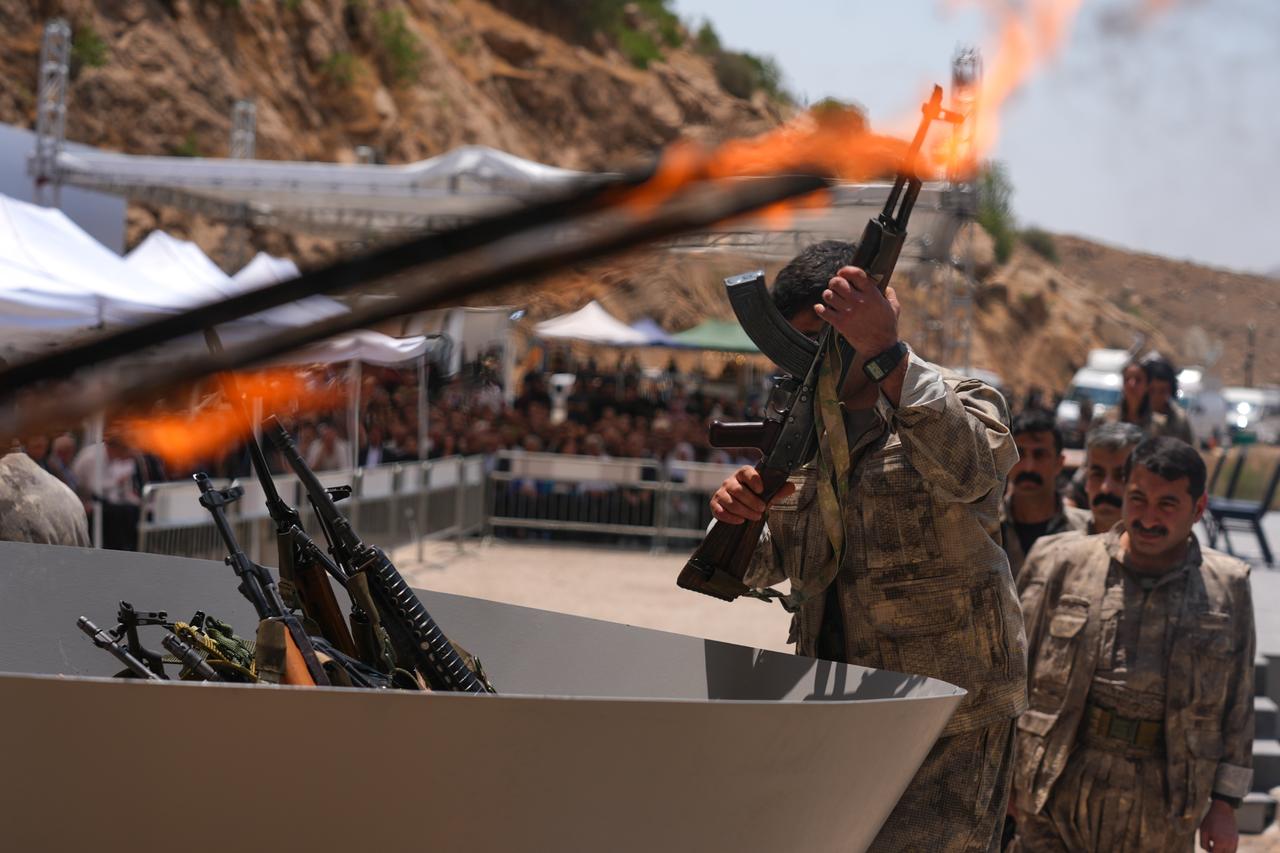
Türkiye sees the PKK peace process as a purely domestic issue and prioritizes parliamentary commissions and DEM Party mediation separate from Syria-related contingencies. This is to keep outside spoilers or Damascus-SDF agreement implementation failures from getting in the way of progress in the talks with PKK. The PKK's withdrawal from border areas and Öcalan's call for disarmament in February 2025 would keep the momentum going independent of other factors.
Effects on the peace process: Allows for carefully planned concessions (like limited amnesty and cultural rights) to build trust, which could lead to a "Turkish model" of managed ethnic inclusion. This scenario will offer more stability for the implementation of the peace process if Syria falls into chaos.
Content Type:Commentaries