The Global Energy Crisis and KRI’s Pipelines: An Alternative to Hormuz
Executive Summary
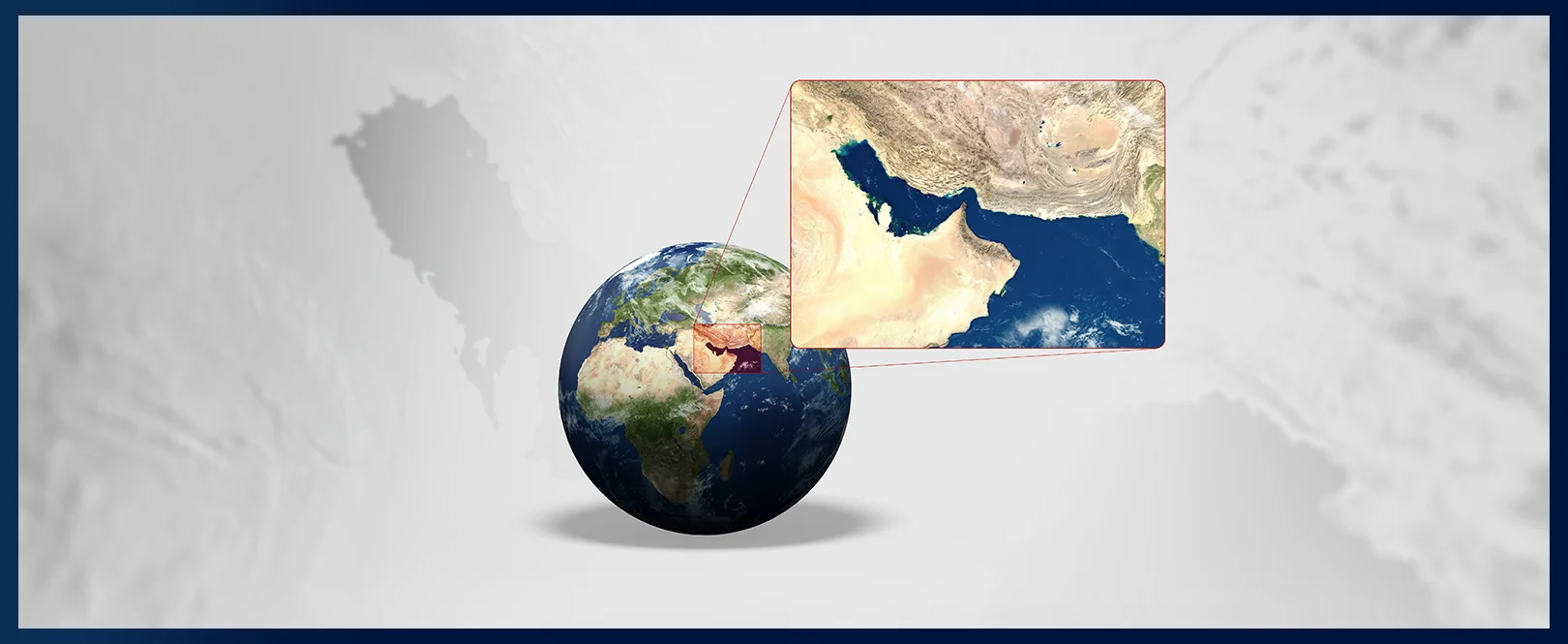
Four weeks into the U.S.-Israeli war on Iran, launched on February 28, 2026, the Strait of Hormuz has effectively ceased to function as a commercial shipping route. Tanker traffic has collapsed to near zero. Brent crude surged past $112 per barrel, peaked at $119.5, and currently sits at $112.57 following a partial diplomatic pause. European natural gas prices have more than doubled at their peak. Qatar's Pearl GTL complex was struck on March 18, with Qatar Energy confirming extensive damage; the GTL facility is expected to take up to one year to repair, while the LNG trains face a three-to-five-year outage. The IEA has mobilized an emergency release of 400 million barrels from member-country reserves in an attempt to stabilize markets. Trump has paused strikes on Iranian energy infrastructure until April 6 as ceasefire negotiations proceed through Pakistan as mediator, with a 15-point U.S. framework on the table —though Iran has publicly denied direct talks.
The Kurdistan region sits in the paradoxical position of being both a frontline target in this conflict and one of the few oil-exporting territories whose primary export route—the Kirkuk-Ceyhan pipeline to Türkiye's Mediterranean coast—is entirely insulated from Hormuz. This commentary examines what that means in economic terms, why the opportunity is conditional on resolving urgent structural vulnerabilities, and what Erbil must do before the window closes.
What The Data Says
Four weeks into the war, the scale of economic impact is clear and measurable. Tanker traffic through the Strait of Hormuz has collapsed to near zero. The IRGC declared the strait closed on March 2, and by the following day no tankers were broadcasting AIS signals. The toll includes at least 21 confirmed Iranian attacks on merchant ships, multiple damaged vessels, deaths among maritime personnel, and approximately 200 internationally trading crude and product tankers effectively stranded in the Gulf. Only a handful of tankers — reportedly including some Pakistani-flagged vessels — have transited this month, permitted as diplomatic gestures in the context of ceasefire negotiations.
The market impacts are severe and sustained. Brent crude broke $100 per barrel on March 8 for the first time since 2022, peaked at $119.5, and is currently trading at $112.57. WTI briefly touched $100 before settling around $89–$99. European natural gas prices have spiked dramatically, in part because Qatar's Pearl GTL complex was struck on March 18—Qatar Energy confirmed extensive damage, with the GTL facility requiring up to one year to repair and the LNG trains facing a three-to-five-year outage, knocking out 17% of Qatar's LNG export capacity. Insurance costs for vessels transiting the region have surged over 300%, rendering passage economically unviable even in the absence of physical attack. The IEA, citing conditions worse than the 1970s energy crises, coordinated an emergency release of 400 million barrels from member-country strategic reserves.
Trump has described the conflict as lasting "four to five weeks" with the "capability to go far longer." Secretary of State Marco Rubio has warned that the most severe blows are still possible. Iran has struck energy infrastructure in Saudi Arabia, Qatar, Kuwait, Bahrain, and the UAE. Qatar's Pearl GTL facility—a cornerstone of global LNG supply—suffered severe damage in an Iranian strike on March 18, with estimates of a multi-year outage. The war has now entered a partial diplomatic pause with a U.S. framework for peace, presented to Iran via Pakistan. The next critical date is April 6, when Trump's moratorium on striking Iranian energy plants expires. What is certain is that the crisis will continue to shape global energy markets for months regardless of its resolution.
Kurdistan Region Within the Conflict: The Hormuz Effect
The situation in Erbil since day one, February 28, has been sobering. Explosions were reported near Erbil International Airport, where U.S. troops remain stationed as part of the international anti-ISIS coalition, following Iran's immediate retaliatory strikes across the region. In the first three days alone, Erbil was targeted by more than 70 missiles and drones, the majority of which were intercepted by U.S. air defense systems. The Kurdistan Region's Counter-Terrorism Directorate confirmed that coalition forces intercepted multiple missiles and bomb-laden drones over Erbil province. Schools across the Kurdistan region were closed from Sunday, March 1, through Wednesday, March 4, under a joint order from the Ministries of Education and Higher Education.
In a development with direct economic consequences, the operator of the Khor Mor Gas Field — Dana Gas — suspended gas exports as a precautionary measure from the outset of the war to protect personnel and facilities. The Ministries of Natural Resources and Electricity warned that power output would drop by 2,500 to 3,000 megawatts as a result. The field briefly resumed limited operations but has remained intermittently disrupted throughout the conflict. The disruption at Khor Mor matters enormously: it is the dominant source of gas in the Kurdistan region, producing well over 520 million standard cubic feet per day (MMSCFD) of non-associated gas—over 90% of the Kurdistan Region's total output. Iranian-backed militias have also targeted the Chamanke oil fields with drone strikes. Any sustained halt at Khor Mor is not merely an inconvenience; it disrupts power generation, undermines export ambitions to Türkiye, and deters international investors. The K250 expansion project, designed to bring total output to nearly 800 MMSCFD, now faces further delays.
Meanwhile, oil exports via the Kirkuk-Ceyhan pipeline—Kurdistan's main crude export corridor—have followed a turbulent trajectory. When the war began, production halted at several companies in the Kurdistan region, which temporarily suspended pipeline flows. However, the crisis also created new urgency: with Iraq's southern export infrastructure devastated and Hormuz closed, Baghdad urgently needed the northern pipeline route. After weeks of negotiations—complicated by Baghdad's imposition of a dollar transfer ban on the region —the KRG and Baghdad reached an agreement on March 17, establishing a joint committee to restart exports. Iraq's North Oil Company confirmed the resumption of crude exports via Ceyhan at an initial capacity of 250,000 barrels per day on approximately March 19. The Kurdistan region's pipeline route was precisely what the commentary predicted: the only functioning large-scale oil export corridor in Iraq.
Kurdistan region's crude exports do not transit the Strait of Hormuz; they flow north via pipeline to Türkiye's Mediterranean port of Ceyhan —bypassing the Persian Gulf and avoiding all conflict-affected maritime routes. The IRGC's attacks on tankers, navigation paralysis, and insurance collapse do not affect this route. The Kurdistan region's pipeline route is an advantage. It is not a mere coincidence; it is Kurdistan's most important economic asset in this crisis.
The Numbers: Why Hormuz Matters More to Iraq than Kurdistan
When the world's primary oil chokepoint closes, buyers do not wait —they pivot. The EIA has previously confirmed that 84% of crude oil and condensate transiting Hormuz in 2024 was destined for Asian markets, primarily China, India, Japan, and South Korea, which together accounted for 69% of all crude flows through the strait. Those importers now face an acute supply shortage and are scrambling to find alternatives. European refiners—who draw from Gulf sources for significant portions of their crude supply and approximately 30% of their jet fuel—are in a comparable position. In this environment, any barrel that can be delivered reliably, through a functioning route, commands a substantial market premium.
Kurdistan's Ceyhan-exit crude is already designated for European and Mediterranean markets. The geopolitical risk premium embedded in global oil prices is currently estimated at between $8 and $14 per barrel. In a Hormuz disruption of this scale and duration, that premium has widened dramatically. Italy, Greece, Croatia, Türkiye, and Israel were among the main destination markets for Ceyhan crude before the crisis. These are precisely the markets now cut off from Gulf supply and most in need of a reliable Mediterranean alternative.
The gas dimension is equally important. Kurdistan's gas sector—centered on Khor Mor—had been positioned before this conflict as a potential regional hub with ambitions to export up to 1.5 billion cubic feet per day by 2027, including exports to Türkiye. With Qatar's Pearl GTL facility requiring up to a year of repairs and its LNG trains facing a three-to-five-year outage—removing 17% of Qatar's LNG export capacity from global markets —the European natural gas supply picture has worsened dramatically. The IEA chief described conditions as "very severe"—worse than the 1970s energy crises and the fallout from the Ukraine war combined. A functional, expanding Kurdish gas export corridor to Türkiye and onward to Europe is no longer a speculative proposition — it is a market requirement. The sustained Khor Mor disruption is therefore not just a short-term inconvenience; it is a signal of how much is at stake if the field expansion does not materialize.
The impact on Iraq more broadly has been severe. Southern Iraqi output dropped roughly 70% to approximately 1.3 million barrels per day following the Hormuz closure. Total Iraqi production fell to around 1.4 million barrels. Standard & Poor's has warned of severe pressure on Iraq's public finances, given that oil accounts for roughly 90% of state revenues. This fiscal devastation has, paradoxically, increased Baghdad's desperation to use the northern pipeline —and with it, Erbil's leverage.
The Structural Vulnerabilities Erbil Cannot Avoid
The Kurdistan region has genuine opportunities, but the structural constraints facing Kurdistan are equally real, and the crisis has intensified their urgency.
The Baghdad-Erbil pipeline agreement and the dollar transfer disputes: The March 17, 2026, resumption agreement established a joint committee and confirmed the KRG's willingness to facilitate Kirkuk and regional exports via the Ceyhan route, with all revenues returned to the federal treasury. However, the negotiations were delayed and complicated by Baghdad's imposition of a ban on dollar transfers to the region in January—a restriction the KRG demanded be lifted before they agreed to pump. This dispute exposed the fragility of the bilateral relationship under wartime pressure. The joint committee must now translate the framework into a durable, legally grounded arrangement that survives the immediate crisis.
The Iraq-Türkiye pipeline agreement expires in July 2026: The Enabling Peace in Iraq Center's annual assessment for 2026 explicitly identified the expiry of the Iraq-Türkiye pipeline agreement in July 2026 as one of the ten most critical issues facing Iraq this year, warning that "the outcome will directly affect the livelihoods of millions in the Kurdistan Region." Ankara has signaled it will seek significantly revised terms —including expanded transit arrangements covering gas, electricity, and petrochemical cooperation. The July 2026 deadline is now only three months away. A Hormuz crisis that has forced Baghdad to rely urgently on the Kirkuk-Ceyhan route creates a rare window to lock in favorable terms—but only if negotiations begin immediately and in earnest.
The IOC debt overhang suppresses production: The September 2025 deal paved the way for negotiations on over $1 billion in arrears that Erbil owes to international oil companies. Norwegian company DNO — the largest foreign oil operator in Kurdistan — refused to sign the September deal specifically due to concerns about debt repayment, meaning its output is not fully integrated into the SOMO arrangement. Until this debt is resolved, investor confidence in expanding production capacity in the Kurdistan region will remain limited. Without that capital, the pipeline's theoretical capacity of 1.5 million barrels per day remains unattainable.
The pipeline itself remains a target: Iranian-backed militias have demonstrated both the capability and the willingness to strike Kurdistan's energy infrastructure repeatedly. Iranian-backed militias have targeted the Khor Mor field more than a dozen times in recent years. Drones struck the Chamanke oil fields during this conflict. The resumption of pipeline exports requires not just political agreement but credible security guarantees for the fields and the pipeline corridor itself.
Practical Steps: A Brighter Outlook
1. Consolidate and formalize the March 17 pipeline agreement: The joint committee established between Baghdad and Erbil on March 17 must be operationalized immediately and converted into a durable, legally grounded arrangement — not a wartime improvisation that collapses when the pressure eases. The current terms, under which all revenues return to the federal treasury, represent a significant concession by Erbil. Formalizing a fair revenue-sharing mechanism that reflects Erbil's operational contribution is essential before the crisis atmosphere dissipates.
2. Resolve the dollar-transfer ban as a precondition for full cooperation: Baghdad's January ban on dollar transfers to the Kurdistan Region nearly derailed the March 17 agreement and remains a serious structural irritant. Lifting this ban should be treated as a condition for sustained KRG cooperation on pipeline exports, not a separate political negotiation. Erbil has demonstrated it will use this as leverage; Baghdad should recognize the cost of continuing the restriction.
3. Open emergency talks on the Türkiye pipeline agreement now: With three months remaining before the Iraq-Türkiye pipeline agreement expires in July 2026, the KRG should push for immediate three-way negotiations between Erbil, Baghdad, and Ankara. Baghdad's desperation—and its demonstrated need for the Northern Route—give Erbil unusual leverage. To secure KRG-favorable terms on revenue allocation and pipeline governance before the July deadline. This window will not remain open once the Strait of Hormuz reopens.
4. Clarify the windfall revenue mechanism: Brent is currently trading at $112.57; the difference between the revenue Erbil captures under current pricing assumptions and what the market is generating is enormous. With Brent currently at $112.57 and having peaked at $119.50—a surge of roughly 80% since the conflict began—the KRG should seek urgent written clarification on how oil revenues above baseline pricing assumptions are distributed under the current deal. If the formula does not allow Erbil to capture a fair share of the current price spike, renegotiation is warranted, and the political conditions demand it has rarely been more favorable.
5. Resolve the IOC debt arrears to unlock production capacity: Over $1 billion in outstanding IOC debt is suppressing production investment and keeping DNO—the largest foreign operator in Kurdistan—outside the main export agreement. A credible debt resolution timeline, even a partial one, would restore investor confidence and enable the production ramp-up that the current market conditions urgently reward.
6. Protect Khor Mor and establish conditions for safe, continuous operation: The sustained disruption of Khor Mor is Kurdistan's most acute and damaging vulnerability. The field has been intermittently suspended since February 28 and continues to face security threats from Iranian-backed militias. U.S. and Iraqi federal commitments to provide air-defense coverage for Khor Mor —which have been discussed since the November 2025 drone attack —must be implemented immediately. Every additional day of suspension leads to lost revenue, diminished market positioning in a region actively seeking non-Gulf gas supply, and eroded credibility with international investors.
7. Engage European energy ministries and the IEA directly: Kurdistan should position itself proactively—today, not next month —as a reliable Mediterranean-exit oil and gas supplier for markets disrupted by the Hormuz closure. The IEA has already coordinated a 400-million-barrel strategic release in response to this crisis and identified Europe's energy supply situation as "very severe." Kurdistan must present this argument diplomatically and commercially at the highest level. The window created by the Hormuz crisis will not remain indefinitely open; cease-fire negotiations are underway, and the strait could reopen on short notice. Erbil must act while the market dislocation is at its peak.
Content Type:Commentaries